
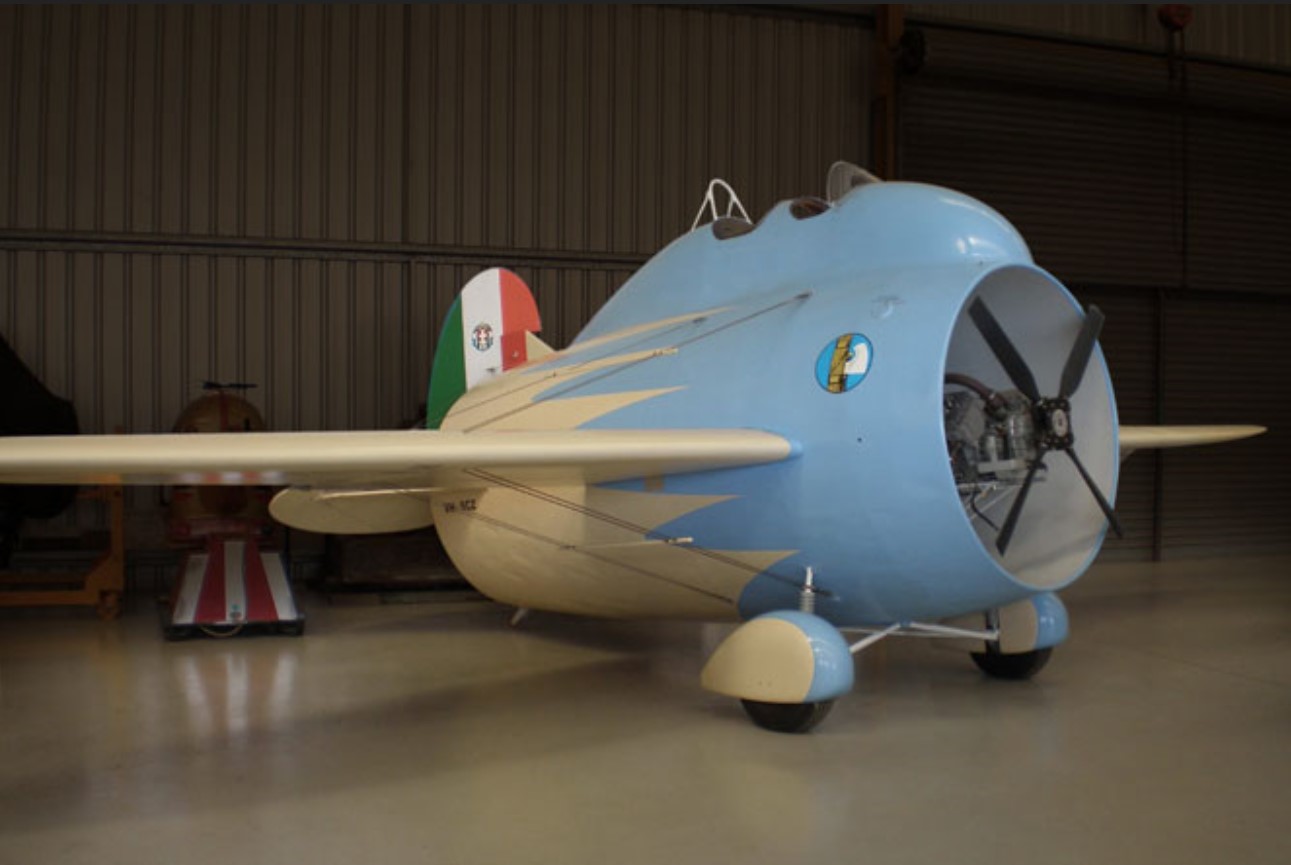
The Stipa-Caproni was an experimental Italian aircraft designed in 1932 by engineer Luigi Stipa and built by Caproni. The prototype featured a distinctive hollow, barrel-shaped fuselage in which the engine and propeller were completely enclosed, making the fuselage itself function as a single ducted fan—a radical departure from conventional aircraft design of the period.
Although the Regia Aeronautica did not pursue further development of the Stipa-Caproni, the aircraft’s innovative configuration left a lasting impact on aeronautical engineering. Its ducted-fan principle influenced subsequent work in jet propulsion, establishing it as a significant experimental design in aviation history.
About Luigi Stipa
Luigi Stipa (1900–1992) was an Italian engineer whose work in experimental aircraft design contributed to developments in propulsion technology during the interwar period and beyond.
Details
- Designer: Luigi Stipa
- Manufacturer: Caproni
- Year: 1932
- Configuration: Ducted-fan fuselage with enclosed engine and propeller
- Status: Experimental prototype; not adopted for production
- Historical significance: Influenced jet propulsion development
On video
Frequently asked questions
Who designed the Stipa-Caproni?
The aircraft was designed by Luigi Stipa (1900–1992), an Italian engineer, and built by the aircraft manufacturer Caproni in 1932.
What made the Stipa-Caproni’s design innovative?
Its most distinctive feature was the hollow, barrel-shaped fuselage that completely enclosed the engine and propeller, making the entire fuselage function as a ducted fan—a novel concept for the period.
Why was the Stipa-Caproni significant if it wasn’t put into production?
Although the Regia Aeronautica showed no interest in the prototype, its ducted-fan design principle proved influential in the development of jet propulsion technology.


