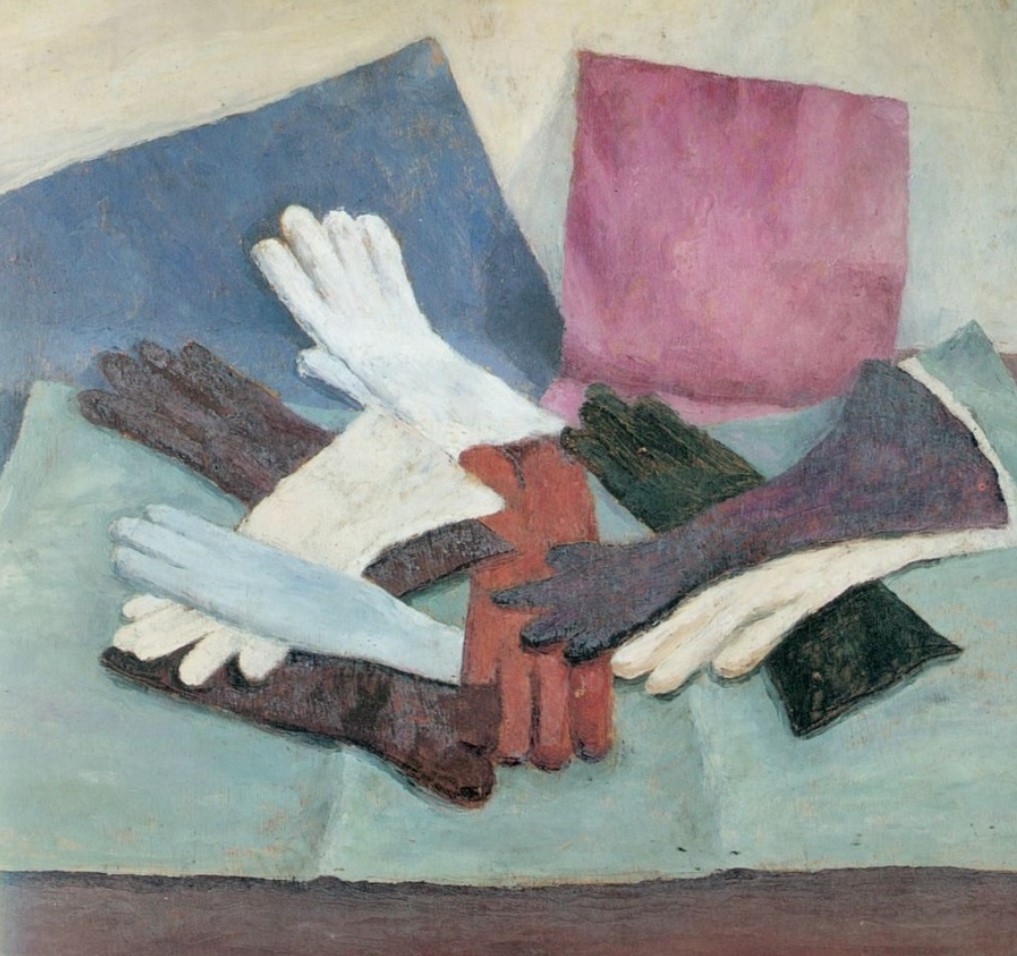
Guanti is a work on paper created by Cesarina Gualino in 1942. Gualino was an Italian painter, dancer and art collector whose career spanned the twentieth century.
Born in Casale Monferrato in 1890, Gualino received broad humanistic training and studied musical composition before becoming known for her work in the visual arts. Alongside her husband Riccardo Gualino, a prominent industrialist and patron, she gathered an extraordinary cultural circle that included painters, dancers, musicians, actors, writers, sculptors and architects of international renown. The couple’s activities as collectors and advocates for artistic creation made them influential figures in early twentieth-century Italian cultural life.
About Cesarina Gualino
Gualino’s practice encompassed painting, dance and curatorial work. She worked during a period of significant artistic experimentation in Italy, and her own creative output reflected the pluralism and intellectual engagement that characterized her milieu. Her long life—she lived to 1992—allowed her to witness and participate in multiple phases of modern Italian art.
Details
- Creator: Cesarina Gualino
- Year: 1942
- Medium: Work on paper
- Period: Italian interwar modernism
Frequently asked questions
Who was Cesarina Gualino?
Cesarina Gualino (1890–1992) was an Italian painter, dancer and art collector. Born in Casale Monferrato, she became known for her artistic practice and her role, alongside her husband Riccardo Gualino, as a patron and collector of modern art.
What was her role in Italian cultural life?
Together with her husband, an industrialist and early twentieth-century patron, Gualino assembled an influential circle of painters, dancers, musicians, actors, writers, sculptors and architects of international standing, making the couple significant advocates for artistic creation in Italy.
When was this work created?
Guanti dates to 1942, during the final phase of Italy’s interwar period.
Sources
- S1 — Pontiggia, Elena. Il Novecento Italiano. Abscondita, 2003. ISBN 978-88-8416-048-5.
- S2 — Ciucci, Giorgio. Gli architetti e il fascismo: architettura e città 1922-1944. Einaudi, 2002. ISBN 978-88-06-16310-5.
Spotted an error? Write to editorial@culturalheritageonline.com and we correct it the same day.