
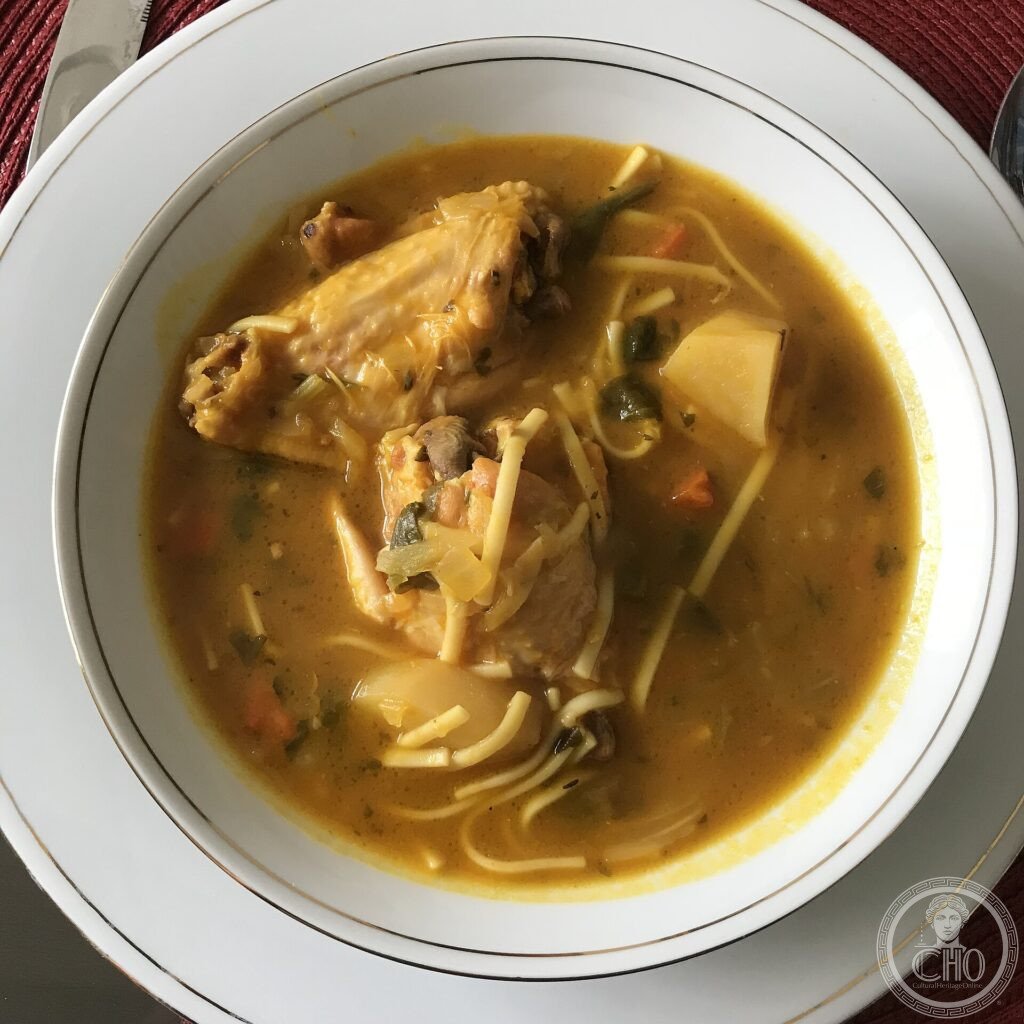
A golden pumpkin soup steeped in Haitian identity and freedom, soup joumou is more than nourishment—it is a living emblem of liberation and family communion.
In UNESCO’s words
Joumou or giraumon soup is a traditional Haitian pumpkin soup made with vegetables, plantains, meat, pasta and spices. It is a celebratory dish, deeply rooted in Haitian identity, and its preparation promotes social cohesion and belonging among communities. Originally reserved for slave owners, Haitians took ownership of the soup when they gained independence from France, turning it into a symbol of their newly acquired freedom and an expression of their dignity and resilience. It is made from giraumon, a variety of pumpkin once cultivated by the indigenous peoples of the Caribbean, and is prepared and consumed specifically on the first of January – Haiti’s Independence Day – when it constitutes the first meal of the year. It also serves as traditional Sunday breakfast. The preparation of Joumou soup is a family and community affair: women manage the overall activities, children help to prepare the ingredients, artisans make the aluminium pots and other utensils used to prepare the soup, and farmers work the land to harvest the vegetables. Today, several variations of the soup can be found in Caribbean and Latin American cuisines.
Official description, UNESCO Intangible Cultural Heritage List — Joumou soup
At a glance
Joumou is a traditional Haitian pumpkin soup made with vegetables, plantains, meat, pasta and spices. It is a celebratory dish that embodies Haitian identity and brings communities together through its preparation and shared consumption.
Origins & history
The soup originates from giraumon, a pumpkin variety once cultivated by the indigenous peoples of the Caribbean. Originally reserved for slave owners, Haitians claimed the soup as their own after gaining independence from France, transforming it into a symbol of freedom, dignity and resilience.
The practice
Joumou is prepared as a family and community affair where women oversee activities, children help prepare ingredients, farmers harvest vegetables, and artisans craft the aluminium pots and utensils used in cooking. It is made from giraumon pumpkin combined with vegetables, plantains, meat and spices. The soup is consumed on Haiti's Independence Day as the first meal of the year and also serves as a traditional Sunday breakfast.
Cultural significance
For Haitians, joumou represents their newly acquired freedom and expresses collective dignity and resilience. Its preparation strengthens social cohesion and belonging among communities. Today, variations of the soup appear in Caribbean and Latin American cuisines, though it remains distinctly rooted in Haitian cultural identity.
Key facts
- Country: Haiti
- Inscribed: 2021
- UNESCO list: Representative List of the Intangible Cultural Heritage of Humanity
- UNESCO reference: 01853
- UNESCO vocabulary: Colonial history; Food preparation
- Map: not shown — UNESCO’s official description of this element names no locality, and a living tradition is practised across a community, not at one address.
Where to experience it
Soup joumou is prepared and consumed throughout Haiti, where it appears on family tables and in community gatherings, especially on January 1st for Independence Day and as a traditional Sunday breakfast. The preparation involves families and entire communities—women directing the work, children helping with ingredients, artisans crafting the aluminium pots, and farmers harvesting the vegetables. Visitors can witness this living tradition during these occasions, when the soup serves as both a celebratory meal and an expression of Haitian identity and resilience.
Sources & resources
- UNESCO — official element page: Joumou soup
- UNESCO — open data record: Intangible Heritage List, reference 01853
- UNESCO — official photograph: Les légumes du marché pour la préparation de la soupe — Jean Cyril Pressoir — JPC, 2020
- Reference — Wikipedia (secondary): Soup joumou — consulted as a secondary reference, not as confirmation
- Cultural Heritage Online: Our archive and city guides

Sources
- S1 — Dubois, Laurent. Avengers of the New World: The Story of the Haitian Revolution. Harvard University Press, 2004. ISBN 978-0-674-01826-6.
- S2 — James, C. L. R. The Black Jacobins: Toussaint L'Ouverture and the San Domingo Revolution. Vintage Books, 1989. ISBN 978-0-679-72467-4.
Spotted an error? Write to editorial@culturalheritageonline.com and we correct it the same day.