
A wire-strung triangular harp tradition rooted in Gaelic nobility, Irish harping demands extraordinary technical skill and years of disciplined practice. The instrument remains a symbol of Irish identity, appearing on national emblems and currency.
In UNESCO’s words
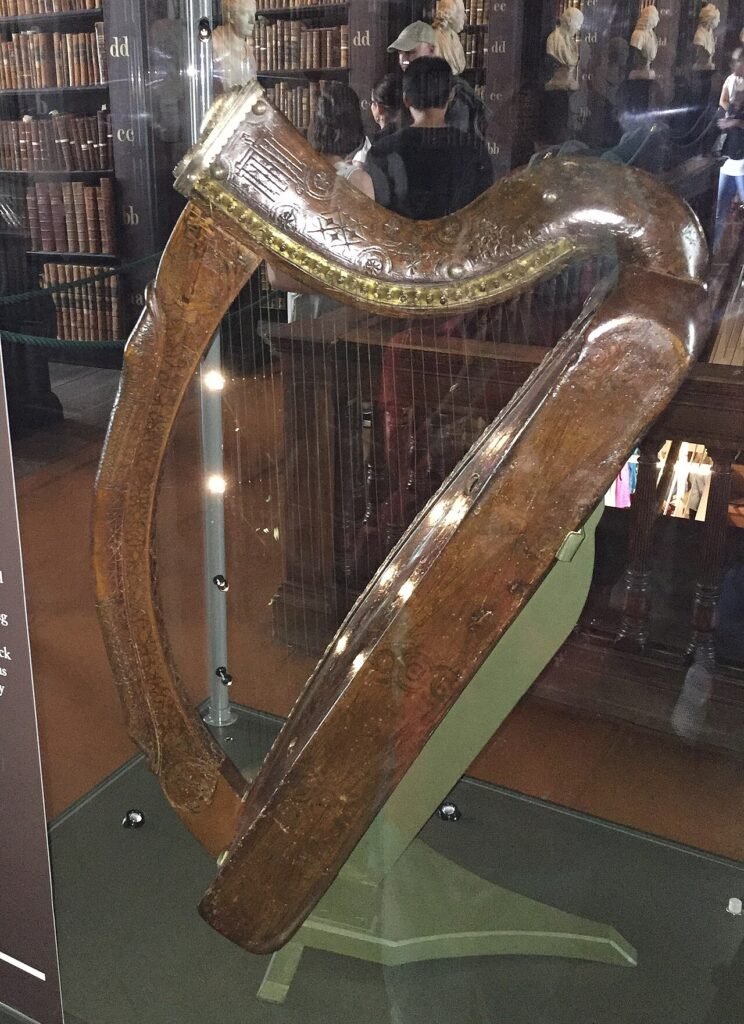
Irish harping is at the heart of the identity of the people of the island of Ireland. The harp is Ireland’s national symbol and has been played for more than 1,000 years; its bell-like sounds and music captivate all those who hear it and are celebrated in Irish mythology, folklore and literature. Nowadays, instead of a harp hewn from a single piece of willow, strung with wire strings and played with the nails, most contemporary harps are made with various types of hardwood, strung with gut or nylon, and played with the finger tips. While some men and boys play the harp, women, girls and children are the primary practitioners. Related skills are transmitted both aurally and/or by notation in the art music style, and contemporary exponents of the early wire-strung harp are bearers of a precious legacy of music. Contemporary gut-strung harpers have safeguarded the old repertoire and ensured its continuity while responding to evolving harp styles. There has been a major resurgence of interest in harp playing over the past sixty years thanks to a growing appreciation of the harp’s role in Irish identity, language and culture and bearers and practitioners now number around 1,500, a number that is growing steadily. Harp playing has also helped people to embrace diversity and bridge divides.
Official description, UNESCO Intangible Cultural Heritage List — Irish harping
At a glance
Irish harping is the practice of playing the harp, an instrument at the heart of Irish identity. The harp's bell-like sounds have captivated people for more than 1,000 years and are celebrated in Irish mythology, folklore and literature. Women, girls and children are the primary practitioners, though some men and boys also play. Skills are passed on both by ear and through notation.
Origins & history
The harp has been played in Ireland for more than 1,000 years. Historically, harps were hewn from a single piece of willow and strung with wire strings, played with the nails. Over time, the instrument evolved. Contemporary gut-strung harpers have preserved the old repertoire while responding to changing harp styles. The past sixty years have seen a major resurgence of interest in harp playing, driven by growing appreciation of its role in Irish identity, language and culture.
The practice
Most contemporary harps are made from various types of hardwood, strung with gut or nylon, and played with the fingertips—a shift from the wire-strung, nail-played instruments of the past. Skills are transmitted both aurally and through notation in the art music style. Contemporary exponents of the early wire-strung harp carry forward a precious musical legacy, while gut-strung harpers continue to develop evolving harp styles.
Cultural significance
The harp is Ireland's national symbol and remains central to the island's identity. Harp playing has helped foster appreciation for Irish language and culture. It has also served a broader social purpose, helping people embrace diversity and bridge divides. The number of bearers and practitioners has grown steadily to around 1,500, demonstrating the tradition's enduring importance to the community.
Key facts
- Country: Ireland
- Inscribed: 2019
- UNESCO list: Representative List of the Intangible Cultural Heritage of Humanity
- UNESCO reference: 01461
- UNESCO vocabulary: Instrumental music; Music education; Plucked string instruments
- Map: not shown — UNESCO’s official description of this element names no locality, and a living tradition is practised across a community, not at one address.
Where to experience it
Irish harping flourishes across the island of Ireland, where around 1,500 practitioners—primarily women, girls and children—maintain this thousand-year tradition. Visitors can encounter harpers at musical venues, cultural festivals and heritage organisations dedicated to Irish music and culture. The tradition thrives through both formal instruction and aural transmission, with contemporary players performing wire-strung and gut-strung harps in styles ranging from classical art music to folk repertoire. This resurgence over the past six decades reflects a deepening appreciation of the harp's profound place in Irish identity, language and heritage.
Sources & resources
- UNESCO — official element page: Irish harping
- UNESCO — open data record: Intangible Heritage List, reference 01461
- UNESCO — official video: UNESCO film on this element — embedded on this page
- UNESCO — official photograph: All together now: National Harp Day with Clodagh, Oisín and Alva at y=the Lexicon Cultural Centre, Dún Laoghaire. Co Dublin — Tom Honan Photography, 2017
- Reference — Wikipedia (secondary): Celtic harp — consulted as a secondary reference, not as confirmation
- Cultural Heritage Online: Our archive and city guides

Sources
- S1 — Rimmer, Joan. The Irish Harp. Mercier Press, 1969. ISBN 978-0-85342-127-6.
- S2 — O'Sullivan, Donal. Carolan: The Life, Times and Music of an Irish Harper. Ossian Publications, 2001. ISBN 978-1-900428-71-2.
Spotted an error? Write to editorial@culturalheritageonline.com and we correct it the same day.