
A master storyteller commands a coffeehouse audience, shifting between characters with a handkerchief and a voice that bends across dialects. The meddah improvises, responds, and never rushes—the story unfolds at the pace of human connection.
In UNESCO’s words
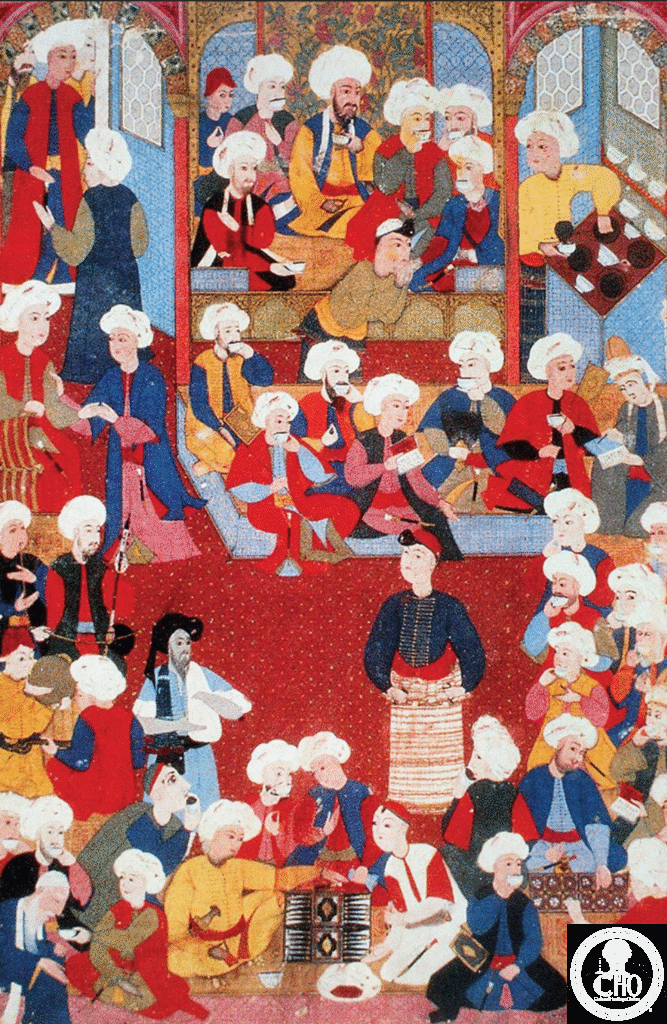
Meddahlik was a Turkish theatre form performed by a single storyteller called a meddah and practised throughout Turkey and Turkishspeaking countries. Through the ages, similar narrative genres have flourished due to interaction among the peoples of Asia, the Caucasus and the Middle East within this wide geographical area. Historically, meddahs were expected to illuminate, educate, and entertain. Performing in caravanserais, markets, coffeehouses, mosques and churches, these storytellers transmitted values and ideas among a predominantly illiterate population. Their social and political criticism regularly provoked lively discussions about contemporary issues. The term meddah, borrowed from Arabic maddah “to praise”, can be translated as “storyteller”. The meddah selects songs and comic tales from a repertory of popular romances, legends and epics and adapts his material according to the specific venue and audience. However, the quality of the performance largely depends on the atmosphere created between storyteller and spectators, as well as the meddah’s ability to integrate imitations, jokes and improvisation often relating to contemporary events. This art, which places great value on the mastery of rhetoric, is highly regarded in Turkey. Although some meddahs still perform at a number of religious and secular celebrations and appear on television shows, the genre has lost much of its original educational and social function due to the development of the mass media and in particular because of the appearance of TV sets in cafés.
Official description, UNESCO Intangible Cultural Heritage List — Arts of the Meddah, public storytellers
At a glance
Meddahlik is a Turkish theatre form performed by a single storyteller called a meddah. The storyteller selects from a repertory of popular romances, legends and epics, adapting material for specific venues and audiences. Performance quality depends on the atmosphere created between storyteller and spectators, along with the meddah's ability to incorporate imitations, jokes and improvisation, often relating to contemporary events. The art places great value on mastery of rhetoric.
Origins & history
The term meddah comes from Arabic maddah, meaning 'to praise', and translates as 'storyteller'. Historically, meddahs were expected to illuminate, educate and entertain, performing in caravanserais, markets, coffeehouses, mosques and churches. These storytellers transmitted values and ideas among a predominantly illiterate population, and their social and political criticism regularly sparked discussions about contemporary issues. Similar narrative genres flourished across Asia, the Caucasus and the Middle East through interaction among peoples in this wide geographical area.
The practice
Meddahs perform in various settings including caravanserais, markets, coffeehouses, mosques and churches. The storyteller draws from a repertory of popular romances, legends and epics, selecting and adapting material according to venue and audience. Performance relies heavily on the meddah's ability to integrate imitations, jokes and improvisation, often responding to contemporary events. The quality of each performance depends substantially on the atmosphere created between storyteller and spectators.
Cultural significance
Meddahlik is highly regarded in Turkey for its mastery of rhetoric and its role in transmitting values and ideas. Historically, it provided education and entertainment to predominantly illiterate populations while enabling social and political criticism. Today, although some meddahs still perform at religious and secular celebrations and on television, the genre has lost much of its original educational and social function due to mass media development and the presence of television in cafés.
Key facts
- Country: Türkiye
- Inscribed: 2008
- UNESCO list: Representative List of the Intangible Cultural Heritage of Humanity
- UNESCO reference: 00037
- UNESCO vocabulary: Oral tradition; Satire; Story telling
- Map: not shown — UNESCO’s official description of this element names no locality, and a living tradition is practised across a community, not at one address.
Where to experience it
Meddahlik survives through performances at religious and secular celebrations across Turkey and Turkish-speaking countries, where meddahs continue to share their art with audiences. Visitors may encounter storytellers at traditional coffeehouses, markets, and cultural venues, though the practice has diminished since the advent of television and mass media. Some meddahs also appear on television shows, keeping the tradition alive for modern audiences while adapting tales from popular romances, legends, and epics to contemporary settings and tastes.
Sources & resources
- UNESCO — official element page: Arts of the Meddah, public storytellers
- UNESCO — open data record: Intangible Heritage List, reference 00037
- UNESCO — official video: UNESCO film on this element — embedded on this page
- UNESCO — official photograph: Photograph of this element — Nilüfer Zeynep ÖZÇÖREKÇİ GÖL — Information and Documentation Center of Folk Culture/Ministry of Culture and Tourism of Turkey
- Reference — Wikipedia (secondary): Meddah — consulted as a secondary reference, not as confirmation
- Cultural Heritage Online: Our archive and city guides

Sources
- S1 — And, Metin. A History of Theatre and Popular Entertainment in Turkey. Forum Yayınları, 1963. / Finkel, Caroline. Osman's Dream: The History of the Ottoman Empire. Basic Books, 2006. ISBN 978-0-465-02396-7.
- S2 — Kafadar, Cemal. Between Two Worlds: The Construction of the Ottoman State. University of California Press, 1995. ISBN 978-0-520-20600-7.
Spotted an error? Write to editorial@culturalheritageonline.com and we correct it the same day.