
Master carvers known as kryždirbiai shape oak wood into intricate crosses that embody Lithuanian identity and Catholic faith, traveling the countryside to craft symbols of resilience and spiritual devotion.
In UNESCO’s words
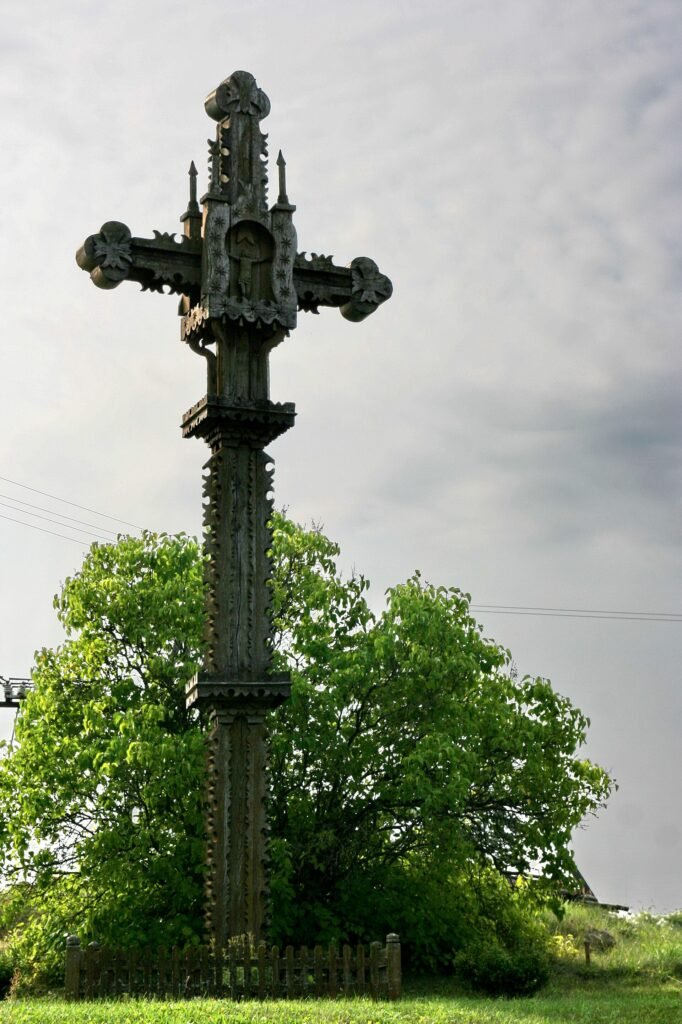
<b>Supported by Latvia</b> Cross-crafting refers to a widespread tradition of making crosses and altars, as well as the consecration of these crosses and the rituals associated with them. The carved oak crosses are linked to Catholic ceremonies and harvest celebrations. Once the cross is consecrated by a priest, it acquires an inalienable sacred significance. They became the symbol of national and religious identity with its incorporation into the orthodox Russian Empire in the nineteenth century. Their symbolic role was reinforced under the Soviet regime, despite the fact that the crosses were officially banned. The crosses measure between one and five metres high and are often adorned with a small roof, floral or geometric decorations, and occasionally bear small statues. Statues of the Virgin Mary and various saints are often called upon to aid people in distress. The crosses are placed on roadsides, at the entrance to villages, near monuments and in cemeteries. A range of types of offerings are made, especially items of food, rosaries, money or coloured scarves (for a wedding, for example) or aprons, asking for fertility. The crosses are also an important meeting place in a village and a symbol of the unity of the community. Today, as in the past, cross crafting is not taught in any school but is handed down through non-formal education. The most serious threat to cross-crafting is rural exodus and the uniformity brought about by the influence of mass media. Although the upkeep of the crosses is ensured by the parishes, more support is needed.
Official description, UNESCO Intangible Cultural Heritage List — Cross-crafting and its symbolism
At a glance
Cross-crafting is a widespread tradition of making crosses and altars, along with their consecration and associated rituals. Carved from oak, these crosses measure between one and five metres high and are often adorned with a small roof, floral or geometric decorations, and occasionally small statues of the Virgin Mary and saints. Once consecrated by a priest, a cross acquires sacred significance and becomes a symbol of religious and national identity. The crosses are placed on roadsides, at village entrances, near monuments, and in cemeteries, serving as important meeting places and symbols of community unity.
Origins & history
Cross-crafting became linked to Catholic ceremonies and harvest celebrations. During the nineteenth century, when the region was incorporated into the Russian Empire, the crosses took on heightened symbolic importance as markers of national and religious identity. This symbolic role was reinforced during the Soviet regime, when the crosses were officially banned yet continued to be made and maintained, demonstrating their deep cultural significance.
The practice
Cross-crafting is not taught in schools but transmitted through non-formal education, passed down within families and communities. Craftspeople carve oak crosses by hand, decorating them with floral or geometric patterns and sometimes small statues. A range of offerings are placed at the crosses—food, rosaries, money, coloured scarves for weddings, and aprons requesting fertility. Parishes ensure the upkeep of crosses placed throughout villages and cemeteries.
Cultural significance
The crosses represent both Catholic faith and community identity, serving as gathering places where people make offerings during times of need or celebration. The most serious threat to the tradition is rural exodus and the uniformity brought by mass media influence. Although parishes maintain the crosses, greater support is needed to ensure the craft and its transmission to future generations continue in the face of these pressures.
Key facts
- Country: Lithuania
- Inscribed: 2008
- UNESCO list: Representative List of the Intangible Cultural Heritage of Humanity
- UNESCO reference: 00013
- UNESCO vocabulary: Religious art; Wood carving
- Map: not shown — UNESCO’s official description of this element names no locality, and a living tradition is practised across a community, not at one address.
Where to experience it
Cross-crafting remains alive in the communities that practise it across Lithuania, where carved oak crosses stand on roadsides, at village entrances, near monuments and in cemeteries. Visitors can observe these sacred structures adorned with small roofs, floral decorations and statues of the Virgin Mary and saints. The crosses serve as important meeting places and symbols of community unity, where offerings of food, rosaries, money and coloured scarves are made. To learn about this living tradition, contact local cultural organizations or seek out contemporary cross-carvers who continue to pass on their knowledge through non-formal education within their families and communities.
Sources & resources
- UNESCO — official element page: Cross-crafting and its symbolism
- UNESCO — open data record: Intangible Heritage List, reference 00013
- UNESCO — official video: UNESCO film on this element — embedded on this page
- UNESCO — official photograph: Photograph of this element — Lithuania Folk Culture Center
- Reference — Wikipedia (secondary): Lithuanian cross crafting — consulted as a secondary reference, not as confirmation
- Cultural Heritage Online: Our archive and city guides

Sources
- S1 — Galaunė, Paulius. Lietuvių liaudies menas: Medžio dirbiniai. Vaga, 1965. / Kiaupa, Zigmantas. The History of Lithuania. Baltos Lankos, 2002. ISBN 978-9955-429-75-3.
- S2 — Bumblauskas, Alfredas. Senosios Lietuvos istorija 1009–1795. R. Paknio leidykla, 2005. ISBN 978-9986-830-89-4.
Spotted an error? Write to editorial@culturalheritageonline.com and we correct it the same day.