Founded in Monza in 1923 as a wool-felt workshop, Manifattura Mario Colombo transformed the city’s traditional hatmaking craft into high-performance skiwear that dressed Italy’s alpine champions.
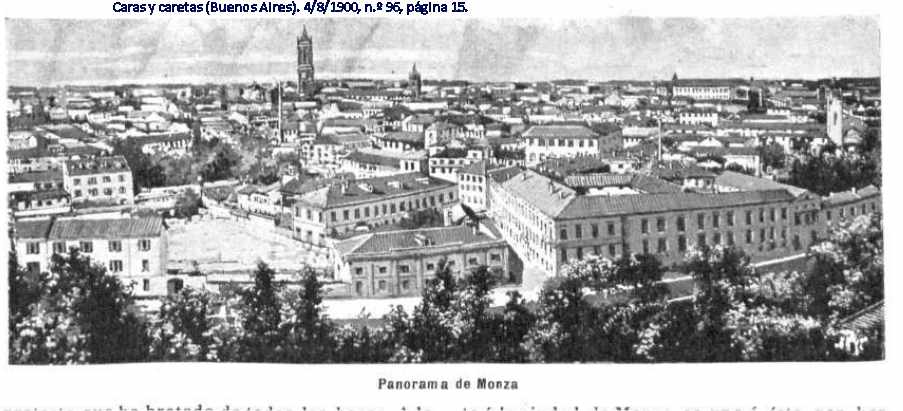
Monza in 1923 was an industrial city shaped by the rushing waters of the Lambro river and the steam whistles of textile mills. Since the nineteenth century, the city had been universally recognized as the felt-making and hat capital of Italy, supplying millions of wool felt hats to European capitals and Latin American markets. Rows of felt steaming drums, hydraulic carding machines, and dye vats lined the factory canals, employing thousands of skilled textile workers.
That summer, thirty-five-year-old Mario Colombo (1888–1944) and his wife Irma Valle walked away from comfortable salaried jobs to establish their own enterprise in Monza: Manifattura Mario Colombo & C.. To name the firm, Colombo took the first three letters of his surname and the first three of his first name, scribbling the acronym on a pack of cigarettes: Colmar.
The evolution of wool felt into alpine gear
Initially, Colmar produced fine wool-felt bodies for gentlemen’s hats and heavy woollen working gaiters (*uose*) worn by postmen, railway switchmen, and mountain farmers to keep mud and freezing rain out of their boots. But in the 1930s, the Colombo family noticed an emerging social movement: alpine winter tourism. Wealthy urbanites from Milan and Turin were flocking to newly built ski resorts in Sestriere and the Dolomites, yet skiers were still wearing soaked tweed overcoats and heavy city trousers that stiffened into blocks of ice upon falling.
Colombo took dense, weather-resistant wool felt and treated it with water-repellent oils and lanolin. In 1936, the firm created specialized ski capes and wind-resistant ski trousers tailored to fit closely around leather ski boots. When the great Italian ski champion Leo Gasperl broke the world flying kilometre record in 1937 wearing a Colmar aerodynamic cape, the brand transitioned from a provincial mill into a national sporting icon.
Aerodynamics for the White Circus
Following Mario Colombo’s death in 1944, his sons Giancarlo and Angelo took the helm. In the 1950s and 1960s, Colmar formed a legendary partnership with the Italian Winter Sports Federation (FISI). Collaborating closely with Olympic champions Zeno Colò and later Alberto Tomba and the famed *Valanga Azzurra* (the Italian ski team of Gustavo Thöni and Piero Gros), Colmar pioneered wind-tunnel-tested aerodynamic speed suits, polyurethane laminations, and thermal batting.
The company proved that sports apparel was not mere fashion, but bio-mechanical equipment that could shave hundredths of a second off Olympic downhill times.
What remains today
Colmar remains firmly under the ownership and leadership of the Colombo family, spanning four generations of continuous manufacturing stewardship. The historic administrative complex on Via Olimpia in Monza houses the Archivio Storico Colmar, preserving ninety years of technical ski prototypes, vintage Olympic competition suits, and the original 1923 felt-pressing logs. It stands as an enduring emblem of Lombard family enterprise: an industrial venture that transformed the ancient hatmaking felt of the Lambro valley into the fabric of alpine speed.
Historic Views & Archives

From the Archives: Historical Newsreels
Sport sulla neve: campionati di discesa e abbigliamento invernale
Historical footage capturing winter sports in the Italian Alps during the 1930s, documenting the early transition from heavy mountaineering gear to streamlined woollen skiwear designed for downhill speed.
Visiting the Site: Street View & Modern Geography
The historic urban headquarters and production roots of Manifattura Mario Colombo are located in northern Monza between Via Prina and Via Olimpia, close to the historic Lambro mills where wool and felt processing took root.
Historic Address: Via Prina 4 & Via Olimpia 3, 20900 Monza (MB), Italy
Sources
- Camera di Commercio di Monza e Brianza, Albo delle Imprese Storiche: Manifattura Mario Colombo (1923)
- Dizionario Biografico degli Italiani (Treccani), entry on Mario Colombo
- Archivio Storico Colmar, Cento anni di velocità: Dalla manifattura del feltro alla Coppa del Mondo, Monza, 2023
- Giorgio Fioravanti, Il design dello sport: Storia dell’abbigliamento tecnico in Italia, Milan, Electa, 2001