
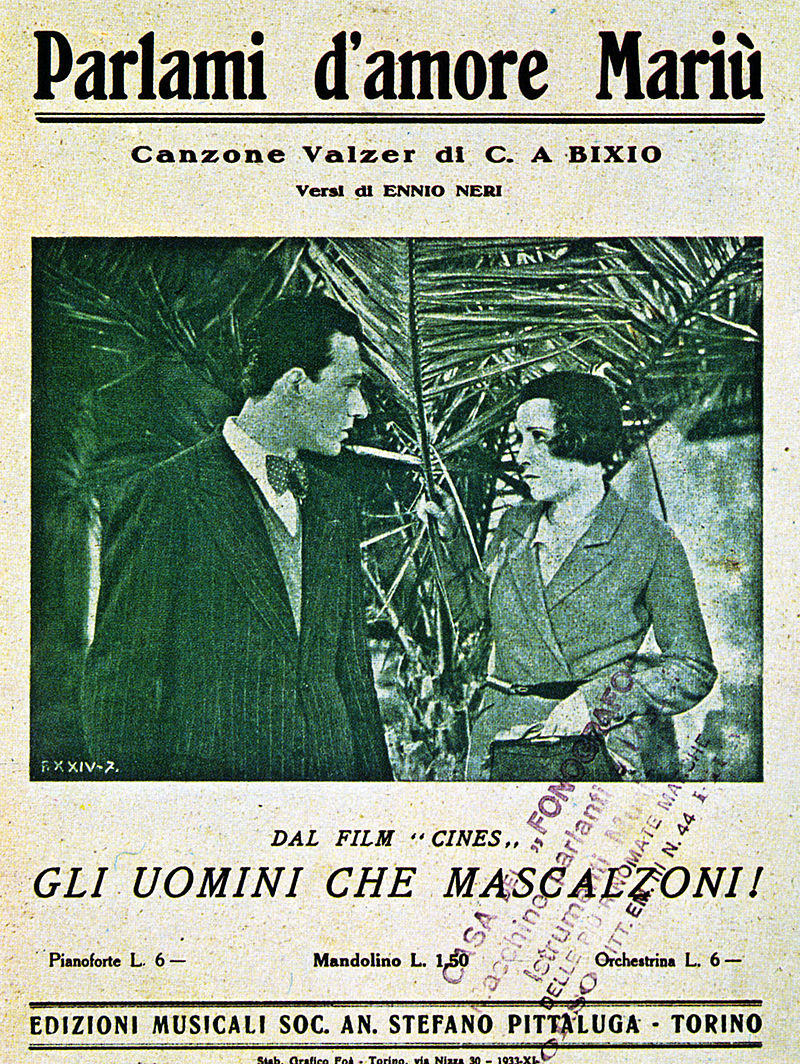
“Parlami d’amore Mariù” is a 1932 Italian song composed by Cesare Andrea Bixio, with lyrics by Ennio Neri. Originally performed by Vittorio De Sica in the comedy film What Scoundrels Men Are!, the song became a enduring classic of Italian music and achieved considerable international popularity.
The work entered the repertoire of major singers across multiple generations and styles. Notable recordings include versions by Natalino Otto, Mina, Luciano Pavarotti, José Carreras, Mario Lanza, Claudio Villa, and Dalida, among many others. In 1975, a rendition by Mal reached the top of the Italian hit parade, demonstrating the song’s sustained appeal decades after its original composition.
About the Composition
The title translates as “Tell me about love, Mariù” and found its English-language counterpart in “Tell Me That You Love Me.” Its integration into a feature film helped establish it as a staple of Italian cinema music, while the melodic strength and emotional directness of the composition enabled successful adaptation across multiple languages and musical idioms.
Details
- Composed by Cesare Andrea Bixio (music) and Ennio Neri (lyrics)
- Year: 1932
- Original performance: Vittorio De Sica in What Scoundrels Men Are!
- Category: Italian popular song
On video
Frequently asked questions
Who composed the song?
Cesare Andrea Bixio composed the music and Ennio Neri wrote the lyrics.
Where did the song originate?
It was originally part of the 1932 Italian comedy film What Scoundrels Men Are!, where it was performed by Vittorio De Sica.
Has the song remained popular over time?
Yes. The song has been recorded by numerous artists across generations and languages. In 1975, a version by Mal topped the Italian hit parade, and it continues to be performed by classical and popular singers internationally.
Sources
- S1 — Brunetta, Gian Piero. Storia del cinema italiano. Il cinema del regime (1929-1945). Editori Riuniti, 1993. ISBN 978-88-359-3730-2.
- S2 — Rondolino, Gianni, e Dario Tomasi. Manuale di storia del cinema. UTET, 2011. ISBN 978-88-02-07446-7.
Spotted an error? Write to editorial@culturalheritageonline.com and we correct it the same day.


