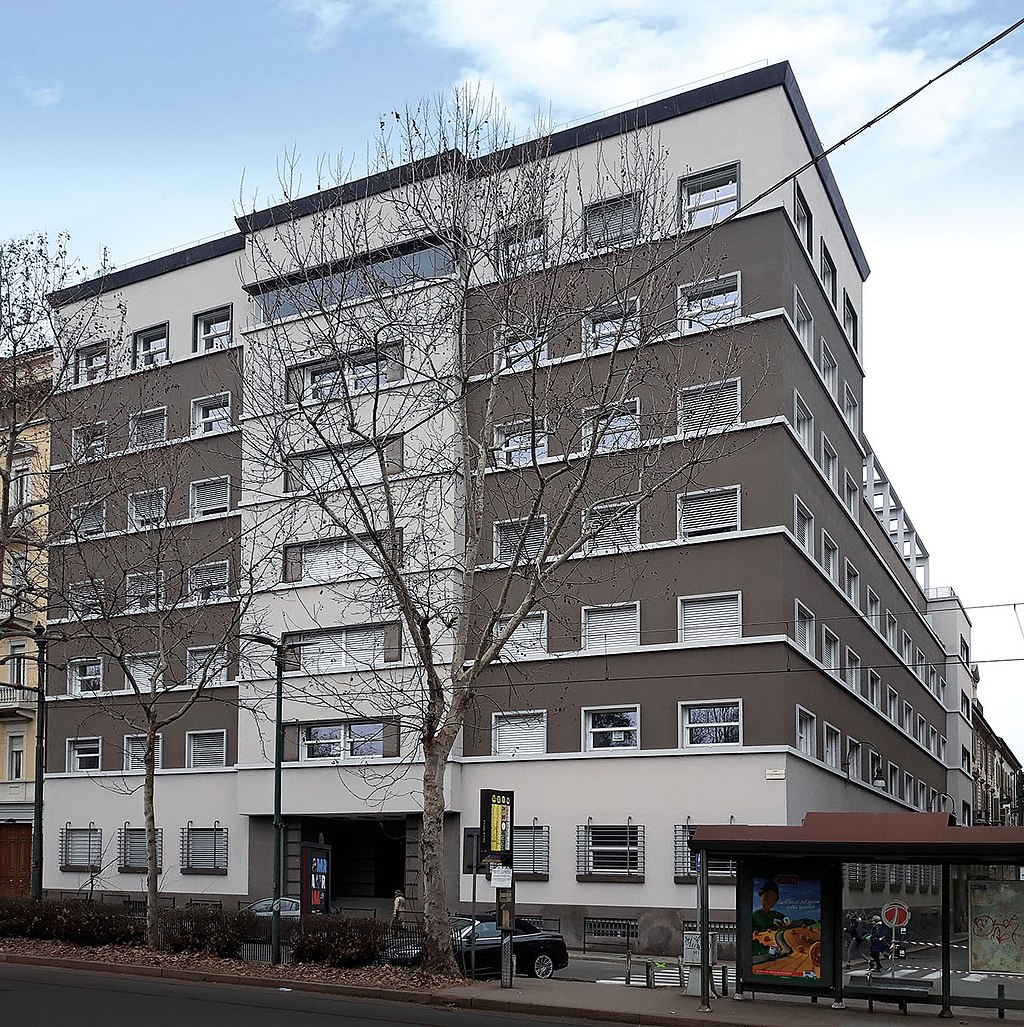
Palazzo Gualino is an office building in Turin, Italy, designed by architects Gino Levi-Montalcini and Giuseppe Pagano and built between 1928 and 1930 for entrepreneur Riccardo Gualino. An important example of early Italian rationalist architecture, the building marks the beginning of Levi-Montalcini’s career and reflects the collaborative vision of two architects who would become leading figures in Italy’s modernist movement.
The palazzo originally served as offices for Gualino’s business interests. Its rationalist design places it among the first significant buildings of this architectural movement in Italy, emerging during a period when Levi-Montalcini and Pagano were part of Turin’s vibrant circle of intellectuals, artists, and architects reshaping the city’s visual culture.
About the Architects
Gino Levi-Montalcini (1902–1974) graduated from the Royal School of Engineering in Turin in 1925 and began his architectural practice through collaboration with Giuseppe Pagano, a classmate six years his senior. Their partnership established both architects as early and important representatives of Italian rationalism. Levi-Montalcini also worked as a designer and maintained connections with painters, critics, and fellow architects in Turin’s intellectual circles.
Details
- Architects: Gino Levi-Montalcini and Giuseppe Pagano
- Year: 1928–1930
- Location: Turin, Italy
- Original purpose: Office building
- Client: Riccardo Gualino
- Movement: Italian rationalist architecture
- Later uses: Fiat offices, Turin municipal offices; converted to apartments (2019) and renamed Palazzo Novecento
Frequently asked questions
Who designed Palazzo Gualino?
Architects Gino Levi-Montalcini and Giuseppe Pagano designed the building. This collaboration marked the beginning of Levi-Montalcini’s career as an architect and established both as important representatives of the Italian rationalist movement.
What is the building’s architectural significance?
Palazzo Gualino is an important example of early Italian rationalist architecture, representing the modernist direction that both architects would champion throughout their careers.
What has happened to the building since its construction?
After serving Gualino as offices, it was used by Fiat and then by the city of Turin. A conversion to apartments began in 2012 but was abandoned in 2015; it was later completed in 2019 and renamed Palazzo Novecento.
On the heritage map: Palazzo Gualino