
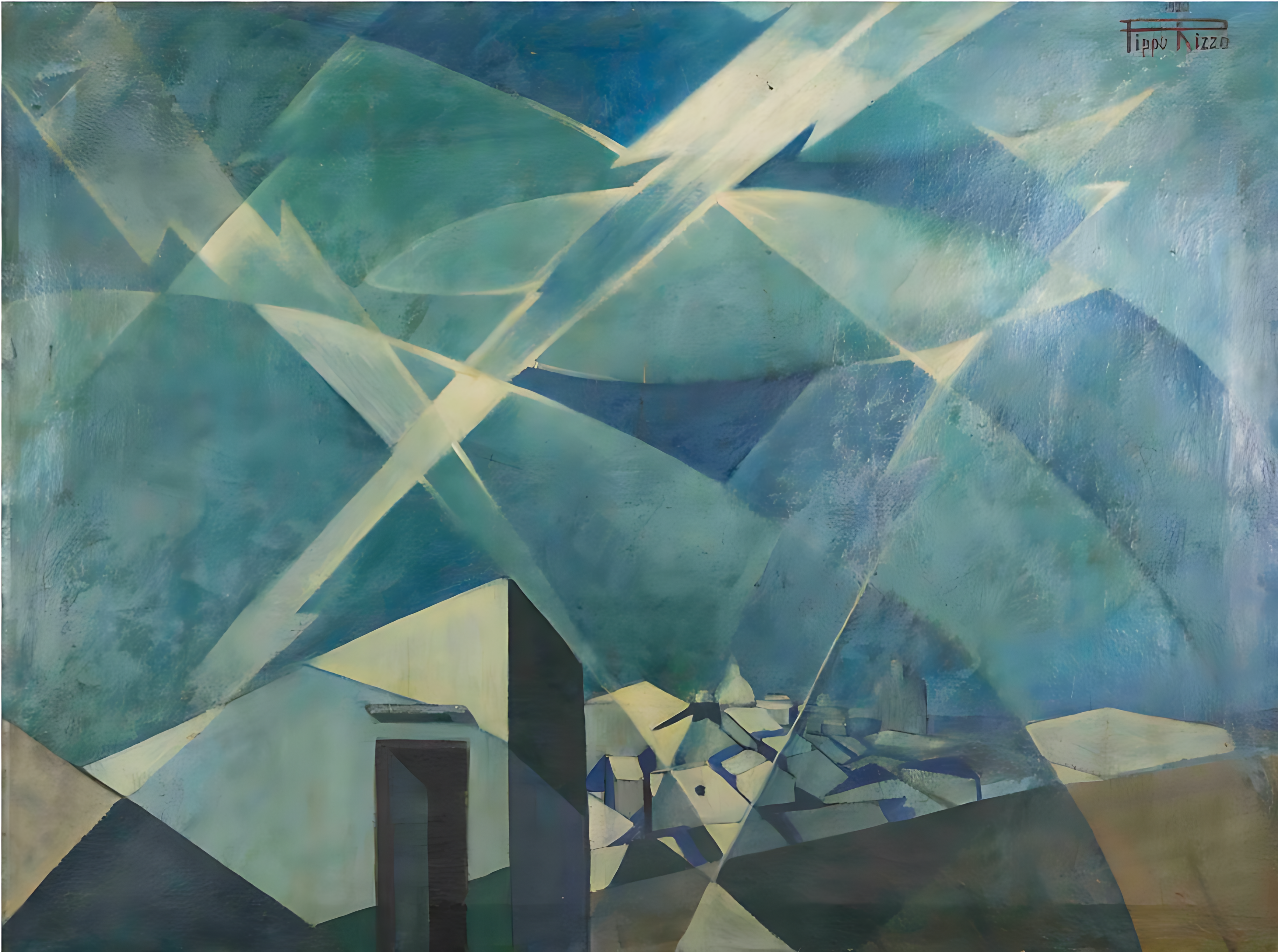
Lampi is a work by Pippo Rizzo, the Sicilian painter and sculptor, created in 1926. Giuseppe Rizzo, known as Pippo, was born in Corleone in the province of Palermo in 1897 and became the leading figure of Sicilian Futurism.
Rizzo studied at the Palermo Academy under Ettore De Maria Bergler before encountering Futurism during a journey to Rome. The movement profoundly impressed him, and he subsequently oriented his artistic practice around its principles. He founded a Futurist circle in his native town and maintained close contact with Filippo Tommaso Marinetti, the movement’s founder. In 1927, Rizzo organized the National Futurist Exhibition in Palermo. His work was first shown at the Venice Biennale in 1926, the same year Lampi was created, and again in 1928. Beginning in 1930, he moved away from Futurism toward Novecento Italiano themes, following the trajectory of Carlo Carrà.
About Pippo Rizzo
Pippo Rizzo (1897–1964) was a painter and sculptor who studied at the Palermo Academy and became the leading exponent of Futurism in Sicily. His early work engaged directly with the movement’s dynamic aesthetics before his practice shifted toward Novecento sensibilities in the 1930s.
Details
- Creator: Pippo Rizzo
- Year: 1926
- First exhibited: Venice Biennale, 1926
- Movement: Italian Futurism
- Region: Sicily
Frequently asked questions
Who was Pippo Rizzo?
Pippo Rizzo (1897–1964) was a Sicilian painter and sculptor born in Corleone. He was the leading figure of Sicilian Futurism and maintained close contact with Filippo Tommaso Marinetti. He organized the National Futurist Exhibition in Palermo in 1927.
When was Lampi created and where was it shown?
Lampi was created in 1926 and was first exhibited at the Venice Biennale that same year. The work reflects Rizzo’s early engagement with Futurism.
Did Rizzo’s artistic practice change over time?
Yes. From 1930 onward, Rizzo moved away from Futurism toward Novecento Italiano themes, following the artistic shift exemplified by Carlo Carrà, as evidenced by his participation in the 1931 Rome Quadriennale.
Sources
- S1 — Crispolti, Enrico. Storia e critica del Futurismo. Laterza, 1986. ISBN 978-88-420-2774-4.
- S2 — Lista, Giovanni. Futurism. Terrail, 2001. ISBN 978-2-87939-234-9.
Spotted an error? Write to editorial@culturalheritageonline.com and we correct it the same day.


