
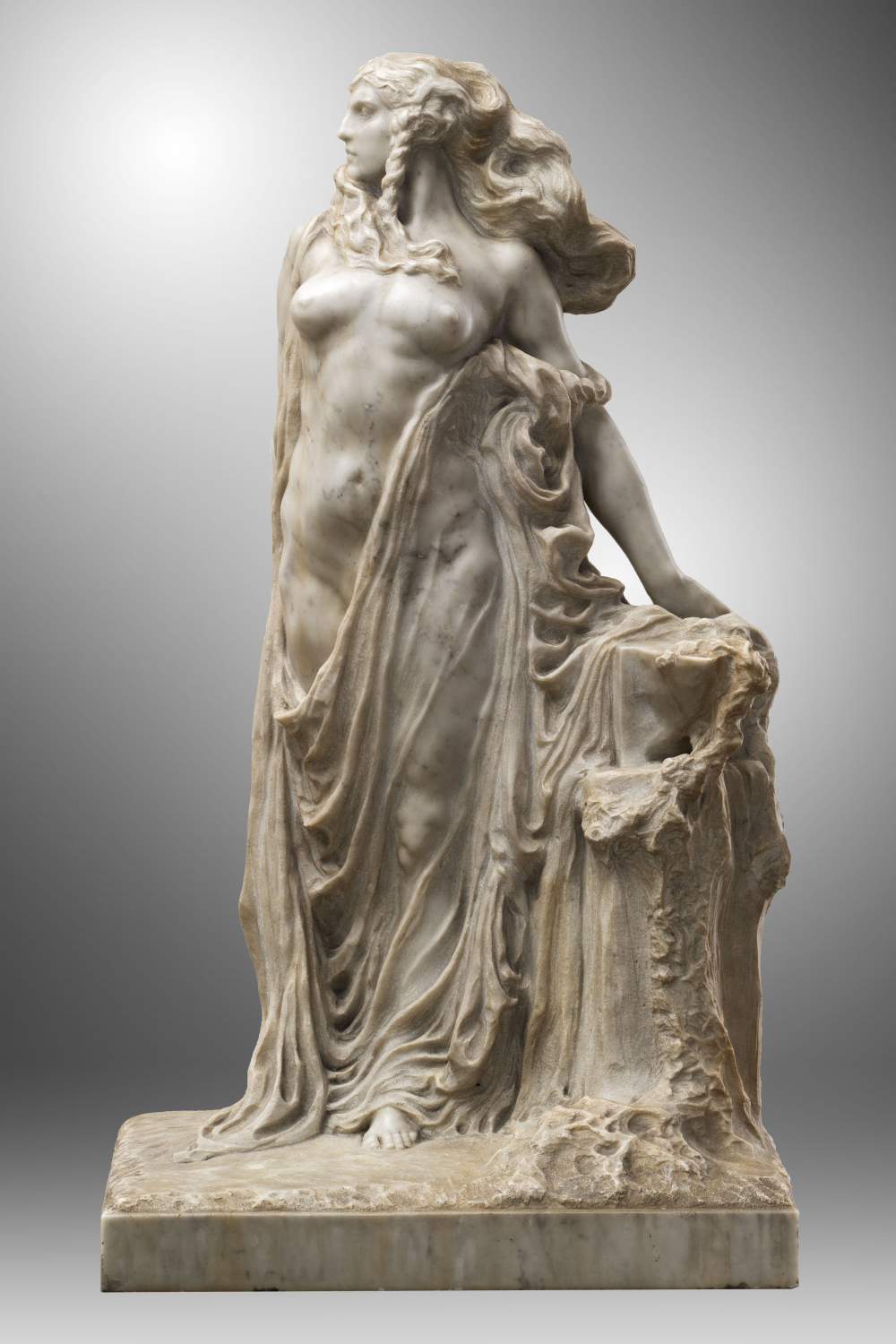
La volontà o l’Industria is a sculpture by Leonardo Bistolfi, created circa 1925. The work dates to the mature period of Bistolfi’s career, when he had established himself as a central figure in Italian Symbolism.
The title—meaning “Will” or “Industry”—suggests an engagement with allegorical representation, a characteristic approach in Symbolist sculpture. Bistolfi’s practice encompassed both monumental public works and intimate symbolic pieces that explored philosophical and human themes through figural form.
About Leonardo Bistolfi
Leonardo Bistolfi (1859–1933) was born in Casale Monferrato, Piedmont, and trained at the Brera Academy in Milan and the Accademia Albertina in Turin. His early works reflected the influence of Milanese Scapigliatura, before he developed into a major exponent of Italian Symbolism. Bistolfi became particularly renowned for his funeral monuments and allegorical sculptures that combined classical formal training with Symbolist philosophy.
Details
- Creator: Leonardo Bistolfi
- Date: circa 1925
- Movement: Italian Symbolism
- Type: Sculpture
Explore more: 8 heritage places in Casale Monferrato
Frequently asked questions
Who was Leonardo Bistolfi?
Leonardo Bistolfi (1859–1933) was an Italian sculptor and major exponent of Italian Symbolism. He studied at the Brera Academy in Milan and the Accademia Albertina in Turin, and became known for allegorical works and funeral monuments.
What does the title refer to?
The Italian title La volontà o l’Industria translates to “Will” or “Industry,” suggesting an allegorical treatment of human effort, determination, or industrial progress—themes characteristic of Symbolist artistic practice.
When was this sculpture created?
The work dates to circa 1925, during Bistolfi’s mature artistic period, when he had fully developed his distinctive approach to Symbolist sculpture.
Sources
- S1 — Bossaglia, Rossana, and Sandra Berresford. Leonardo Bistolfi: 1859–1933. Il Quadrante, 1981. ISBN 978-88-7804-032-8.
- S2 — Bairati, Eleonora, and Daniele Riva. Guide all'architettura in Italia: Il Liberty in Italia. Laterza, 1985. ISBN 978-88-420-2541-2.
Spotted an error? Write to editorial@culturalheritageonline.com and we correct it the same day.


