
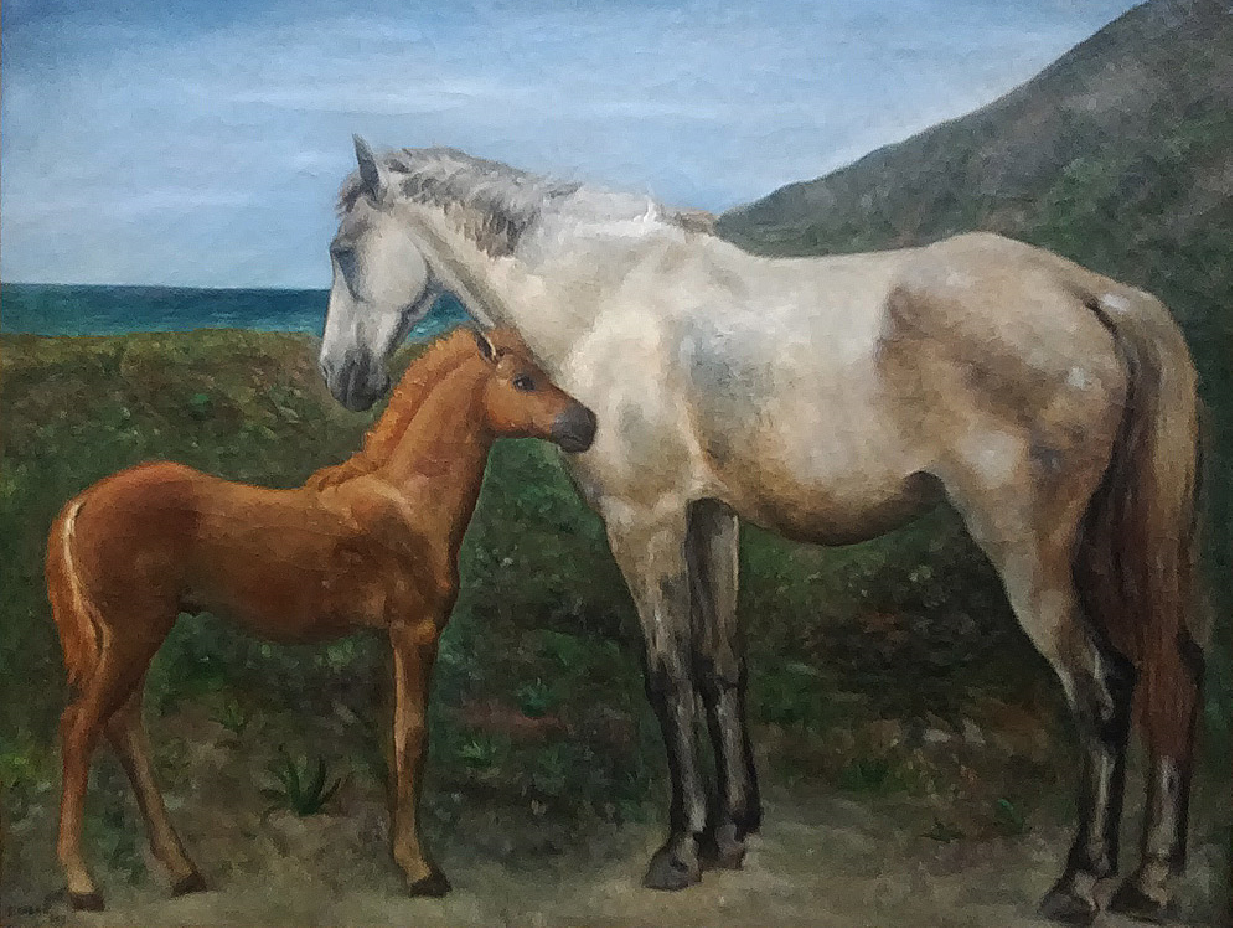
I cavalli is a painting by Carlo Carrà completed in 1927. Carrà (1881–1966) was an Italian painter and a leading figure of the Futurist movement that emerged in early-twentieth-century Italy.
By 1927, Carrà’s practice had evolved significantly from his Futurist phase, which had ended around the time of the First World War. Though his work continued to incorporate elements of Futurist vocabulary, his focus had shifted toward different pictorial concerns. The painting exemplifies the artist’s work during the interwar decades, a period of artistic reassessment across Europe. Carrà spent much of his career in Milan, where he taught for many years and remained a central figure in Italian modernism.
About Carlo Carrà
Carrà was born in Quargnento, Piedmont, in 1881. After training at the Brera Academy in Milan under Cesare Tallone, he became a signatory of the Manifesto of Futurist Painters in 1910 alongside Umberto Boccioni, Luigi Russolo, and Giacomo Balla. He remained active as a painter and writer on art until his death in 1966.
Details
- Artist: Carlo Carrà
- Year: 1927
- Movement: Post-Futurist interwar modernism
- Medium: Painting
Frequently asked questions
Who was Carlo Carrà?
Carlo Carrà (1881–1966) was an Italian painter and a founding figure of the Futurist movement. He signed the Manifesto of Futurist Painters in 1910 and taught for many years in Milan.
When did Carrà’s Futurist phase end?
Carrà’s Futurist phase ended around the time World War I began. By 1927, when he painted I cavalli, his work had moved beyond pure Futurism while retaining some of its conceptual vocabulary.
What was Carrà’s role in Italian art?
Carrà was a leading modernist painter and writer on art who shaped Italian painting through the early and mid-twentieth century, particularly through his role as an educator and theorist based in Milan.
Sources
- S1 — Pontiggia, Elena. Il Novecento Italiano. Abscondita, 2003. ISBN 978-88-8416-048-5.
- S2 — Bossaglia, Rossana. Il Novecento italiano. Electa, 1995. ISBN 978-88-435-6178-0.
Spotted an error? Write to editorial@culturalheritageonline.com and we correct it the same day.


