
The living heritage of the Garifuna people—an Afro-Indigenous community born from the mixing of free African and Caribbean Islander ancestry—flows through language, rhythmic movement, and song across Central America and beyond.
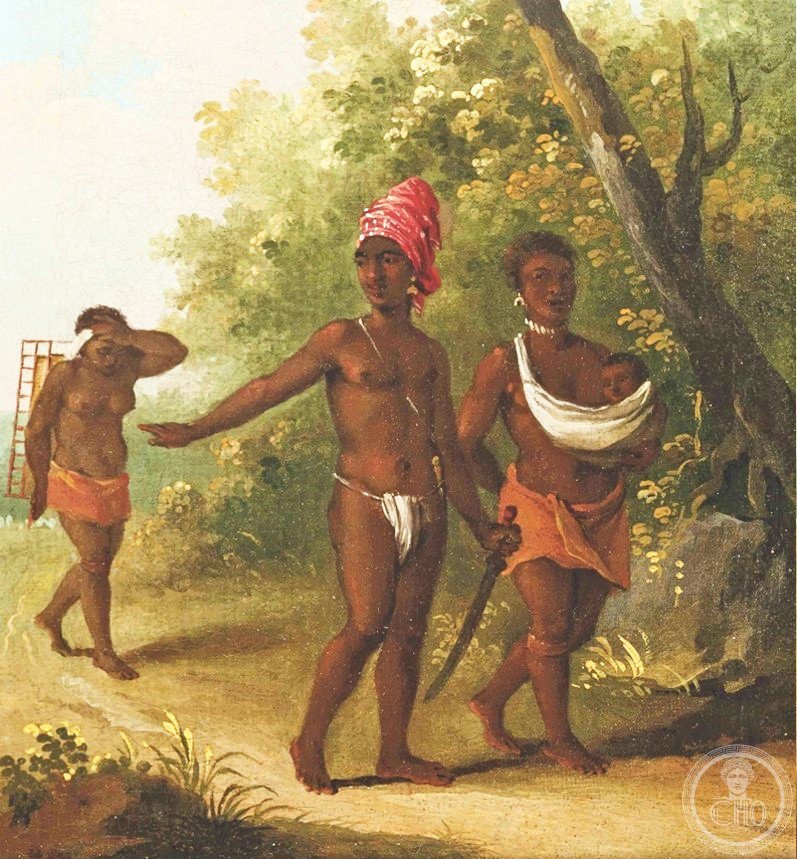
In UNESCO’s words
A population of mixed origin incorporating cultural elements of indigenous Caribbean and African groups, the Garifuna settled along the Atlantic coast of Central America after being forced to flee from the Caribbean island of Saint Vincent in the eighteenth century. Today, Garifuna communities mainly live in Honduras, Guatemala, Nicaragua and Belize. The Garifuna language belongs to the Arawakan group of languages and has survived centuries of discrimination and linguistic domination. It is rich in tales (úraga) originally recited during wakes or large gatherings.The melodies bring together African and Amerindian elements, and the texts are a veritable repository of the history and traditional knowledge of the Garifuna, such as cassava-growing, fishing, canoe-building and the construction of baked mud houses. There is also a considerable amount of satire in these songs, which are accompanied by various drums and dances, which the spectators may join in. These traditions are still very important to the life and survival of the Garifuna people. The elders are the ones who maintain many of the ceremonies, festivals and oral traditions. However, economic migration, discrimination and the complete absence of the Garifuna language from the school system are endangering its survival. Although the language is still widely spoken, it is now taught in only one village.
Official description, UNESCO Intangible Cultural Heritage List — Language, dance and music of the Garifuna
At a glance
Garifuna culture centres on a language belonging to the Arawakan group, accompanied by drums, dances, and songs that blend African and Amerindian elements. The tradition encompasses tales recited at wakes and gatherings, along with dances that spectators may join. These practices form a living repository of Garifuna history and knowledge, from cassava-growing to canoe-building and traditional construction methods.
Origins & history
The Garifuna emerged from mixed indigenous Caribbean and African origins. Forced to flee the Caribbean island of Saint Vincent in the eighteenth century, they settled along the Atlantic coast of Central America. Today, Garifuna communities mainly live in Honduras, Guatemala, Nicaragua, and Belize, where their language and traditions have endured despite centuries of discrimination and linguistic domination.
The practice
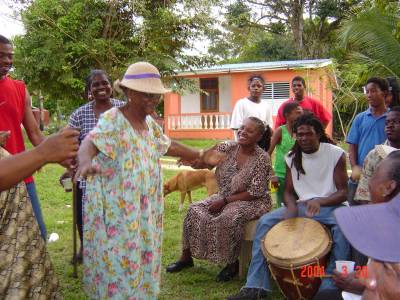
The Garifuna language, rich in traditional tales called úraga, is still widely spoken within communities. Songs and music are performed at wakes and large gatherings, accompanied by various drums and dances in which spectators participate. Elders maintain many ceremonies and festivals, passing knowledge through direct involvement in celebrations. The songs themselves encode practical knowledge such as fishing, cassava-growing, canoe-building, and house construction.
Cultural significance
These traditions remain vital to Garifuna survival and identity. Elders preserve ceremonies, festivals, and oral traditions that connect communities across generations and borders. However, economic migration, discrimination, and the absence of Garifuna language from schools threaten its continuity. The language is now taught in only one village, placing its future at risk despite being widely spoken.
Key facts
- Country: Belize, Guatemala, Honduras, Nicaragua
- Inscribed: 2008
- UNESCO list: Representative List of the Intangible Cultural Heritage of Humanity
- UNESCO reference: 00001
- UNESCO vocabulary: Dance; Instrumental music; Local languages; Oral tradition
- Map: not shown — UNESCO’s official description of this element names no locality, and a living tradition is practised across a community, not at one address.
Where to experience it
Garifuna communities throughout Honduras, Guatemala, Nicaragua and Belize maintain these traditions as essential parts of daily life, family gatherings and public festivals. Elders play a vital role in preserving ceremonies, oral narratives and the language itself, passing down knowledge of cassava-growing, fishing and traditional crafts through úraga performances. Visitors may encounter these living practices during community celebrations and festivals, where drumming, dancing and storytelling bring together African and Amerindian cultural elements—and spectators are often invited to participate in the dances themselves.
Sources & resources
- UNESCO — official element page: Language, dance and music of the Garifuna
- UNESCO — open data record: Intangible Heritage List, reference 00001
- UNESCO — official video: UNESCO film on this element — embedded on this page
- UNESCO — official photograph: Photograph of this element — National Garifuna Council
- Reference — Wikipedia (secondary): Garifuna — consulted as a secondary reference, not as confirmation
- Cultural Heritage Online: Our archive and city guides
Sources
- S1 — Gonzalez, Nancie L. Sojourners of the Caribbean: Ethnogenesis and Ethnohistory of the Garifuna. University of Illinois Press, 1988. ISBN 978-0-252-01453-6.
- S2 — Taylor, Douglas. The Black Carib of British Honduras. Wenner-Gren Foundation, 1951. ISBN 978-0-385-05527-7.
Spotted an error? Write to editorial@culturalheritageonline.com and we correct it the same day.