
A Levantine circle and line dance performed at celebrations, dabkeh brings communities together through synchronized footwork, rhythmic movement, and the authority of a lead dancer who guides the line with face and body.
In UNESCO’s words
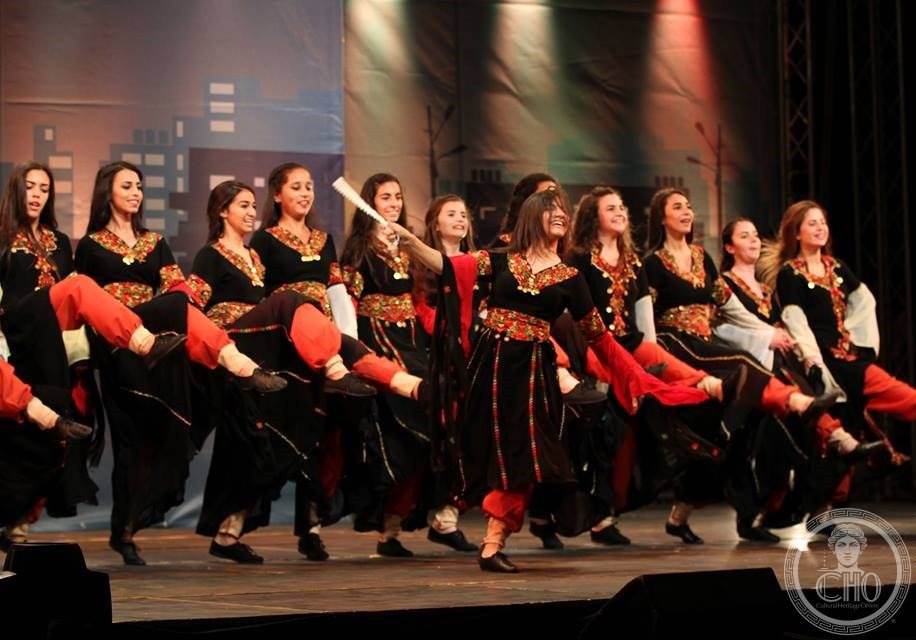
Dabkeh is a popular group dance in Palestine that is accompanied by traditional wind instruments and popular singing. A social activity, it is performed in several regions during festivals, celebrations and events such as weddings and graduations. Dabkeh is performed by eleven dancers, regardless of gender. The dancers stand in a straight line or semicircle, clasping hands and shoulders to indicate cohesion. The movements involve jumping and hitting the ground with their feet. The dance can be performed by professional groups or spontaneously in public squares and family yards. Most Palestinians know the dabkeh dance and practise it as a means of sharing their joy with family, friends and neighbours. The lyrics of the accompanying folk songs are in local dialects and express emotions related to the occasion, such as courage, strength, and love. Dabkeh and the accompanying arts and crafts are transmitted informally, through one-on-one learning and training. Youth learn by participating in social celebrations where dabkeh is performed and by imitating adults. The practice is also transmitted through summer vacation activities, in schools and universities, and through existing audiovisual media and publications. Dabkeh is a means of expressing cultural identity, celebrating family occasions and increasing social ties.
Official description, UNESCO Intangible Cultural Heritage List — Dabkeh, traditional dance in Palestine
At a glance
Dabkeh is a popular group dance performed across Palestine, accompanied by traditional wind instruments and folk singing. Eleven dancers stand in a straight line or semicircle, clasping hands and shoulders as they jump and strike the ground with their feet. Both men and women participate together, and the dance appears at weddings, graduations, festivals and celebrations, performed by professional groups or spontaneously in public squares and family yards.
Origins & history
Dabkeh’s roots run deep in Levantine communities across the eastern Mediterranean. The dance is thought to emerge from collective agricultural and social traditions, though its exact origins remain debated among folklorists. It has evolved across generations, adapting to regional preferences while maintaining its core identity as a communal celebration.
The practice
Eleven dancers of any gender stand together in a line or semicircle, holding hands and shoulders to show unity. The movements centre on jumping and hitting the ground with their feet, performed to accompany traditional wind instruments and popular singing. Folk songs in local dialects express emotions tied to the occasion—courage, strength, and love. The dance can be performed by trained groups or arise spontaneously among friends and neighbours.
Cultural significance
Dabkeh allows Palestinians to express cultural identity and celebrate family occasions while strengthening social ties. Most Palestinians know and practise the dance as a way to share joy with family, friends and neighbours. Knowledge is passed on informally through participation in social celebrations, imitation of adults, and through schools, universities, summer programs, audiovisual media and publications. The tradition remains a vital means of connection across generations.
Key facts
- Country: State of Palestine
- Inscribed: 2023
- UNESCO list: Representative List of the Intangible Cultural Heritage of Humanity
- UNESCO reference: 01998
- UNESCO vocabulary: Dance; Social participation; Vocal music
- Map: not shown — UNESCO’s official description of this element names no locality, and a living tradition is practised across a community, not at one address.
- Related World Heritage site: Birthplace of Jesus: Church of the Nativity and the Pilgrimage Route, Bethlehem, Hebron/Al-Khalil Old Town (a different UNESCO designation, not the place of the tradition)
Where to experience it
Dabkeh flourishes throughout Palestinian communities, where it remains central to celebrations and social gatherings. Visitors may encounter the dance at weddings, graduations, festivals, and community events, performed in public squares and family yards by both professional groups and spontaneous participants. The tradition is also transmitted through schools, universities, and summer vacation programs, making it accessible during educational activities. To experience dabkeh authentically, check locally for upcoming celebrations and cultural events where the eleven-dancer formations, accompanied by traditional wind instruments and folk songs, bring communities together.
Sources & resources
- UNESCO — official element page: Dabkeh, traditional dance in Palestine
- UNESCO — open data record: Intangible Heritage List, reference 01998
- UNESCO — official video: UNESCO film on this element — embedded on this page
- UNESCO — official photograph: El-Funoun Palestinian popular dance troupe founded in 1979, training generations on the traditional debakeh, making teams of young girls and men and participating in many performances on national events, locally and internationally. The performance represent the traditional dance in Palestine and show the traditional dress. — Al-Funoun Center, State of Palestine, 2022
- Reference — Wikipedia (secondary): Dabke — consulted as a secondary reference, not as confirmation
- Cultural Heritage Online: Our archive and city guides
