
The traditional ensemble music of Indonesia’s Javanese, Sundanese, and Balinese peoples, gamelan is a predominantly percussive art form central to ceremonies, theater, and national identity across the archipelago.
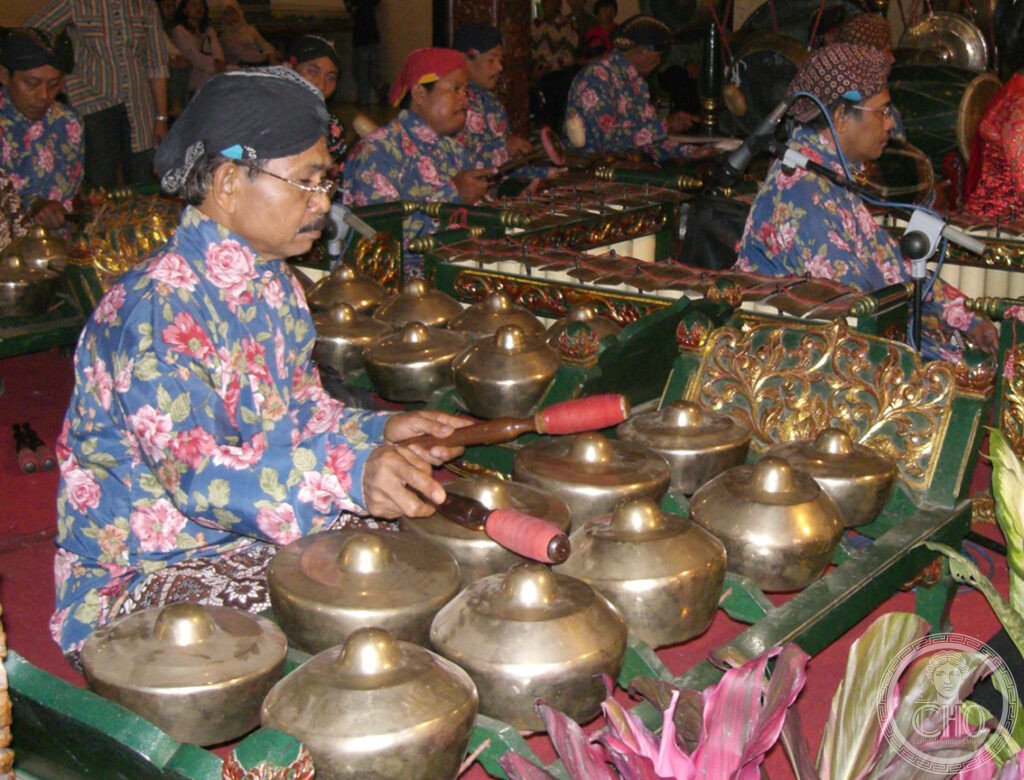
In UNESCO’s words
Gamelan refers to the traditional Indonesian percussion orchestra and to the set of musical instruments used. Consisting primarily of ornate, percussive instruments made of hand-forged metal, the ensemble typically includes xylophones, gongs, gong-chimes, drums, cymbals, string instruments and bamboo flutes. Gamelan music follows precise rules and techniques regarding tuning, layout, rhythmic and metric patterns and performance. For instance, the melody is played simultaneously by a group of instruments and multiple instruments may play interlocking parts to form a single rhythm. The music is played by men, women and children of all ages, and is typically performed in religious rituals, ceremonies, traditional theatre, festivals and concerts. It is also used for music therapy and is viewed as a means of expression and as a way of establishing a connection between humans and the universe. Gamelan is an integral part of Indonesian identity dating back centuries; archaeological evidence of the practice has been found in the relief sculptures of the eighth-century Borobudur temple. Practitioners include vocalists and instrumentalists, as well as instrument-makers and tuners. An important source of national pride, Gamelan continues to be passed down from generation to generation through informal and formal education, including in school and after-school activities.
Official description, UNESCO Intangible Cultural Heritage List — Gamelan
At a glance
Gamelan is Indonesia's traditional percussion orchestra, built from hand-forged metal instruments arranged to produce music of precise coordination and layered sound. The ensemble typically includes xylophones, gongs, gong-chimes, drums, cymbals, string instruments and bamboo flutes. Players of all ages—men, women and children—perform together, often with instruments playing interlocking parts that form a single rhythm while the melody sounds across the group simultaneously.
Origins & history
Archaeological evidence found in the relief sculptures of the eighth-century Borobudur temple shows gamelan's practice stretches back centuries into Indonesia's past. The tradition follows exact rules and techniques for tuning, layout, rhythmic and metric patterns, refined and maintained through generations. Today it continues to be taught informally and through formal education in schools and after-school activities, passing the knowledge forward to new musicians.
The practice
A gamelan ensemble brings together vocalists, instrumentalists, instrument-makers and tuners. Performers follow precise rules of tuning and techniques for rhythm and meter. The music typically accompanies religious rituals, ceremonies, traditional theatre, festivals and concerts. Multiple instruments play interlocking parts to create unified rhythms, requiring players to know the repertoire deeply and coordinate through collective attention and mutual familiarity with the music.
Cultural significance
Gamelan is integral to Indonesian identity and an important source of national pride. Beyond its role in sacred rituals and traditional ceremonies, the music serves as a means of expression and connection between humans and the universe. It is also used for music therapy, strengthening community bonds and supporting wellbeing across generations who learn and perform together.
Key facts
- Country: Indonesia
- Inscribed: 2021
- UNESCO list: Representative List of the Intangible Cultural Heritage of Humanity
- UNESCO reference: 01607
- UNESCO vocabulary: Music education; Percussion instruments
- Map: not shown — UNESCO’s official description of this element names no locality, and a living tradition is practised across a community, not at one address.
Where to experience it
Gamelan thrives throughout Indonesia, performed at temples, community celebrations, and cultural institutions across Bali, West Java, East Java, and Sumatra. The tradition is transmitted through informal and formal education, including school and after-school activities, ensuring that vocalists, instrumentalists, and instrument-makers of all ages continue the practice. Visitors can encounter gamelan at religious rituals, ceremonies, traditional theatre performances, and festivals, where the interlocking rhythms of hand-forged metal instruments, xylophones, gongs, drums, and bamboo flutes connect performers and audiences alike to Indonesia's centuries-old cultural heritage.
Sources & resources
- UNESCO — official element page: Gamelan
- UNESCO — open data record: Intangible Heritage List, reference 01607
- UNESCO — official video: UNESCO film on this element — embedded on this page
- UNESCO — official photograph: Students are playing gamelan — Dian Dianawati — The Center for Policy Research of Education and Culture, Indonesia, 2018
- Reference — Wikipedia (secondary): Gamelan — consulted as a secondary reference, not as confirmation
- Cultural Heritage Online: Our archive and city guides

Sources
- S1 — Tenzer, Michael. Balinese Music. Periplus Editions, 1998. ISBN 978-0-9628704-3-9.
- S2 — Sorrell, Neil. A Guide to the Gamelan. Faber & Faber, 1990. ISBN 978-0-571-14400-6.
Spotted an error? Write to editorial@culturalheritageonline.com and we correct it the same day.