
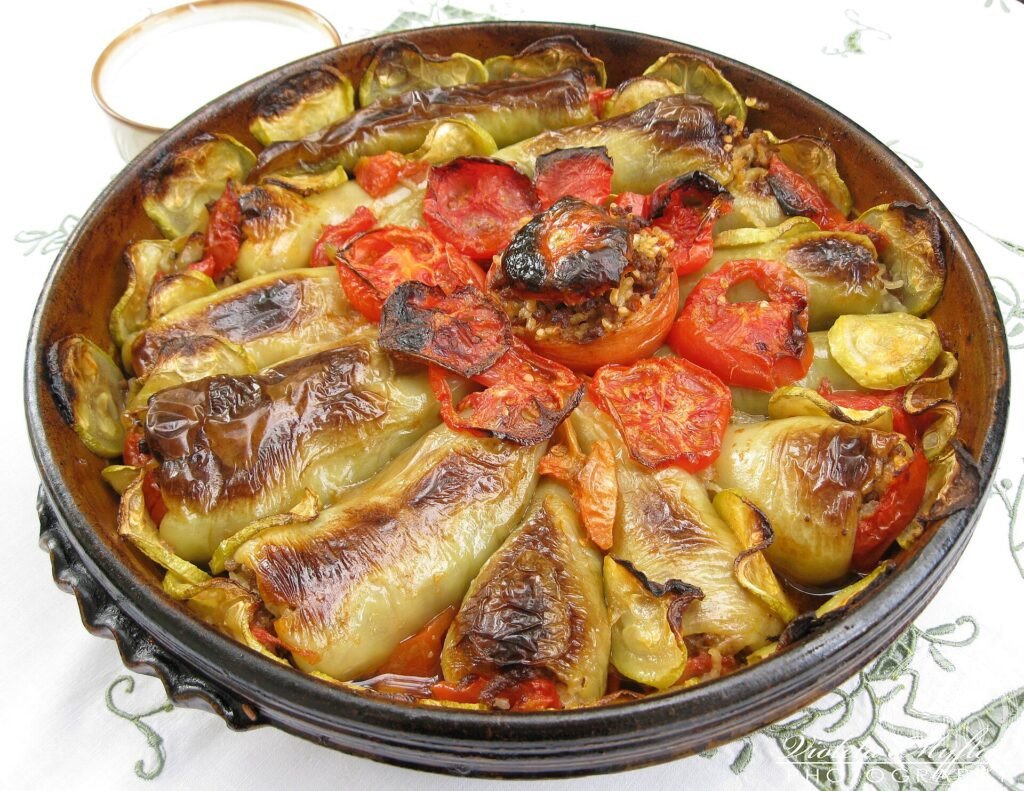
Dolma is a family of stuffed dishes—vegetables, leaves, or fruits hollowed out or wrapped and filled with rice, minced meat, herbs, and spices. Across the former Ottoman lands, it remains a staple of daily life and celebration, a practice that binds communities through shared preparation and table.
In UNESCO’s words
Dolma tradition is a set of knowledge and skills relating to the preparation of the traditional meal ‘dolma’, which takes the form of small fillings (containing meat, onion, rice, peas and spices) wrapped in fresh or pre-cooked leaves or stuffed in fruits and vegetables. The name of the tradition originates from the shortened Turkic word ‘doldurma’, meaning ‘stuffed’. The meal is shared within families or local communities, with different methods, techniques and ingredients used to prepare the traditional meal by different communities. The tradition is present throughout the Republic of Azerbaijan, and is perceived as a central culinary practice in all regions. It is enjoyed on special occasions and gatherings and expresses solidarity, respect and hospitality. It is transmitted from generation to generation and transcends ethnic and religious boundaries within the country. Bearers consist of traditional cooking practitioners, mostly women, and the wider community of people that use dolma for various cultural and social purposes. The tradition is transmitted through parent-child relationships, while formal transmission mainly occurs in vocational and apprenticeship schools. The element enjoys great visibility within Azerbaijani society, and its viability is ensured by the communities through numerous awareness-raising activities and events such as festivals, vocational schools that teach the tradition and the preparation of publications on the subject.
Official description, UNESCO Intangible Cultural Heritage List — Dolma making and sharing tradition, a marker of cultural identity
At a glance
Dolma is a traditional meal made by wrapping small fillings in fresh or pre-cooked leaves or stuffing them into fruits and vegetables. The fillings typically contain meat, onion, rice, peas and spices. The name comes from the Turkic word 'doldurma', meaning 'stuffed'. Different communities across the country prepare dolma using their own methods, techniques and ingredients, making it a flexible tradition that takes many forms.
Origins & history
Dolma is transmitted from generation to generation within families and communities, crossing ethnic and religious boundaries throughout the country. The tradition has been passed down through parent-child relationships over time, ensuring its continuity as a central culinary practice across all regions.
The practice
The tradition is practiced mainly by women cooking practitioners and wider community members who prepare dolma for cultural and social purposes. Knowledge is transmitted through family teaching and also through formal channels including vocational and apprenticeship schools. The practice involves selecting and preparing leaves or vegetables, creating fillings with the specified ingredients, and assembling the dolma for cooking and serving.
Cultural significance
Dolma expresses solidarity, respect and hospitality within Azerbaijani communities. It is enjoyed at special occasions and gatherings, serving as a marker of cultural identity and belonging. The tradition remains viable through numerous awareness-raising activities, festivals, vocational schools and publications that keep the practice alive and visible in society.
Key facts
- Country: Azerbaijan
- Inscribed: 2017
- UNESCO list: Representative List of the Intangible Cultural Heritage of Humanity
- UNESCO reference: 01188
- UNESCO vocabulary: Food preparation
- Map: not shown — UNESCO’s official description of this element names no locality, and a living tradition is practised across a community, not at one address.
Where to experience it
Dolma is woven into daily life throughout the Republic of Azerbaijan, prepared in homes, served in restaurants, and featured at family gatherings and celebrations. The tradition persists across all regions of the country, where recipes and techniques pass between generations. Visitors can encounter dolma at festivals and cultural events, while vocational and apprenticeship schools offer formal opportunities to learn the tradition from skilled practitioners, mostly women who carry this culinary knowledge forward.
Sources & resources
- UNESCO — official element page: Dolma making and sharing tradition, a marker of cultural identity
- UNESCO — open data record: Intangible Heritage List, reference 01188
- UNESCO — official video: UNESCO film on this element — embedded on this page
- UNESCO — official photograph: Photograph of this element — Asif Abramov — Ministry of Culture and Tourism of Azerbaijan, 2016
- Reference — Wikipedia (secondary): Dolma — consulted as a secondary reference, not as confirmation
- Cultural Heritage Online: Our archive and city guides
