
An ancient aqueous art where pigment floats on water or viscous size, then transfers to paper in patterns as unique as fingerprints. Each pull yields an unrepeatable monotype.
In UNESCO’s words
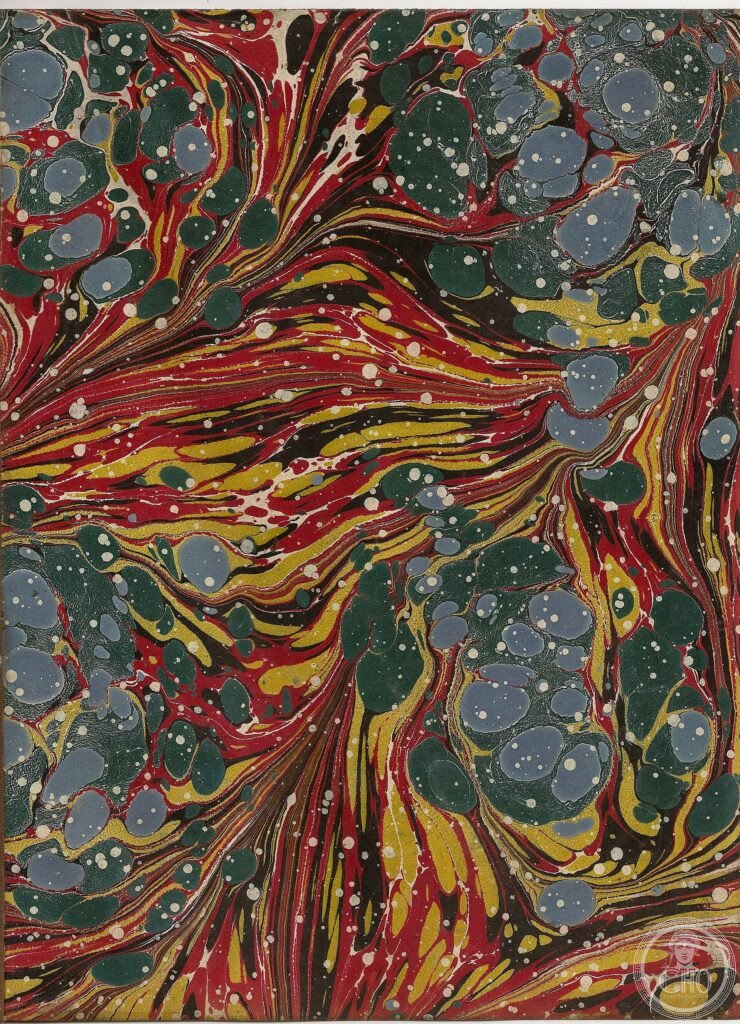
Ebru is the traditional Turkish art of creating colourful patterns by sprinkling and brushing colour pigments onto a pan of oily water and then transferring the patterns to paper. Known as marbling, the designs and effects include flowers, foliage, ornamentation, latticework, mosques and moons, and are used for decoration in the traditional art of bookbinding. The practitioner uses natural methods to extract colours from natural pigments, which are then mixed with a few drops of ox-gall, a kind of natural acid, before sprinkling and brushing the colours onto a preparation of condensed liquid, where they float and form swirling patterns. Ebru artists, apprentices and practitioners consider their art to be an integral part of their traditional culture, identity and lifestyle. Their knowledge and skills, as well as the philosophy behind this art, are transmitted orally and through informal practical training within master-apprentice relationships. Achieving basic skills in Ebru takes at least two years. The tradition is practised without barrier of age, gender or ethnicity, and plays a significant role in the empowerment of women and the improvement of community relationships. The collective art of Ebru encourages dialogue through friendly conversation, reinforces social ties and strengthens relations between individuals and communities.
Official description, UNESCO Intangible Cultural Heritage List — Ebru, Turkish art of marbling
At a glance
Ebru is the traditional Turkish art of creating colourful patterns on paper by floating pigments on oily water, then transferring the designs to paper. Known as marbling, the resulting patterns include flowers, foliage, latticework, mosques and moons. These decorated papers are used in the traditional art of bookbinding. The artist sprinkles and brushes colour pigments—made from natural sources mixed with ox-gall, a natural acid—onto a pan of prepared liquid, where they float and form swirling patterns before being transferred to paper in a single irreplaceable impression.
Origins & history
Paper marbling has been applied across several centuries and cultures to decorate surfaces ranging from book covers and endpapers to calligraphy grounds and stationery. The Turkish tradition, known as ebru, represents a refined distillation of this technique within the Ottoman and contemporary Turkish artistic heritage.
The practice
Practitioners float natural pigments mixed with ox-gall onto a preparation of condensed liquid. The colours are sprinkled and brushed onto this surface, where they form swirling patterns. The practitioner then transfers the pattern to paper by laying it on the floating design and lifting it away. Achieving basic skills takes at least two years, with knowledge and skills transmitted orally and through informal practical training in master-apprentice relationships. The tradition is practised without barrier of age, gender or ethnicity.
Cultural significance
Ebru artists, apprentices and practitioners consider their art integral to their traditional culture, identity and lifestyle. The practice plays a significant role in empowering women and improving community relationships. The collective art of ebru encourages dialogue through friendly conversation, reinforces social ties and strengthens relations between individuals and communities. However, the description does not identify specific threats to the tradition's continuation.
Key facts
- Country: Türkiye
- Inscribed: 2014
- UNESCO list: Representative List of the Intangible Cultural Heritage of Humanity
- UNESCO reference: 00644
- UNESCO vocabulary: Painting; Paper; Technical skills
- Map: not shown — UNESCO’s official description of this element names no locality, and a living tradition is practised across a community, not at one address.
Where to experience it
Ebru thrives among communities of practitioners and apprentices who maintain the tradition through master-apprentice relationships and informal practical training. Visitors can observe this living art in working studios and workshops, where artisans create colourful patterns on water before transferring them to paper. These spaces offer opportunities to watch demonstrations, learn the technique, and witness how knowledge passes from master to apprentice—a transmission that remains central to the culture and identity of those who practise ebru.
Sources & resources
- UNESCO — official element page: Ebru, Turkish art of marbling
- UNESCO — open data record: Intangible Heritage List, reference 00644
- UNESCO — official photograph: Photograph of this element — Mahmut Davulcu — Ministry of Culture and Tourism, 2011
- Reference — Wikipedia (secondary): Paper marbling — consulted as a secondary reference, not as confirmation
- Cultural Heritage Online: Our archive and city guides

Sources
- S1 — Derman, M. Uğur. Letters in Gold: Ottoman Calligraphy from the Sakıp Sabancı Collection. Metropolitan Museum of Art, 1998. ISBN 978-0-87099-873-7.
- S2 — Barutçugil, Hikmet. The Art of Ebru: Turkish Marbling. Ebristan Publications, 2007. ISBN 978-975-92435-0-0.
Spotted an error? Write to editorial@culturalheritageonline.com and we correct it the same day.