
The dombra is a long-necked plucked lute at the heart of Kazakh musical tradition, and the principal national instrument of Kazakhstan. Its repertoire of traditional pieces—known as kuy—forms one of the two most widely recognised symbols of Kazakh musical culture.
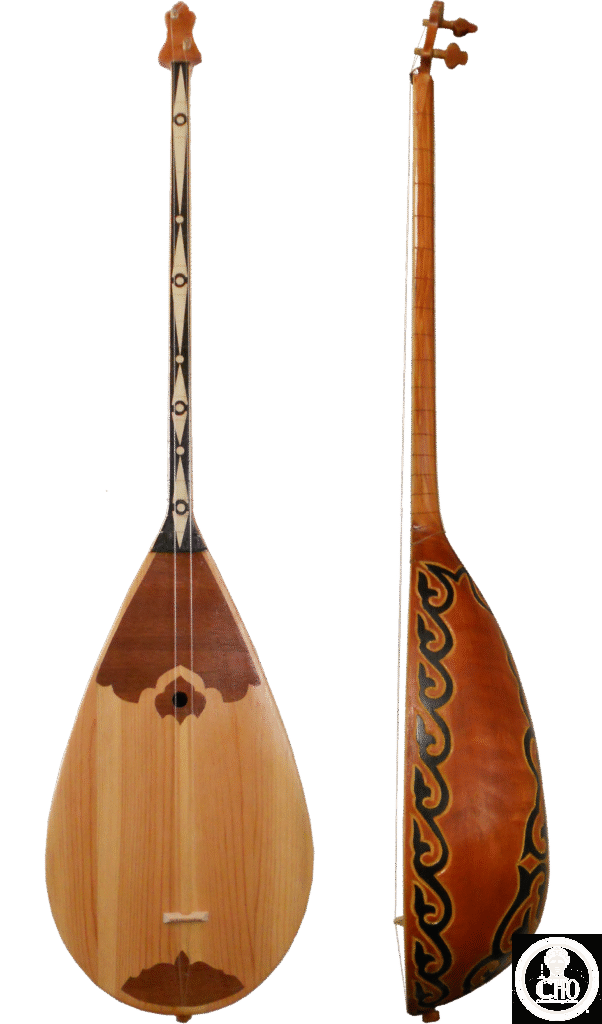
In UNESCO’s words
The art of DombraKuy refers to a short solo composition performed on a traditional pear-shaped, long-necked, two-stringed, plucked musical instrument known as a dombra. The music aims to connect people to their historic roots and traditions through classical and improvised pieces that engage the audience at a spiritual and emotional level. Public engagement in the performance serves as one of the most important means of social communication between people and contributes to the transfer of knowledge and skills related to Kazakh culture. The music is usually accompanied by narrated stories and legends. It is traditionally performed at social gatherings, holidays and festive celebrations, amid a rich variety of food and musical entertainment. It serves as a vital social and cultural experience, strengthening people’s identity and promoting solidarity and mutual understanding in society. Aspiring and talented musicians are apprenticed to masters from the moment a child demonstrates an interest in the philosophy and virtuosity of traditional music and performance. Amateur musicians then apprentice themselves to other more experienced and talented performers from their region to increase their skills and repertoire.
Official description, UNESCO Intangible Cultural Heritage List — Kazakh traditional art of Dombra Kuy
At a glance
DombraKuy is a solo musical performance on the dombra, a traditional pear-shaped, long-necked, two-stringed plucked instrument. The music connects people to their historic roots and traditions through classical and improvised pieces that engage audiences at spiritual and emotional levels. Performances are usually accompanied by narrated stories and legends, and often take place at social gatherings, holidays, and festive celebrations alongside food and other entertainment.
Origins & history
The dombra is deeply rooted in the musical heritage of Central Asia and the Caucasus. Its name appears in Persian as dambūra, while Kazakh speakers know it as dombyra. The instrument has long been played across multiple cultures and ethnic groups, from Kazakhs and Uzbeks to Tajiks, Hazaras, Nogais, Bashkirs and Tatars, suggesting centuries of shared musical exchange across the region.
The practice
DombraKuy is performed by aspiring musicians who apprentice with masters once they show interest in traditional music and philosophy. Amateur musicians then apprentice themselves to experienced performers from their region to develop their skills and repertoire. The practice serves as a vital means of social communication, transferring knowledge and skills related to Kazakh culture through direct master-to-student instruction.
Cultural significance
DombraKuy strengthens people's identity and promotes solidarity and mutual understanding in society. Public engagement in performance is one of the most important means of social communication between people. The tradition serves as a vital social and cultural experience for communities, binding people to their heritage and to each other through shared musical knowledge and participation.
Key facts
- Country: Kazakhstan
- Inscribed: 2014
- UNESCO list: Representative List of the Intangible Cultural Heritage of Humanity
- UNESCO reference: 00996
- UNESCO vocabulary: Instrumental music; Plucked string instruments
- Map: not shown — UNESCO’s official description of this element names no locality, and a living tradition is practised across a community, not at one address.
Where to experience it
DombraKuy lives throughout Kazakhstan's communities, where masters pass their knowledge to apprentices through direct mentorship. The tradition thrives at social gatherings, holidays, and festive celebrations, where performers connect audiences to Kazakh cultural roots through classical and improvised compositions. Visitors may encounter live performances at cultural venues and festivals, where the dombra's spiritual and emotional power strengthens people's identity and mutual understanding. The music typically accompanies narrated stories and legends, transforming each performance into a vital social and cultural experience that reinforces bonds within communities.
Sources & resources
- UNESCO — official element page: Kazakh traditional art of Dombra Kuy
- UNESCO — open data record: Intangible Heritage List, reference 00996
- UNESCO — official photograph: Photograph of this element — S. Suleimenova-Bazargalieva, 2012
- Reference — Wikipedia (secondary): Dombra — consulted as a secondary reference, not as confirmation
- Cultural Heritage Online: Our archive and city guides

Sources
- S1 — Sultanova, Razia, and Megan Rancier, eds. Turkic Soundscapes: From Shamanic Voices to Hip-Hop. Routledge, 2018. ISBN 978-1-4724-7667-8.
- S2 — Slobin, Mark, ed. Retuning Culture: Musical Changes in Central Asia and the Caucasus. Duke University Press, 1996. ISBN 978-0-8223-1847-7.
Spotted an error? Write to editorial@culturalheritageonline.com and we correct it the same day.