
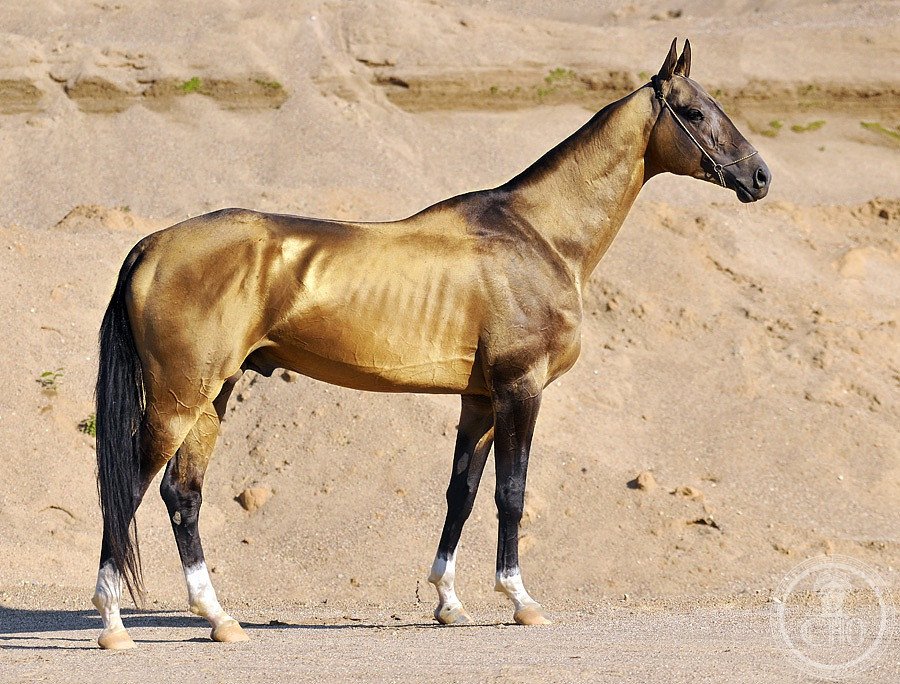
For centuries, Turkmen breeders have cultivated the Akhal-Teke, a legendary horse breed prized for speed, endurance, and an ethereal golden sheen. Known as the “Golden Horses,” these animals embody a living tradition of selective breeding, oral pedigree recording, and horsemanship passed down through generations.
In UNESCO’s words
The Akhal-Teke is a breed of horses created in the territory of modern Turkmenistan. Characterized by their large size, intelligence, agility, strength and shiny coat, Akhal-Teke are hardy and can manage without food and water for long stretches of time. There are many customs and traditions around Akhal-Teke horses, including naming rituals, horse beauty contests, and racing and riding games. They are also closely linked to wedding ceremonies, during which the groom takes the bride away on a decorated Akhal-Teke horse. The jewellery and lace used to decorate the horses are primarily created and passed on by women. Knowledge and skills related to the breeding and care of Akhal-Teke horses are transmitted through formal and informal learning, during which young horse breeders learn how to establish contact, groom and feed the horses. They then master the knowledge and skills of riding and training the horses. Higher educational institutions and equestrian training centres also contribute to the formal transfer of Akhal-Teke knowledge and skills. The horses are an important part of the historical and cultural identity of Turkmenistan, and the related traditions contribute to social cohesion and to increased awareness of the importance of living heritage in general.
Official description, UNESCO Intangible Cultural Heritage List — Art of Akhal-Teke horse breeding and traditions of horses' decoration
At a glance
The Akhal-Teke is a horse breed developed in Turkmenistan, known for its large size, intelligence, agility, strength, and shiny coat. These horses are hardy and can survive long periods without food and water. Beyond their physical qualities, they are central to Turkmen cultural life, featuring in naming rituals, beauty contests, racing, riding games, and wedding ceremonies, where the groom rides a decorated Akhal-Teke to take the bride away.
Origins & history
The Akhal-Teke breed emerged in the territory of modern Turkmenistan through generations of selective breeding by Turkmen tribes. Knowledge and skills related to breeding and care have been transmitted through formal and informal learning methods, with young breeders learning to establish contact, groom, feed, ride, and train the horses. Higher educational institutions and equestrian training centres have also contributed to formal knowledge transfer over time.
The practice
Breeding and horsemanship involve both practical and ceremonial dimensions. Women primarily create and pass on the jewellery and lace used to decorate the horses. Young breeders learn through direct instruction how to establish contact with horses, groom and feed them, then progress to mastering riding and training skills. This hands-on education occurs alongside formal study at dedicated institutions and training centres.
Cultural significance
The Akhal-Teke represents an important part of Turkmenistan's historical and cultural identity. The traditions surrounding these horses—from breeding to decoration to ceremonial use—contribute to social cohesion and strengthen awareness of living heritage's importance. The knowledge systems that sustain the breed embody cultural values passed between generations and bind communities together.
Key facts
- Country: Turkmenistan
- Inscribed: 2023
- UNESCO list: Representative List of the Intangible Cultural Heritage of Humanity
- UNESCO reference: 01978
- Map: not shown — UNESCO’s official description of this element names no locality, and a living tradition is practised across a community, not at one address.
- Related World Heritage site: Kunya-Urgench (a different UNESCO designation, not the place of the tradition)
Where to experience it
Akhal-Teke traditions thrive throughout Turkmenistan, where breeders maintain living knowledge of pedigrees, breeding practices, and the cultural values surrounding these celebrated horses. Visitors can witness naming rituals, horse beauty contests, and racing games that form the heart of this heritage. Wedding ceremonies showcase the decorated horses central to Turkmen culture, while equestrian training centres and higher educational institutions offer formal opportunities to learn about breeding and care. The jewellery and decorative lace created by women for the horses reflect skills passed down through generations within communities that practise this tradition.
Sources & resources
- UNESCO — official element page: Art of Akhal-Teke horse breeding and traditions of horses' decoration
- UNESCO — open data record: Intangible Heritage List, reference 01978
- UNESCO — official video: UNESCO film on this element — embedded on this page
- UNESCO — official photograph: Riding woman of Galkynysh group — Hasan Magadov, Turkmenistan, 2022
- Reference — Wikipedia (secondary): Akhal-Teke — consulted as a secondary reference, not as confirmation
- Cultural Heritage Online: Our archive and city guides

Sources
- S1 — Edwards, Elwyn Hartley. The Encyclopedia of the Horse. Dorling Kindersley, 1994. ISBN 978-1-56458-614-8.
- S2 — Blackwell, William. The Akhal-Teke Horse. British Horse Society, 1998. / Dani, Ahmad Hasan, and V. M. Masson, eds. History of Civilizations of Central Asia. UNESCO Publishing, 1992. ISBN 978-92-3-102719-2.
Spotted an error? Write to editorial@culturalheritageonline.com and we correct it the same day.