
An ancient Gaelic field sport played with ash wood sticks and a small leather ball, hurling is among the fastest and most dynamic team games in the world, rooted in Irish identity for over a thousand years.
In UNESCO’s words
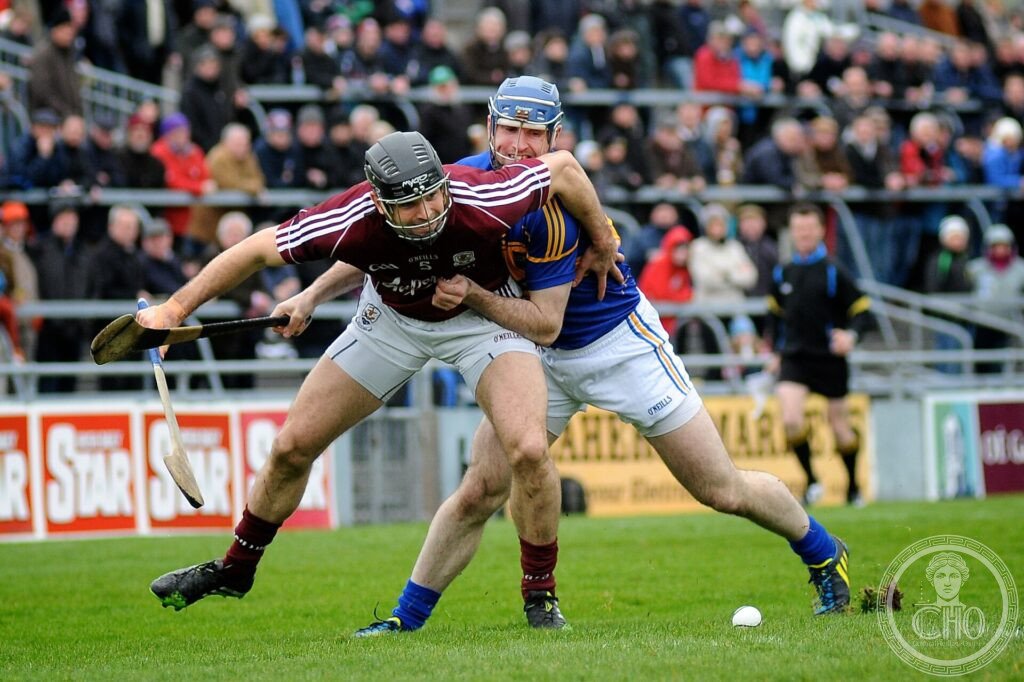
Hurling, or Camogie (a form of Hurling played by women), is a field game played by two teams which dates back 2,000 years and features strongly in Irish mythology, most notably in the epic saga of Cú Chulainn. It is played throughout the island of Ireland, particularly in more fertile agricultural areas, as well as overseas. Traditionally, the number of players in the game was unregulated and games were played across open fields. Nowadays, there are fifteen players on adult teams and the game is played on a clearly marked pitch. Players use a wooden stick (hurley), similar to a hockey stick but with a flat end, and a small ball (sliotar), with the aim being to use the hurley to strike the sliotar and hit it between the opposing team’s goalposts. The primary bearers and practitioners are the players, known as ‘hurlers’ (male) and ‘camógs’ (female). Hurling is considered as an intrinsic part of Irish culture and plays a central role in promoting health and wellbeing, inclusiveness and team spirit. Today, the skills are promoted and transmitted through coaching and games in schools and clubs. As the custodians of Hurling, the Gaelic Athletic Association and the Camogie Association, both volunteer-led organizations, play a central role in transmitting the skills and values associated with Hurling.
Official description, UNESCO Intangible Cultural Heritage List — Hurling
At a glance
Hurling is a field game played by two teams using a wooden stick called a hurley to strike a small ball, the sliotar, between opposing goalposts. When played by women, it is called camogie. The game is played throughout the island of Ireland, particularly in more fertile agricultural areas, and also overseas. Adult teams consist of fifteen players on a clearly marked pitch.
Origins & history
Hurling dates back 2,000 years and features strongly in Irish mythology, most notably in the epic saga of Cú Chulainn. Traditionally, the number of players was unregulated and games were played across open fields. Today, the Gaelic Athletic Association and the Camogie Association, both volunteer-led organizations, serve as custodians and play a central role in transmitting the skills and values associated with the game.
The practice
Players use a hurley—a wooden stick with a flat end, similar to a hockey stick—to strike the sliotar and hit it between the goalposts. Modern adult teams field fifteen players on a clearly marked pitch. The primary practitioners are male 'hurlers' and female 'camógs'. Skills are promoted and transmitted through coaching and games in schools and clubs.
Cultural significance
Hurling is considered an intrinsic part of Irish culture and plays a central role in promoting health and wellbeing, inclusiveness and team spirit. The game transmits cultural values across generations and remains deeply embedded in Irish identity and community life.
Key facts
- Country: Ireland
- Inscribed: 2018
- UNESCO list: Representative List of the Intangible Cultural Heritage of Humanity
- UNESCO reference: 01263
- UNESCO vocabulary: Games; Sports competitions
- Map: not shown — UNESCO’s official description of this element names no locality, and a living tradition is practised across a community, not at one address.
Where to experience it
Hurling and Camogie are played throughout the island of Ireland, particularly in more fertile agricultural areas, and the tradition extends overseas as well. The All-Ireland Senior Hurling Championship represents the sport's premier competition, drawing large crowds and televised audiences. Local clubs and county teams across Ireland offer opportunities to watch both club and championship-level hurling year-round, while schools and clubs transmit the skills and values of the game to new generations through coaching and organised play.
Sources & resources
- UNESCO — official element page: Hurling
- UNESCO — open data record: Intangible Heritage List, reference 01263
- UNESCO — official video: UNESCO film on this element — embedded on this page
- UNESCO — official photograph: Photograph of this element — Sam Barnes, Sportsfile
- Reference — Wikipedia (secondary): Hurling — consulted as a secondary reference, not as confirmation
- Cultural Heritage Online: Our archive and city guides

Sources
- S1 — de Búrca, Marcus. The GAA: A History. Gill & Macmillan, 1999. ISBN 978-0-7171-3109-9.
- S2 — Ó Maolfabhail, Art. Camán: 2,000 Years of Hurling in Ireland. Dundalgan Press, 1973. ISBN 978-0-85221-080-2.
Spotted an error? Write to editorial@culturalheritageonline.com and we correct it the same day.