For centuries, Turkmen weavers have crafted handmade carpets that serve as both functional textiles and carriers of tribal identity, using traditional techniques passed down through generations.
In UNESCO’s words
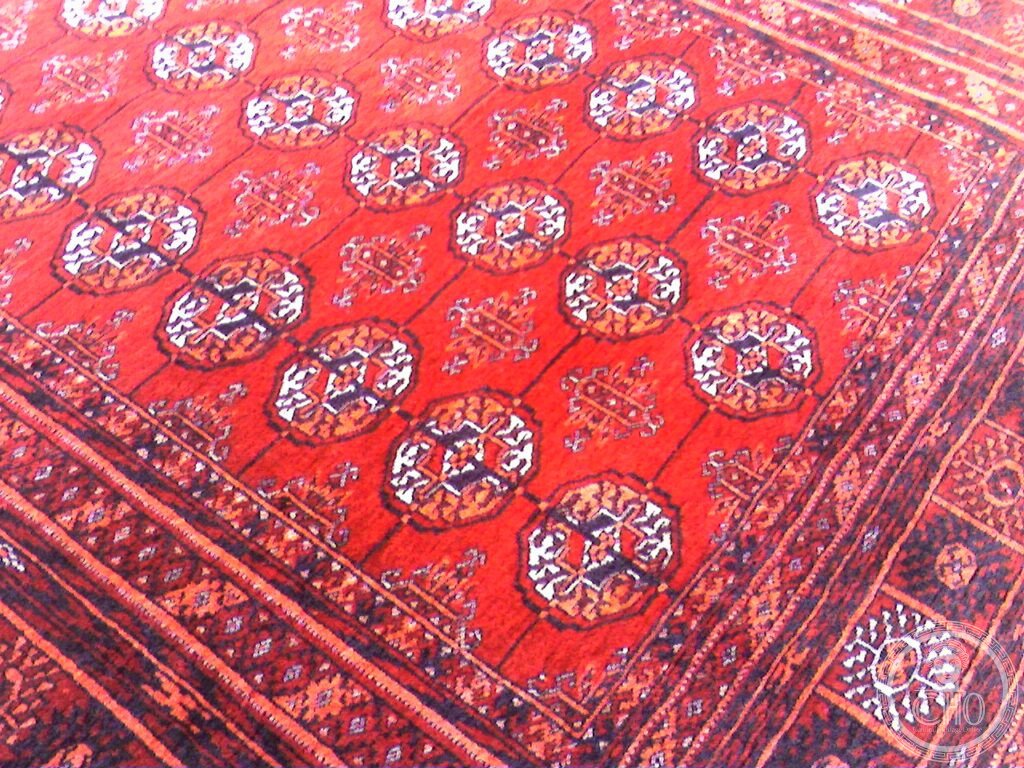
Traditional turkmen carpet making art in Turkmenistan relates to the production of traditional Turkmen carpets and carpet products: hand-woven woolen textile products decorated with ornamental art. The carpets feature a dense texture ornamented with characteristic coloured patterns pertaining to one of the five main Turkmen tribes. They are characterized by patterns forming clear linear geometric arrangements. The context in which the carpet weaver lives – including local flora, fauna and the environment – is reflected in the combination of threads, pictures and colours creating the carpet designs. Turkmen carpets are created on horizontal or vertical looms, mainly using different coloured wool threads. The carpets serve both as floor coverings and wall decorations, and special carpets are also woven for the birth of a child, wedding ceremonies, and prayer and mourning rituals. The carpet-making art is broadly integrated into the social and cultural life of Turkmen people and is considered as a sign of cultural identity and unity. Related skills and knowledge are transmitted within the family, and the viability of the tradition has been continuously ensured by community members. The annual celebration of Carpet Day plays a key role in the transmission of the element by gathering various communities, strengthening social ties and cooperation.
Official description, UNESCO Intangible Cultural Heritage List — Traditional turkmen carpet making art in Turkmenistan
At a glance
Turkmen carpet making is the hand-weaving of woolen textiles decorated with ornamental patterns characteristic of the five main Turkmen tribes. The carpets feature dense textures with geometric designs in coloured threads. Weavers create these pieces on horizontal or vertical looms, using different coloured wool. The finished carpets serve as floor coverings and wall decorations, and special versions are woven for births, weddings, prayer, and mourning rituals.
Origins & history
The tradition developed within Turkmen tribal communities, with patterns and designs reflecting the local environment—flora, fauna, and landscape. Knowledge and skills are transmitted within families, ensuring the practice has remained viable across generations. Each of the five main tribes developed characteristic coloured patterns and designs that distinguish their work.
The practice
Weavers work on horizontal or vertical looms, hand-tying thousands of knots using different coloured wool threads. The process requires technical skill and deep knowledge of traditional geometric patterns. The combination of threads, pictures, and colours in each design reflects the weaver's local context and environment. Carpets range from small pieces to large floor coverings, with complexity and size affecting production time.
Cultural significance
Carpet making is deeply integrated into Turkmen social and cultural life, serving as a sign of cultural identity and unity. The tradition strengthens family bonds and community cooperation through its transmission from one generation to the next. The annual celebration of Carpet Day gathers various communities, reinforcing social ties and ensuring the practice continues to thrive.
Key facts
- Country: Turkmenistan
- Inscribed: 2019
- UNESCO list: Representative List of the Intangible Cultural Heritage of Humanity
- UNESCO reference: 01486
- UNESCO vocabulary: Carpets; Craft workers; Weaving
- Map: not shown — UNESCO’s official description of this element names no locality, and a living tradition is practised across a community, not at one address.
Where to experience it
Traditional Turkmen carpet weaving survives through the communities and families who practise it across Turkmenistan. Visitors can encounter weavers at work in family workshops and local bazaars, where both the creative process and finished carpets—distinguished by their tribal patterns and dense geometric designs—are on display. The annual Carpet Day celebration brings together various communities to showcase the craft, strengthen social bonds, and ensure knowledge passes to new generations. The carpets themselves, woven on horizontal or vertical looms with coloured wool threads, serve as functional textiles and cultural markers within Turkmen society.
Sources & resources
- UNESCO — official element page: Traditional turkmen carpet making art in Turkmenistan
- UNESCO — open data record: Intangible Heritage List, reference 01486
- UNESCO — official video: UNESCO film on this element — embedded on this page
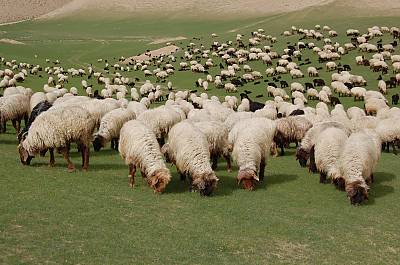
- UNESCO — official photograph: Saryja sheeps herd on the pasture — K. Poladov — Secretariat of the Turkmenistan National Commission for UNESCO, 2018
- Reference — Wikipedia (secondary): Turkmen rug — consulted as a secondary reference, not as confirmation
- Cultural Heritage Online: Our archive and city guides