
A syncretic music and dance born in the highlands of eastern Cuba in the late 19th century, blending Spanish vocal traditions and guitars with African rhythms, percussion, and call-and-response. Son became Cuba’s most influential genre and shaped Latin music worldwide.
In UNESCO’s words
Son is a traditional music and dance practice that blends singing, instruments, rhythm and movement. It is performed in pairs or groups and combines improvisation with structured patterns. Son includes lyrics drawn from daily life, which are passed down orally, and brings together African and European musical influences. The dance is closely connected to the music, with the bass and instruments guiding the dancers steps. The practice involves various roles such as singers, dancers, composers, musicians and instrument makers. The singer leads the performance, often improvising verses and guiding the dance, while the ‘tres’ (a string instrument) plays a key musical role. Son can be danced freely or with set choreography, often with the man leading the rhythm and steps. Son is passed down through both formal and informal education. Families, community gatherings and bands play an important part in transmitting the skills and traditions to younger generations. Elders share their knowledge, and schools and cultural centres include Son in their programmes to keep the practice alive. Son strengthens community bonds and contributes to the oral transmission of popular culture. It also promotes creativity, communication and a shared sense of heritage, belonging and identity both within and beyond the community.
Official description, UNESCO Intangible Cultural Heritage List — The practice of Cuban Son
At a glance
Son is a traditional music and dance practice that combines singing, instruments, rhythm and movement. Performed in pairs or groups, it weaves together African and European musical influences through both improvisation and structured patterns. The practice draws on everyday life for its lyrics, which pass orally from one generation to the next. The tres, a string instrument, plays a key musical role alongside the dance, with the bass and instruments guiding dancers' steps.
Origins & history
Son emerged in the highlands of eastern Cuba during the late 19th century as a fusion of Spanish and African musical vocabularies. Around 1909 the practice reached Havana; the first recordings followed in 1917, sparking rapid expansion across the island.
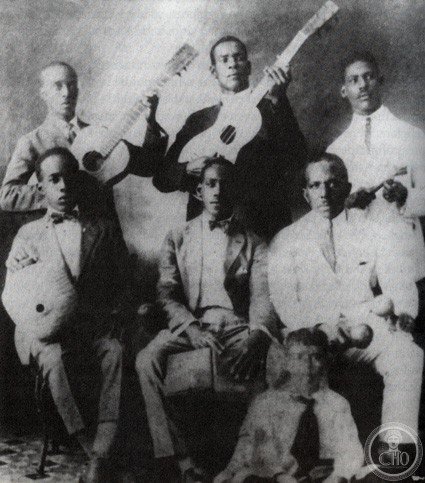
Through the early 20th century, son ensembles evolved in size and instrumentation. Three- to five-member groups gave way to sextetos (sextets) by the 1920s; the addition of trumpet created septetos in the 1930s; and by the 1940s, larger conjuntos with congas and piano became standard.
From the 1930s onward, Cuban bands touring Europe and North America introduced son to global audiences, inspiring ballroom adaptations and hybrid genres from West African rumba to New York salsa. In Cuba itself, son continues to evolve into forms such as songo and timba.
The practice
Son involves multiple roles: singers lead performances and often improvise verses to guide the dance, while musicians play instruments including the tres. Dancers may perform freely or follow set choreography, with the man often leading rhythm and steps. The practice is transmitted through families, community gatherings and bands, as well as through formal education in schools and cultural centres. Elders share knowledge directly with younger generations, keeping the skills and traditions alive.
Cultural significance
Son strengthens community bonds and carries forward popular culture through oral transmission. It fosters creativity, communication and a shared sense of heritage, belonging and identity both within the community and beyond. The practice serves as a living expression of cultural identity and continuity across generations.
Key facts
- Country: Cuba
- Inscribed: 2025
- UNESCO list: Representative List of the Intangible Cultural Heritage of Humanity
- UNESCO reference: 02299
- UNESCO vocabulary: Dance; Instrumental music; Vocal music
- Map: not shown — UNESCO’s official description of this element names no locality, and a living tradition is practised across a community, not at one address.
Where to experience it
Son lives in the communities that practise it across generations, transmitted through families, local gatherings, and bands. Visitors can encounter the tradition at cultural centres and schools that include Son in their programmes, as well as at community performances where singers, dancers, and musicians bring together the African and European influences that define this practice. The tradition remains vital in everyday settings where elders share knowledge with younger generations, keeping the music and dance alive through both formal education and informal learning within families and neighborhoods.
Sources & resources
- UNESCO — official element page: The practice of Cuban Son
- UNESCO — open data record: Intangible Heritage List, reference 02299
- UNESCO — official photograph: Presentation of the group Los Richards in the Céspedes Park of the city of Bayamo — Archive of the National Council of Cultural Heritage — Consejo Nacional de Patrimonio, 2023, Cuba
- Reference — Wikipedia (secondary): Son cubano — consulted as a secondary reference, not as confirmation
- Cultural Heritage Online: Our archive and city guides

Sources
- S1 — Sublette, Ned. Cuba and Its Music: From the First Drums to the Mambo. Chicago Review Press, 2004. ISBN 978-1-55652-516-2.
- S2 — Acosta, Leonardo. Cubano Be, Cubano Bop: One Hundred Years of Jazz in Cuba. Smithsonian Books, 2003. ISBN 978-1-58834-147-1.
Spotted an error? Write to editorial@culturalheritageonline.com and we correct it the same day.