
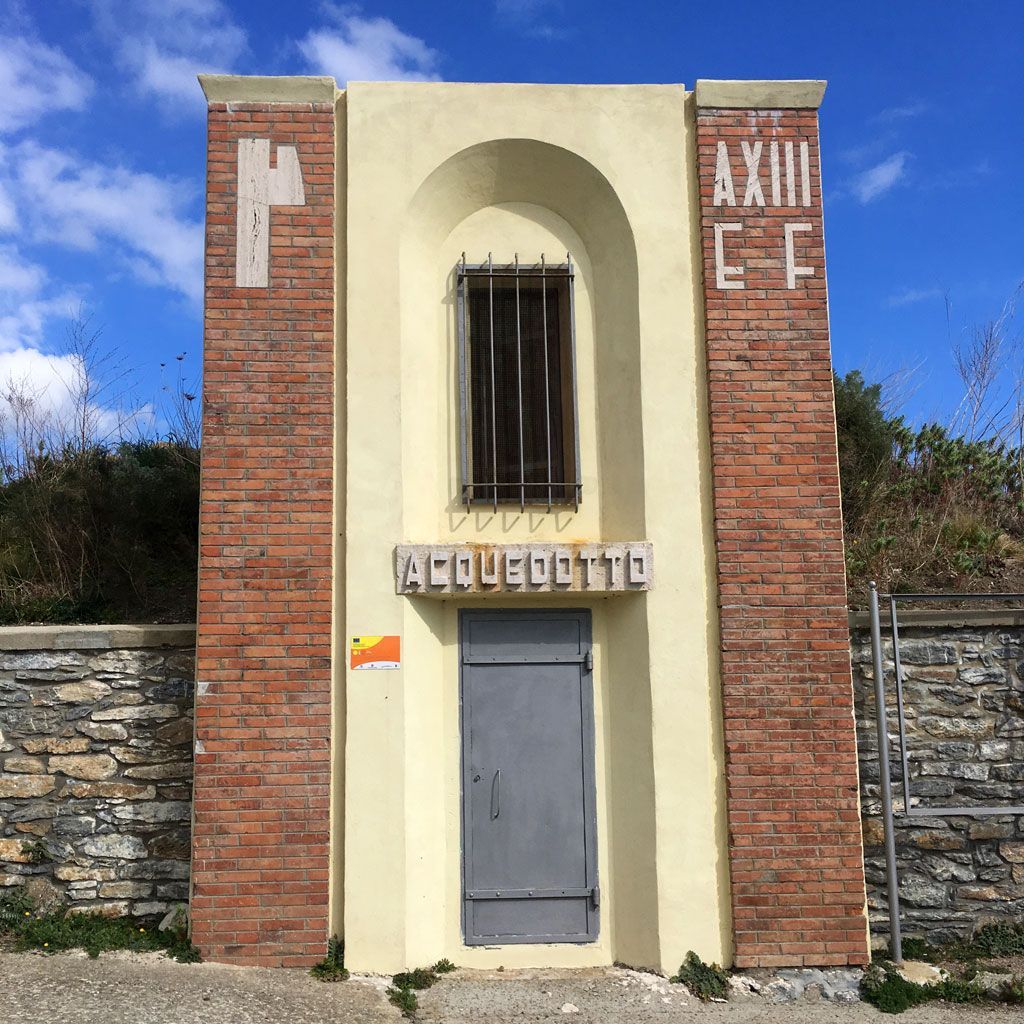
The Acquedotto of San Nicolò Gerrei is a modernist water infrastructure structure built in 1935 in the upper reaches of San Nicolò Gerrei, in the province of Cagliari, Sardinia. Positioned strategically near multiple natural water sources in the elevated terrain of the village, the aqueduct represents the interwar period’s approach to engineered public utilities.
The structure exemplifies early-twentieth-century modernist design principles applied to essential infrastructure. Its architectural vocabulary reflects the geometric clarity and functional aesthetic that characterized the rationalist movement across Italy during the 1930s. The aqueduct served a vital role in the community’s water supply, channeling resources from the springs located in the upper district for distribution throughout the settlement.
Details
- Built: 1935
- Location: Upper district of San Nicolò Gerrei, Cagliari, Sardinia
- Type: Water aqueduct infrastructure
- Architectural approach: Modernist design with utilitarian focus
- Setting: Near natural water sources in elevated terrain
Explore more: 32 heritage places in Cagliari
Frequently asked questions
What purpose did the aqueduct serve?
The structure was designed to channel water from natural springs located in the upper part of San Nicolò Gerrei and distribute it to the community below.
Where exactly is the aqueduct located?
The aqueduct stands in the elevated upper district of San Nicolò Gerrei, in the province of Cagliari, Sardinia, near multiple natural water sources.
What architectural style does it represent?
The aqueduct embodies modernist design principles characteristic of 1930s infrastructure, emphasizing geometric form and functional efficiency.
Sources
- S1 — Ciucci, Giorgio. Gli architetti e il fascismo: architettura e città 1922-1944. Einaudi, 2002. ISBN 978-88-06-16310-5.
- S2 — Nicoloso, Paolo. Mussolini architetto: Propaganda e paesaggio urbano nell'Italia fascista. Einaudi, 2008. ISBN 978-88-06-19086-6.
Spotted an error? Write to editorial@culturalheritageonline.com and we correct it the same day.


