
Musée du Verre — Site verrier de Meisenthal
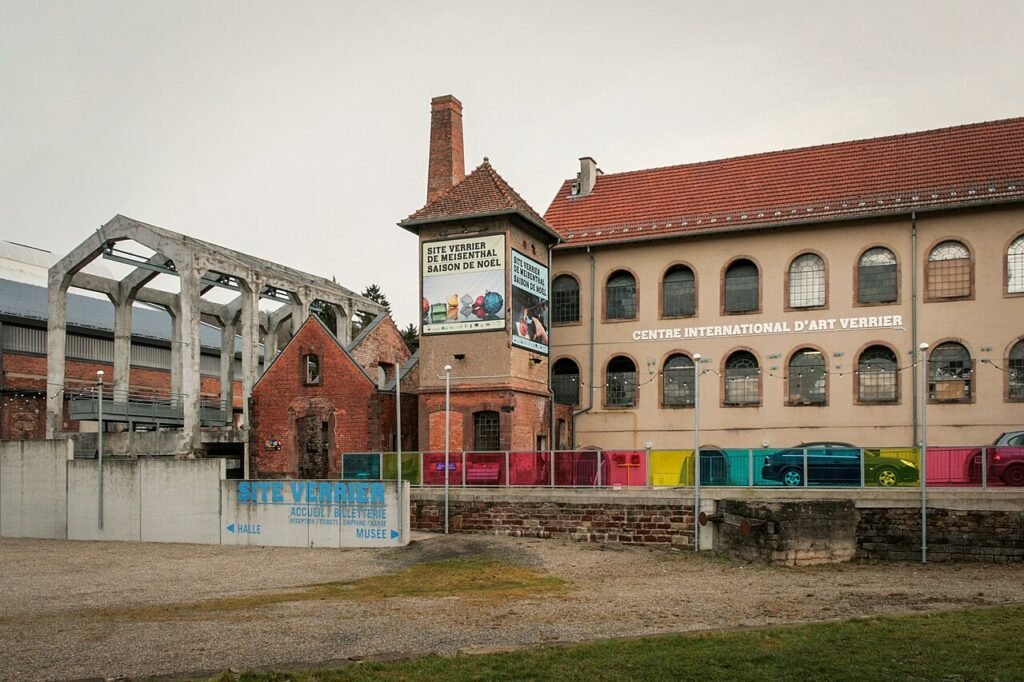
The Centre International d’Art Verrier on the Meisenthal glass site, which also houses the Musée du Verre. Photo: Claude Truong-Ngoc […]

The Centre International d’Art Verrier on the Meisenthal glass site, which also houses the Musée du Verre. Photo: Claude Truong-Ngoc […]

A Spanish castle in Gatika, Biscay, reimagined in neo-Gothic style. The dramatic fortress demonstrates nineteenth-century romantic revival architecture.

A Brutalist government building in Oslo designed by Erling Viksjø and decorated with two murals by Pablo Picasso, the Y-Block stood from 1970 until its demolition in 2020.

A ten-story modernist office building in Zagreb whose geometric form inspired its name—Croatian for ‘little cube’. Built 1963–68, it once housed Yugoslavia’s communist leadership and now serves Croatia’s maritime and tourism ministries.

A Grade II listed Gothic Revival villa in North Oxford, designed by Frederick Codd and completed in 1877, featuring red brick, stone dressings, and William De Morgan tiles.

A Neo-Gothic manor house on the Danish island of Møn, rebuilt in 1876 from an estate founded in 1774.

A surviving Gothic city gate marking medieval Munich’s western edge, Karlstor once defended the town’s salt-road crossing and remains one of three original fortification towers still standing.

A 1958 brutalist villa designed by architect Knud Friis on a Brabrand lakeside hilltop, exemplifying post-war Danish modernism through sculptural concrete forms and landscape integration.

A 116-metre modernist tower that briefly claimed Frankfurt’s skyline in 1972–74 before its 2014 demolition. It housed university departments in the Westend district.

Sir George Gilbert Scott’s Venetian Gothic masterpiece near Llangernyw, Wales (1861–1866). Scott’s second most important country house, now undergoing restoration after a 2004 fire.