

Former Brno Bank, Prague — Josef Gočár’s 1922–23 Corner on Panská
The Prague branch of the Brno Bank, designed by Josef Gočár in 1922–23: a rounded corner, a mansard top floor and two reliefs by Karel Dvořák over the door. Now the NYX Hotel.

The Prague branch of the Brno Bank, designed by Josef Gočár in 1922–23: a rounded corner, a mansard top floor and two reliefs by Karel Dvořák over the door. Now the NYX Hotel.
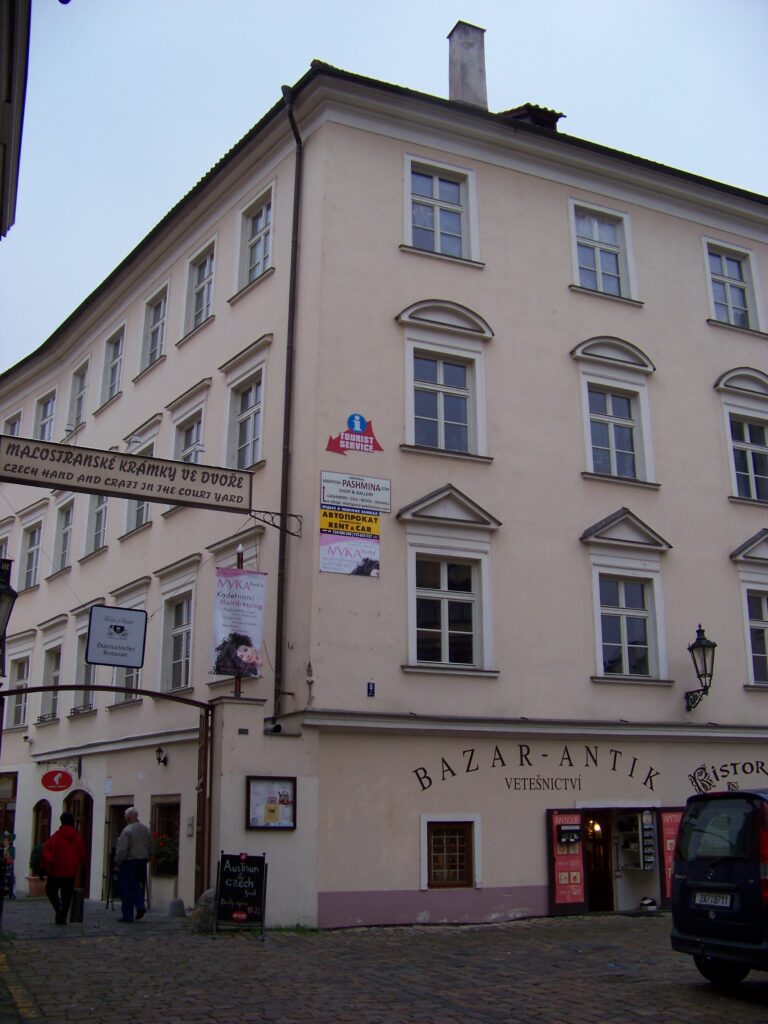
Built after 1606 as a bathhouse on land of the Knights of St John, remodelled in the Baroque and in 1831 and 1884; a listed house at Saská 3 that is home to the Karel Zeman Museum.
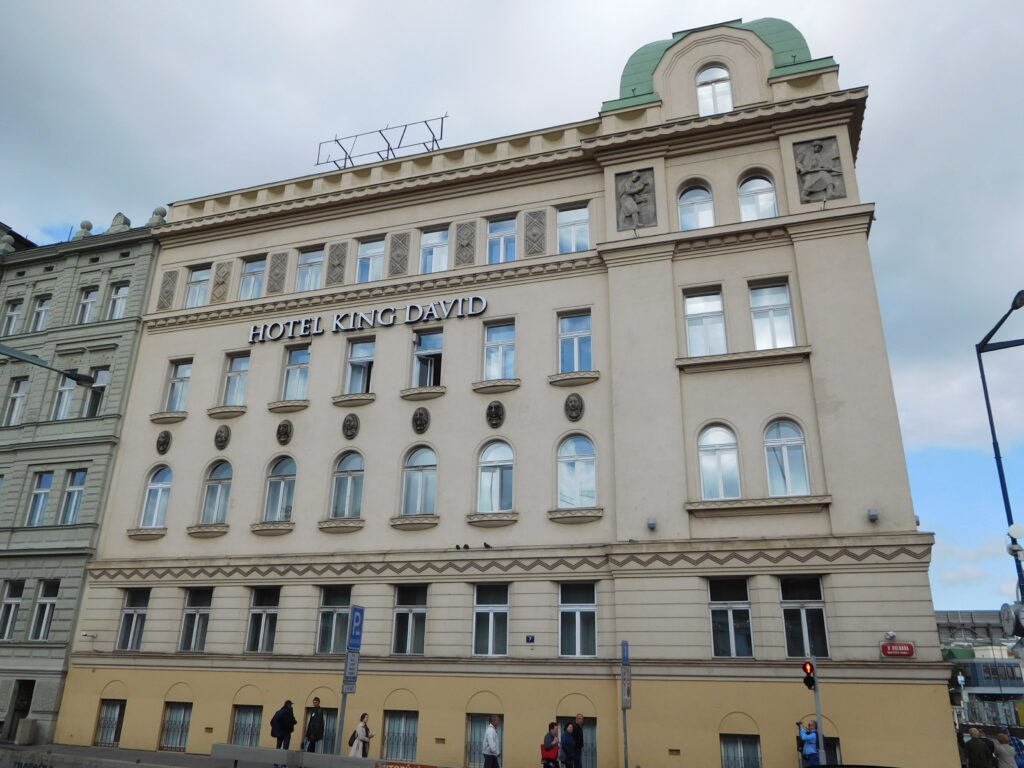
A domed corner house of 1884 at the end of Hybernská, recast in 1918–19 by Bohumil Kozák and Václav Nekvasil with a cubo-classicist facade and figural reliefs; listed since 2003.
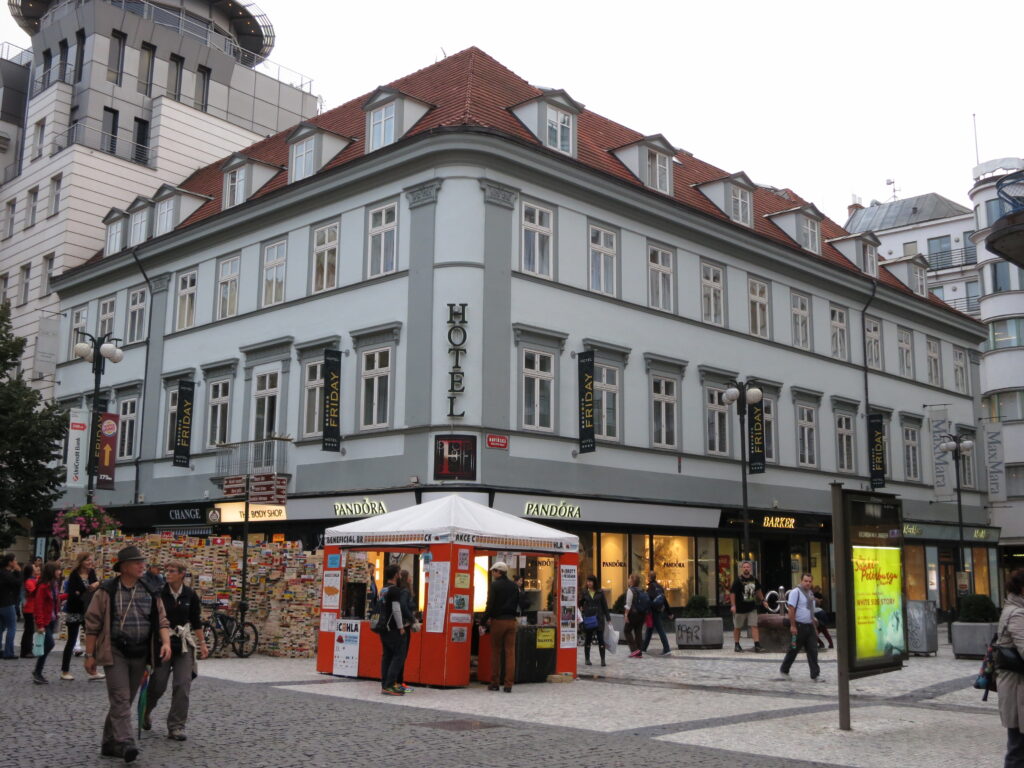
A classicist corner house built in 1839 to plans by Johann Nowotny, where Na Příkopě meets Havířská; joined to its neighbour in 1859 and listed since 1958. Now the Friday Hotel.
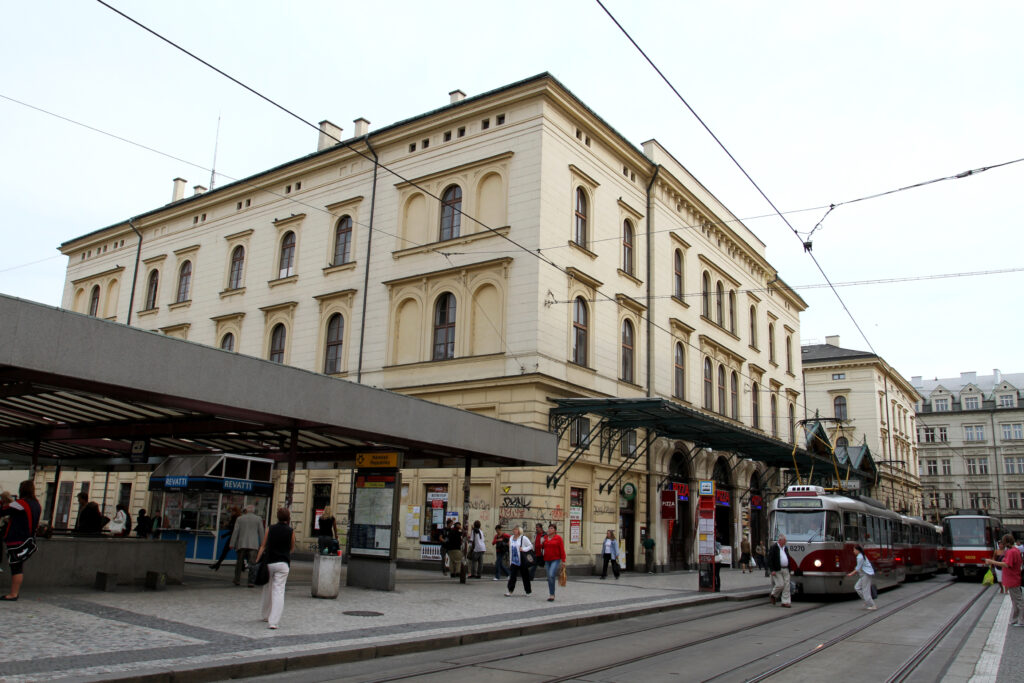
Prague’s oldest railway station, opened in 1845 as the terminus of the line from Olomouc: a classicist complex between Hybernská and Havlíčkova, listed as a cultural monument since 1958.
Listed Neo-Baroque town palace on Lőrinc pap tér, completed in 1899 by Lipót Havel for Count Nándor Zichy in Budapest’s Palace District; now a hotel.
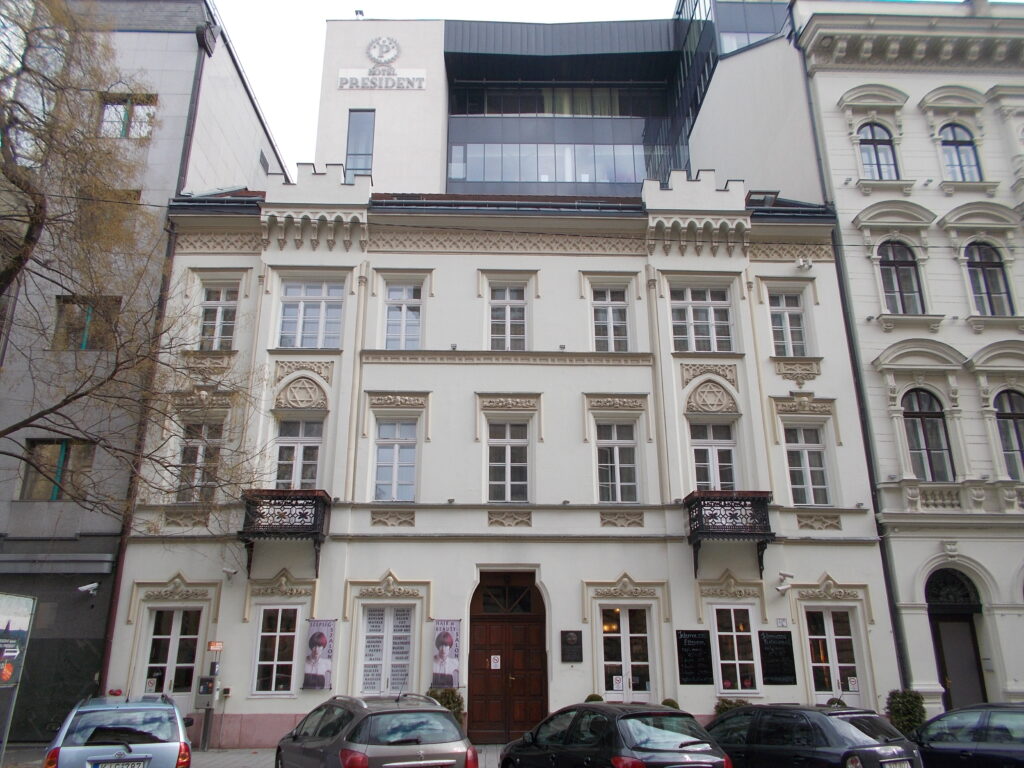
Listed Gothic-Romantic town house of 1854–1855 by Ferenc Brein in Lipótváros, with crenellated gables and Stars of David on its front; now part of the Hotel President.
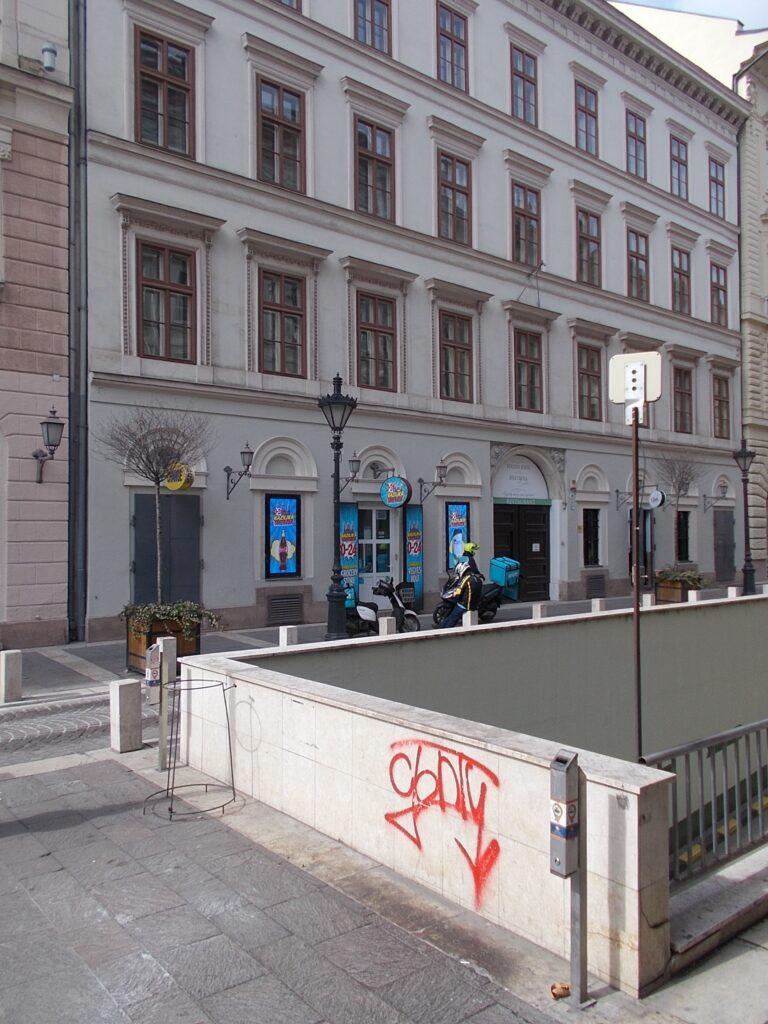
Listed Classicist house in Lipótváros, dated 1819 and attributed to József Düttrich by the monument register; an office building for decades, part of the BasiliQ Hotel since 2025.
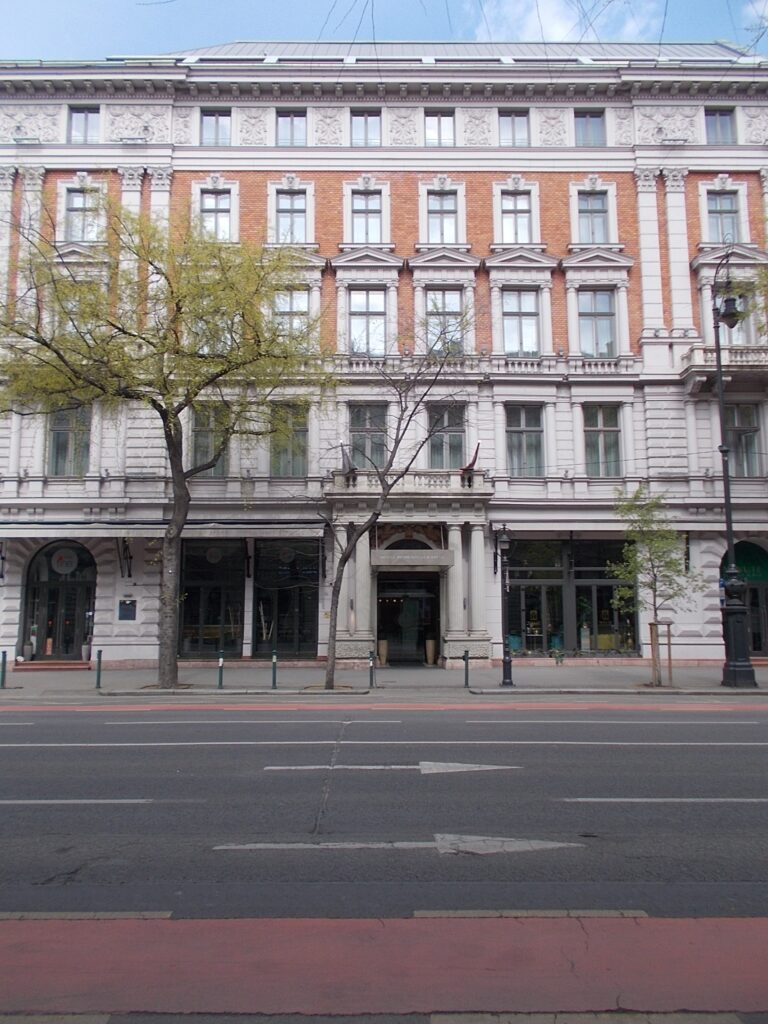
Listed Neo-Renaissance tenement palace designed by Adolf Feszty in the 1880s for the merchant Henrik Schossberger on Andrássy út; a hotel since 2016.
The house of Riga’s Estonian Education Society in Āgenskalns, designed by Eižens Laube and built 1912-1913; later a theatre, from 1954 the first studios of Riga television, now a hotel.