
Heritage Hub · Lombardia, Italy
Liberty Milano
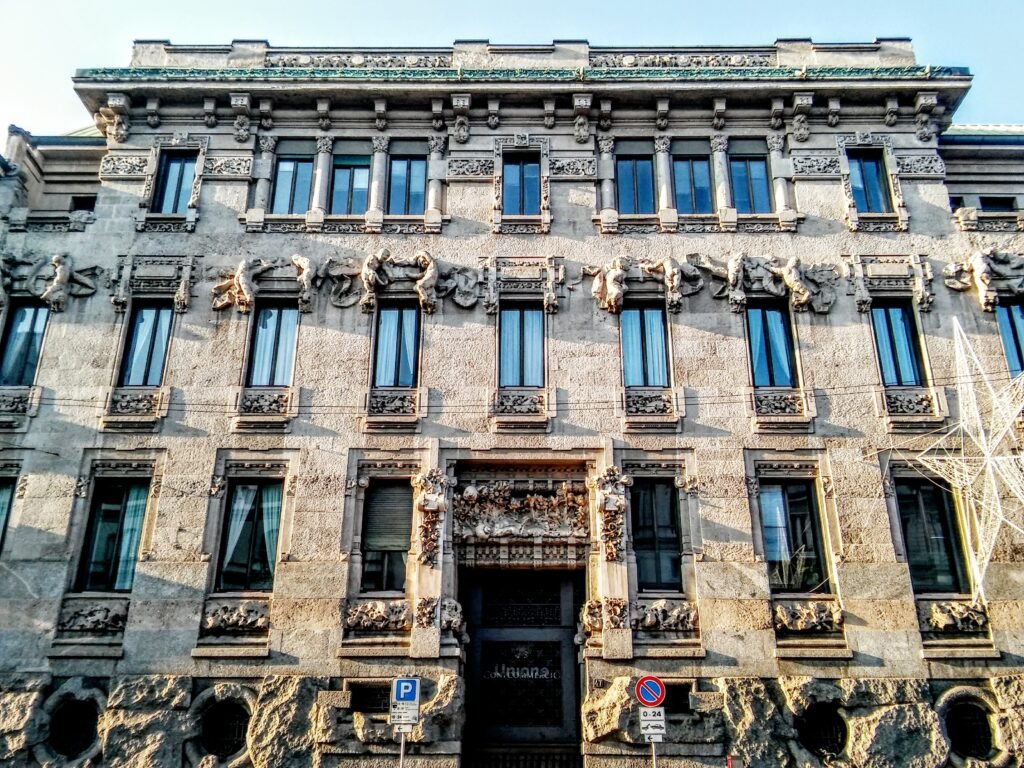
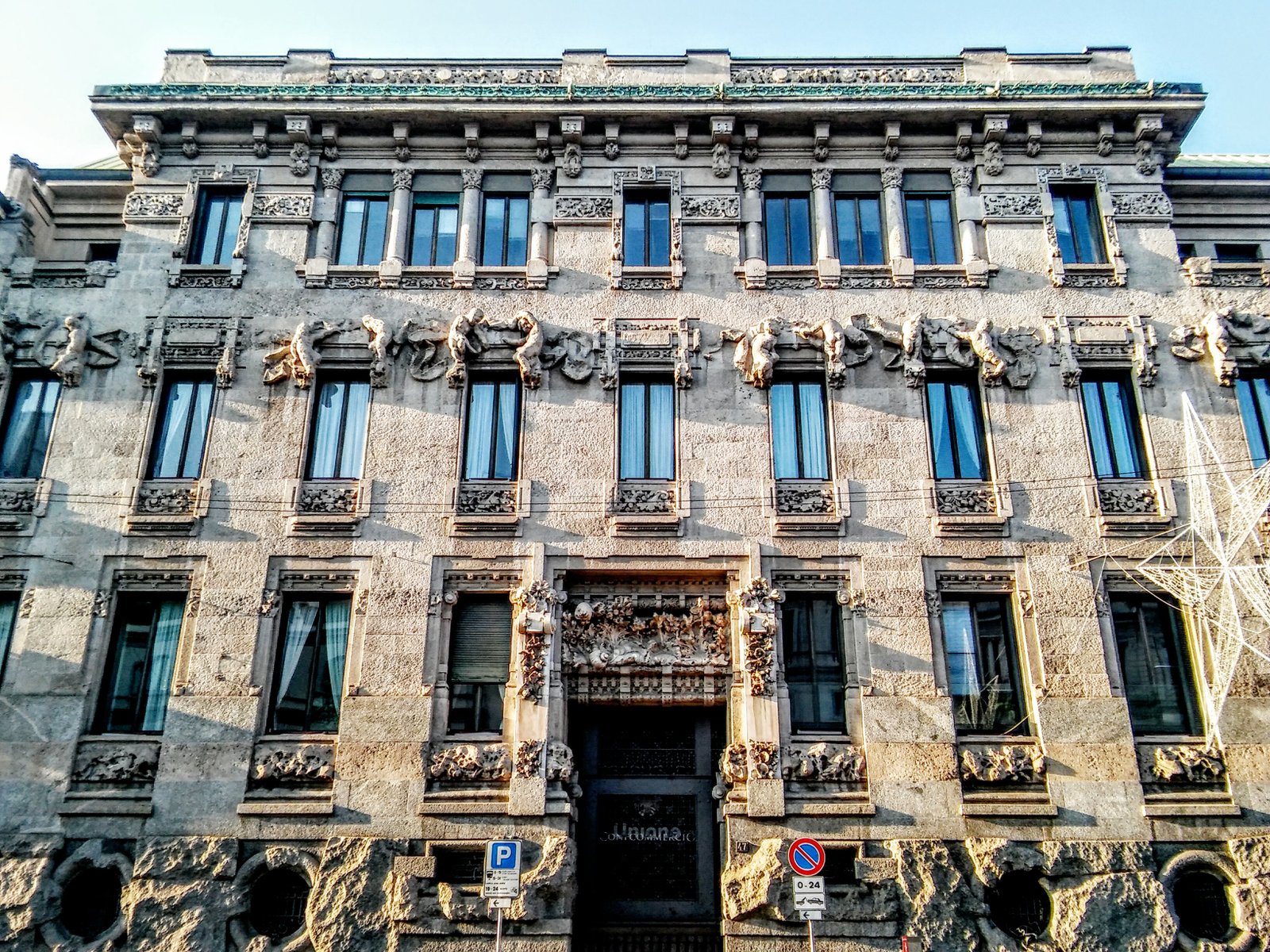
Milan did not invent Italian Liberty — it decided what Liberty was for. Ten buildings in Porta Venezia and Buenos Aires show how.
City profile
- Style era
- 1900–1925
- Key architect
- Giuseppe Sommaruga (1867–1917)
- Region
- Lombardia, Italy
- Walking tour
- 3.6 km · 50 min
- Heritage sites
- 10 documented
Key figures
- Giuseppe Sommaruga (1867–1917) — Author of Palazzo Castiglioni, the definitive manifesto of Milanese Liberty on Corso Venezia.
- Ulisse Stacchini — Designed the Stazione Centrale, where Liberty transitions to monumentalism.
- Piero Portaluppi (1888–1967) — Answered Sommaruga fifteen years later with terminal Déco on the same streets.
Explore on the map
Browse all Liberty heritage sites in Milano on the interactive CHO map.
Open interactive mapMilan did not invent Italian Liberty. Turin did, at the 1902 Esposizione. What Milan did was decide what Liberty was for. Between 1900 and 1914 the new bourgeois quarters east of the Bastioni — Porta Venezia, Buenos Aires, the residential blocks pushed up against the new tram lines — became the laboratory of a style with a specific brief. Build apartment houses for industrialists, lawyers and merchants who had money for ornament and an appetite for modernity. Make the street look new. Sign the door with floral iron and a polychrome frieze.
Giuseppe Sommaruga (1867–1917) is the argument’s loudest voice. The Brera-trained architect finished Palazzo Castiglioni on Corso Venezia in 1903 and instantly published the manifesto of Milanese Liberty. The portal carried two colossal female nudes by Ernesto Bazzaro symbolising Peace and Industry. Public outcry forced their removal within weeks, and Milanese wits renamed the building Ca’ di ciapp — the House of Buttocks. The statues survived. They were quietly transplanted to Sommaruga’s Villa Romeo-Faccanoni a decade later.
Milan’s Liberty is an argument that began on Corso Venezia in 1903 and ended, without resolution, fifteen years later when the Déco arrived to replace it.
Resources
Discover all CHO walking tours — Join as Founding Partner
Find it on the map
See this place and what’s around it →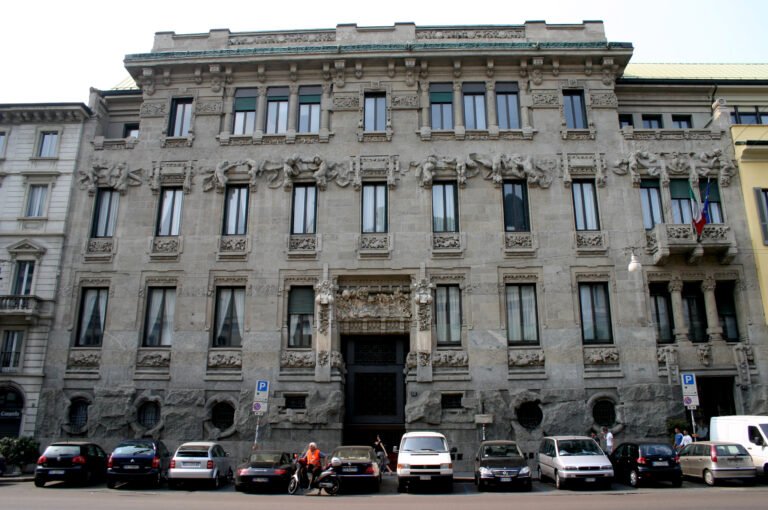
📷 Become a Cultural Heritage Online photographer
Share your photos of places: they stay published under your name as the author. The more they're seen, the more you get noticed — and soon a contest will reward the most appreciated photos.
Log in or sign up free to add a photo