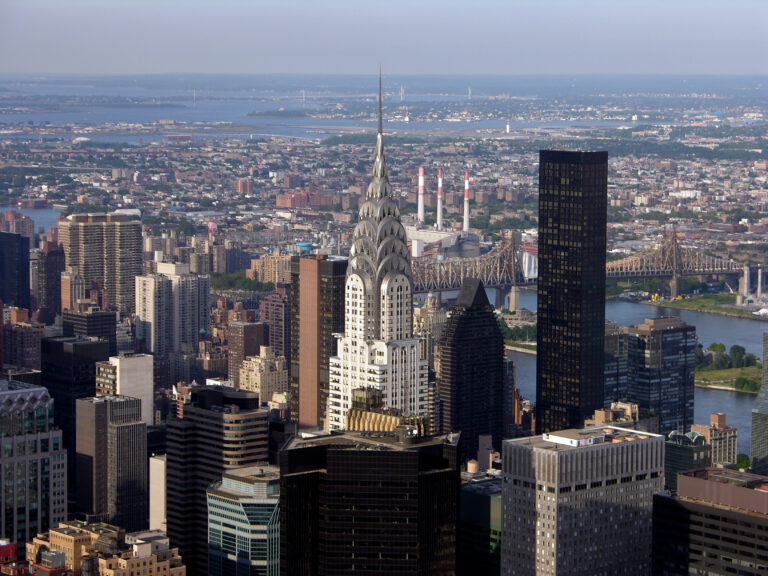
A 1.8-kilometre walk along Corrientes Avenue takes in four Art Deco landmarks: two early skyscrapers and two theatres built between 1930 and 1937.
Why this walk exists
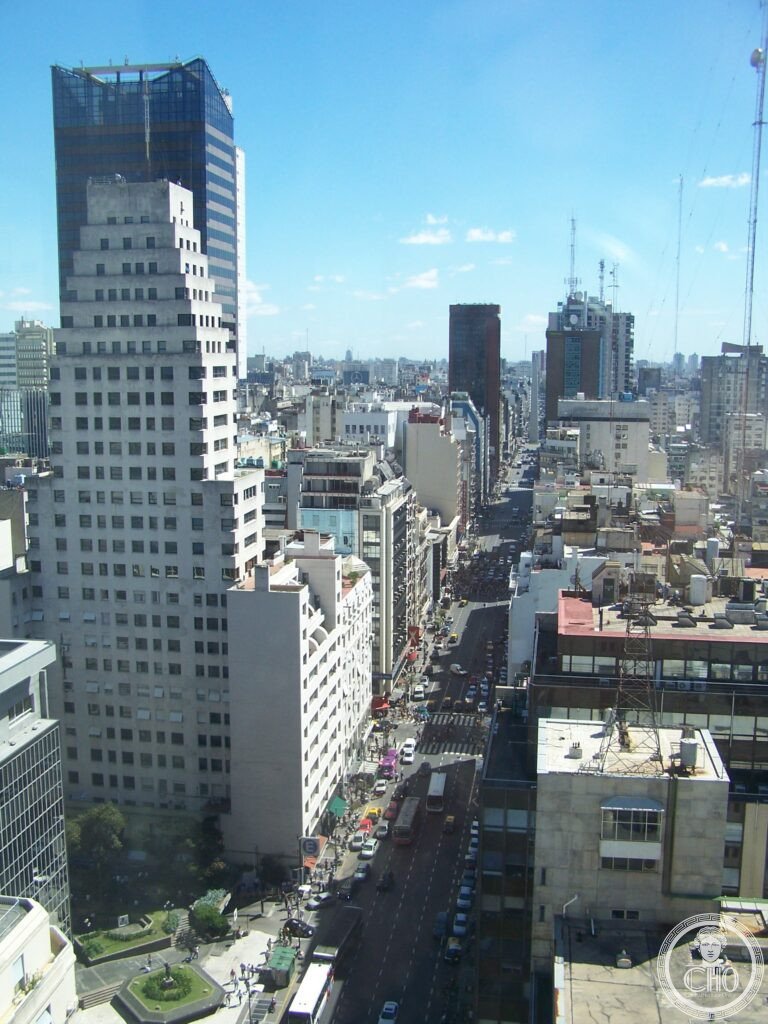
Corrientes Avenue is the spine of Buenos Aires’s theatre district, known locally as the street that never sleeps. Between 1930 and 1937 it acquired a cluster of Art Deco buildings that were technically and stylistically ahead of their time. This walk covers 1.8 kilometres and four stops, all within a compact stretch of the avenue. It takes about 120 minutes at a steady pace, without entering the buildings.
The four structures differ from other Art Deco works of the period in South America. Two are early reinforced concrete skyscrapers that competed for the title of Buenos Aires’s tallest building. Two are theatres that brought North American Art Deco to the southern hemisphere. Together they show how the city modernised its centre during the interwar economic boom.
Safico Building: a skyscraper for global media
The Safico Building, completed in 1933, reaches 90 metres and was among Buenos Aires’s earliest true skyscrapers. At the time only the Palacio Barolo was taller. Its reinforced concrete frame and clean geometric massing placed it at the forefront of interwar modernism in South America. Swiss engineer Walter Möll supervised construction, which took a record ten months from groundbreaking to completion.
Since the 1940s the building has served as the Buenos Aires home for major international media organisations including The Washington Post, the Financial Times, the BBC and Reuters. Its most celebrated resident was the Chilean poet Pablo Neruda, who lived here during his diplomatic posting and wrote a significant portion of Residence on Earth within its rooms. Federico García Lorca visited him there. In 2019 the building hosted the international Art-Déco World Congress.
Comega Building: a travertine-clad tower
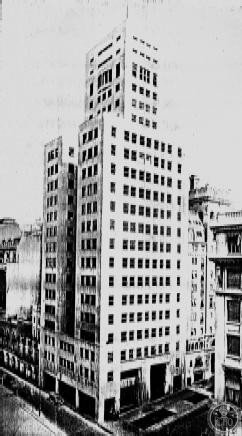
The Comega Building, completed in 1933 after construction that began in 1921, stands at 222 Avenida Corrientes at Avenida Leandro N. Alem. It rises 88 metres in a central 21-storey tower flanked by two lower wings. An open central courtyard between the wings sets its massing apart from other towers of the period. The facade is uniformly faced in travertine, a first for Buenos Aires.
Architects Alfred Joselevich and Enrique Douillet, with structural engineer Alberto Stein, designed the tower in a rationalist idiom that rejected historicist ornament. It was the first reinforced concrete skyscraper in Argentina and held the record as Buenos Aires’s tallest building until the Kavanagh Building surpassed it in 1936. Its 19th-floor café became a prestigious venue; celebrations there marked the arrival of the Graf Zeppelin over the city in 1934 and the funeral of tango legend Carlos Gardel in 1936.

Teatro Gran Rex: Prebisch's streamlined auditorium
Teatro Gran Rex anchors the cultural life of Corrientes Avenue at number 857. Designed by Alberto Prebisch, the architect of the Obelisk of Buenos Aires, it opened on 8 July 1937 as the largest cinema in Argentina. The theatre hosts some 3,300 spectators across a single grand auditorium. With the Teatro Opera on the opposite side of Corrientes, it forms a pair of Art Deco landmarks that define the city’s theatre district.
Construction took seven months during 1936–1937. On opening night Argentine intellectual Victoria Ocampo praised it in her journal Sur as an outstanding example of modern architecture. The interior draws inspiration from Radio City Music Hall in New York: curved walls, concealed lighting troughs, and acoustically refined surfaces. In the 1990s the children’s musical Chiquititas performed every winter holiday season from 1996 to 2001, selling over one million tickets. The 1998 run set a house record of 240,000 seats sold in a single season.
Broadway Theatre: an early Art Deco stage
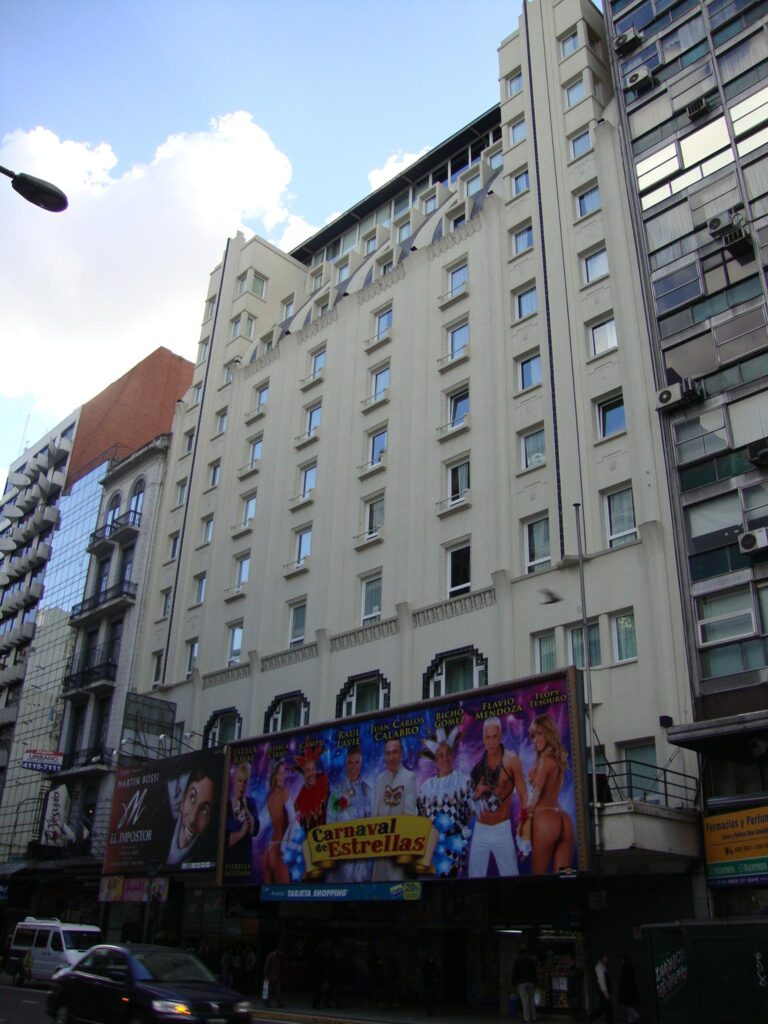
The Broadway Theatre stands at 1155 Corrientes Avenue, in the heart of the historic theatre district. It opened on 11 October 1930, earlier than the other stops on this walk. Architect Jorge Kálnay designed it in the Art Deco style, with geometric forms and streamlined details. The facade exemplifies the elegance and optimism of 1930s architectural expression.
The theatre was built during a period when Buenos Aires was establishing itself as a major cultural hub in South America. As part of Corrientes Avenue’s theatrical heritage, it contributed to the city’s reputation as the Paris of South America. It represents the investment in performance spaces and popular culture during the interwar period. For current performance schedules, hours and admission information, contact the venue directly.
Practical notes for the walk
The walk covers 1.8 kilometres and takes about 120 minutes. The order is Safico Building, Comega Building, Teatro Gran Rex, Broadway Theatre. Start at the Safico Building on Avenida Corrientes and head west; the Comega Building is at 222 Avenida Corrientes at Avenida Leandro N. Alem. Teatro Gran Rex is at 857 Corrientes Avenue and the Broadway Theatre at 1155 Corrientes Avenue, further along the same street.
The route is flat and entirely on public footpaths. The buildings are commercial offices and theatres; access to interiors depends on opening hours and performance schedules. The theatre facades are visible from the street at all times. Buenos Aires is temperate; the walk is possible year-round, though summer months can be hot. The avenue is busy in the evening when the theatres are active.
The full route, with the order of the stops and the distances, is on the Buenos Aires Art Deco: a walk through Corrientes Avenue's skyscrapers and theatres page.
Sources
- Safico Building · https://culturalheritageonline.com/places/safico-building/
- Comega Building · https://culturalheritageonline.com/places/comega-building/
- Teatro Gran Rex · https://culturalheritageonline.com/places/teatro-gran-rex/
- Broadway Theatre (Buenos Aires) · https://culturalheritageonline.com/places/broadway-theatre-buenos-aires/
- Buenos Aires Art Deco: a walk through Corrientes Avenue's skyscrapers and theatres · https://culturalheritageonline.com/itineraries/buenos-aires-art-deco-walk/
Spotted an error? Write to [email protected] and we correct it the same day.