From the Bund to Nanjing Road West: Sassoon House, the Bank of China, the Customs House, Broadway Mansions and the Park Hotel, the tallest building in Asia when it opened in 1934.
The Bund, and what a bank could look like
Between the wars Shanghai was the richest city in Asia, and it spent the money on fronts along the Huangpu river. The Bund is the result: a mile of banks, hotels and trading houses, built in every style a European architect could offer, and behind it a grid of streets where the Chinese city did business. This walk takes five buildings, four on the Bund and one twenty minutes inland, and it works because the distance between them is small: 3.9 kilometres measured on the streets.
Start at Sassoon House at the corner of Nanjing Road, built in 1929 for Sir Victor Sassoon and opened as the Cathay Hotel. The green copper pyramid on the roof is the first thing you see from the water, and the interior was, for a decade, the most modern hotel in the city. It is the Peace Hotel now.

Two buildings facing each other
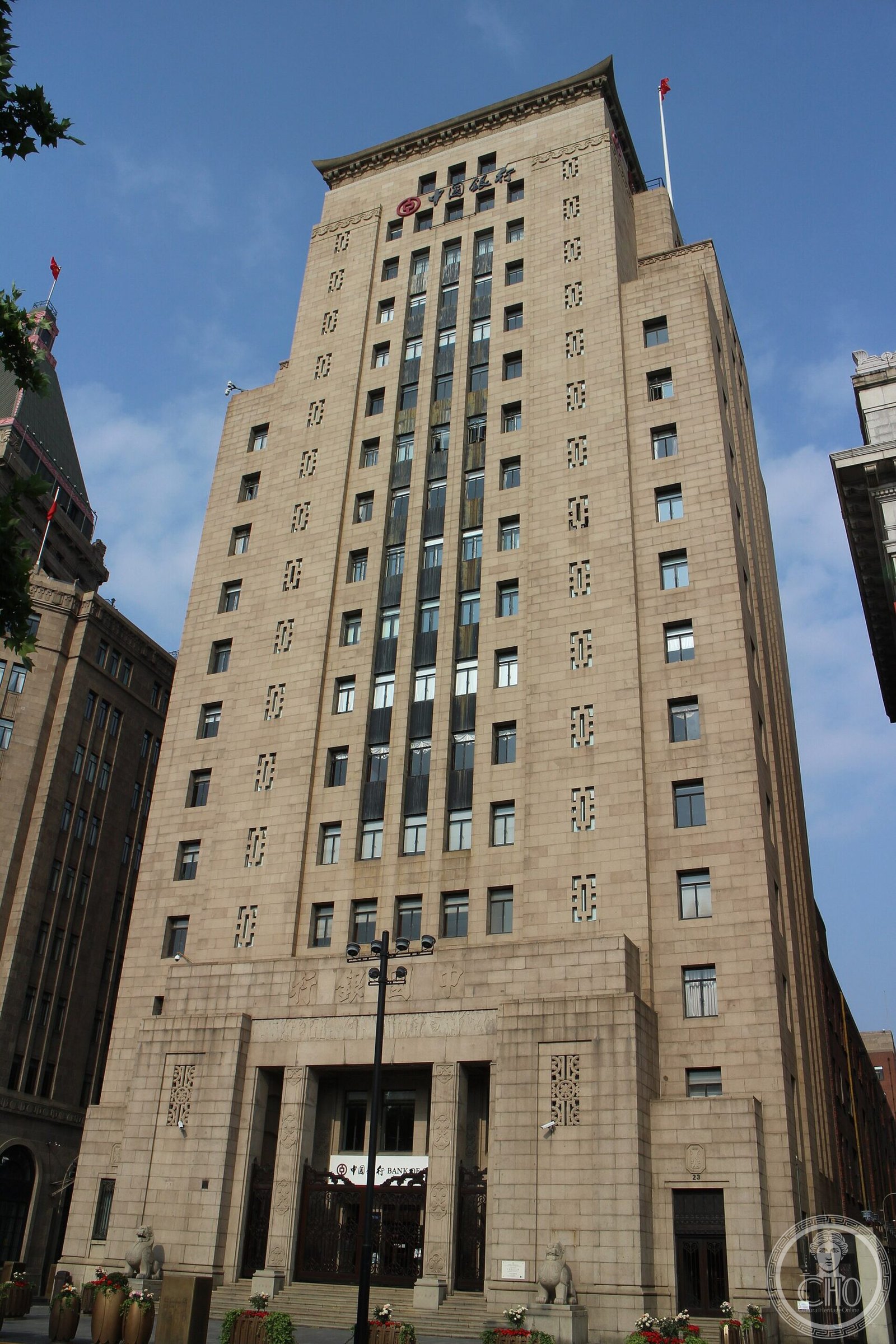
A few doors along, the Bank of China was completed in 1937 by Palmer & Turner, with Lu Qianshou as the bank’s own chief architect. It is the building where Shanghai decided that a modern frame could wear a Chinese roof: the upper storeys taper towards green glazed tiles with upswept eaves, over a stone front with Art Deco verticals. The gesture was political as much as architectural, and it is the most interesting façade on the Bund.
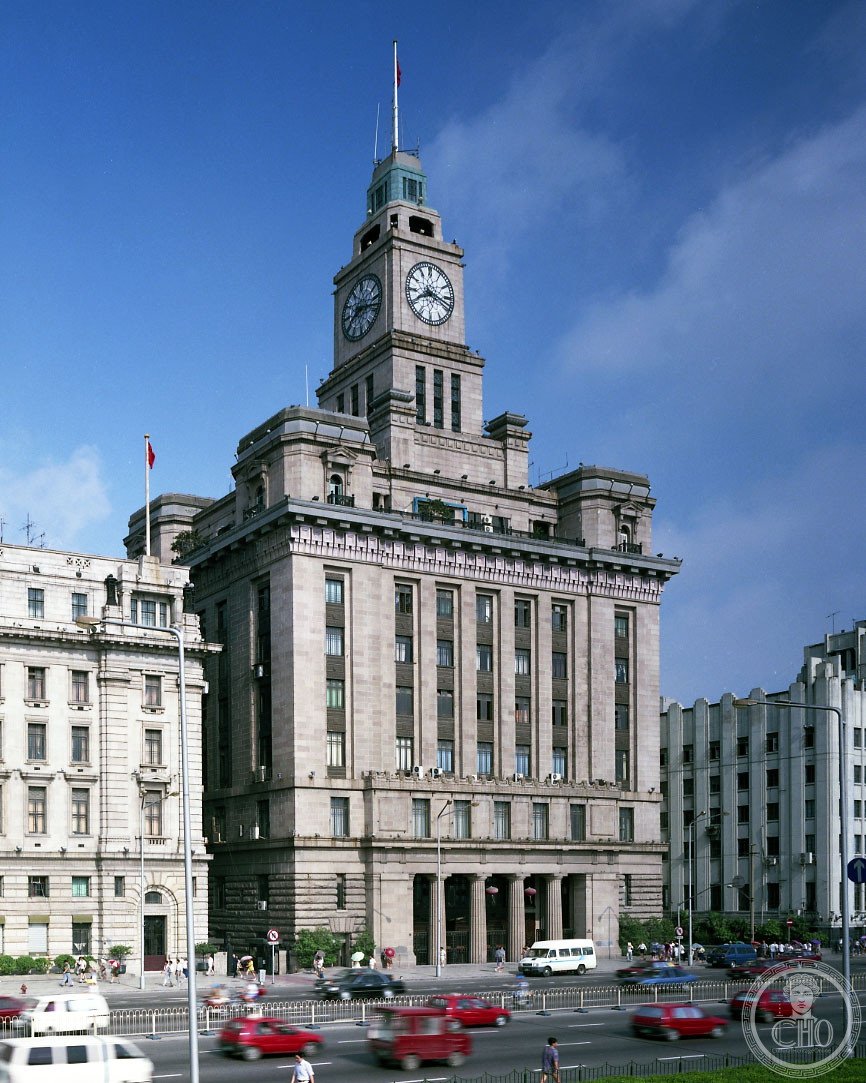
Across the street the Customs House keeps the clock, the one the city calls Big Ching, in a tower that has been telling Shanghai the time since the 1920s. Look at the clock face before the building: it is the detail everyone photographs and nobody explains.
Across the creek, and then inland
The walk crosses Suzhou Creek to Broadway Mansions, the brick block of flats and hotel rooms at the north end of the Bund, finished in 1934. It is where the foreign press watched the city fall in 1937, and it is where the classic photograph of the Bund skyline is taken from: walk to the bridge and look south.
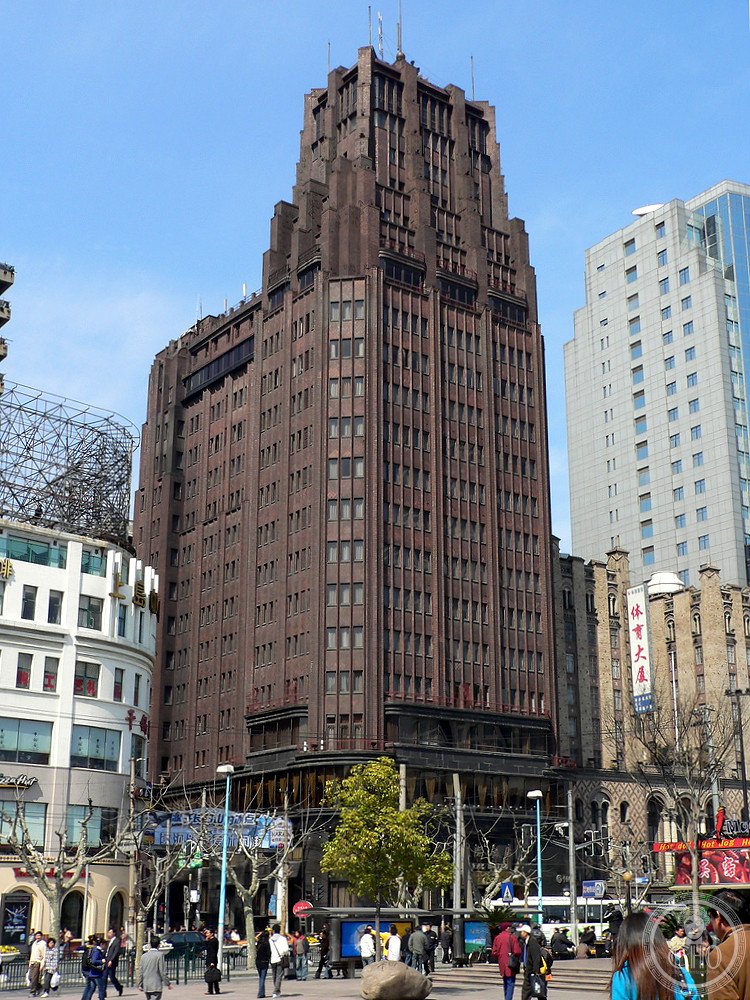
The last stop is inland, on Nanjing Road West: the Park Hotel, designed by László Hudec and completed in December 1934. It is 83.8 metres of brick and glass, and it was the tallest building in Asia for nearly thirty years, until 1963. The shape is a slab that steps back as it rises, closer to the American skyscrapers of the same years than to anything else in Shanghai, and the top of the building is a good place to see how far the city has grown around it.
How to walk it
Four of the five stops are on the Bund, within a kilometre of each other; the Park Hotel is a twenty-minute walk inland. Allow about three hours. October to April is the season: in summer the Bund is hot and crowded, and the light on the river is better in the late afternoon. The full route is on the Art Deco in Shanghai walking tour page.

Sources
- Sassoon House, the Peace Hotel · https://culturalheritageonline.com/places/sassoon-house-peace-hotel-shanghai/
- Bank of China Building · https://culturalheritageonline.com/places/bank-of-china-building-shanghai/
- Shanghai Customs House · https://culturalheritageonline.com/places/shanghai-customs-house/
- Broadway Mansions · https://culturalheritageonline.com/places/broadway-mansions-shanghai/
- Park Hotel · https://culturalheritageonline.com/places/former-park-hotel-shanghai/
- Art Deco in Shanghai walking tour · https://culturalheritageonline.com/itineraries/art-deco-shanghai-walking-tour/
Spotted an error? Write to [email protected] and we correct it the same day.