

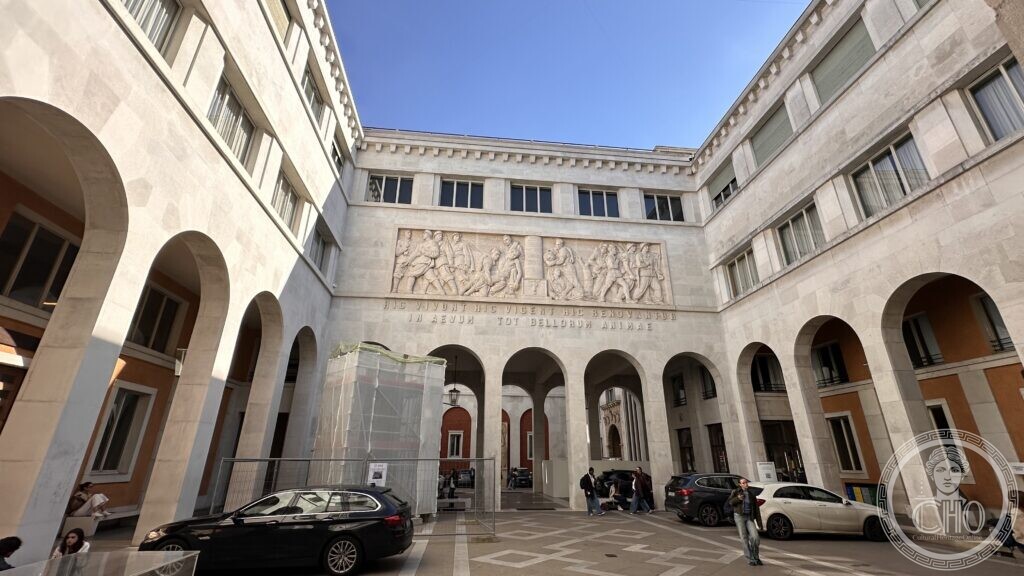
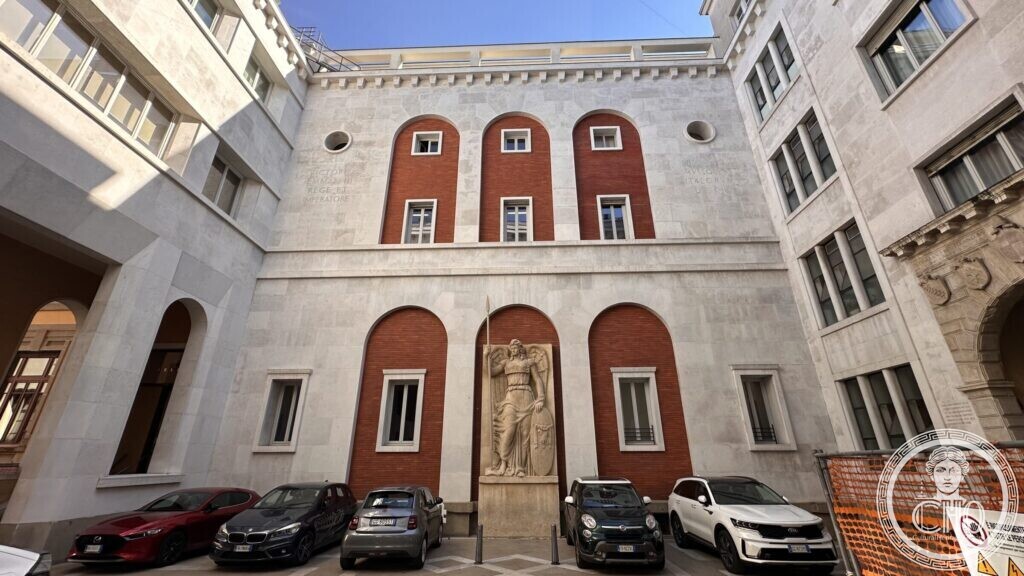
The twentieth-century extension of the University of Padua’s historic seat, built around a neoclassical courtyard and marked by a large war memorial relief and Latin inscriptions.
At a glance
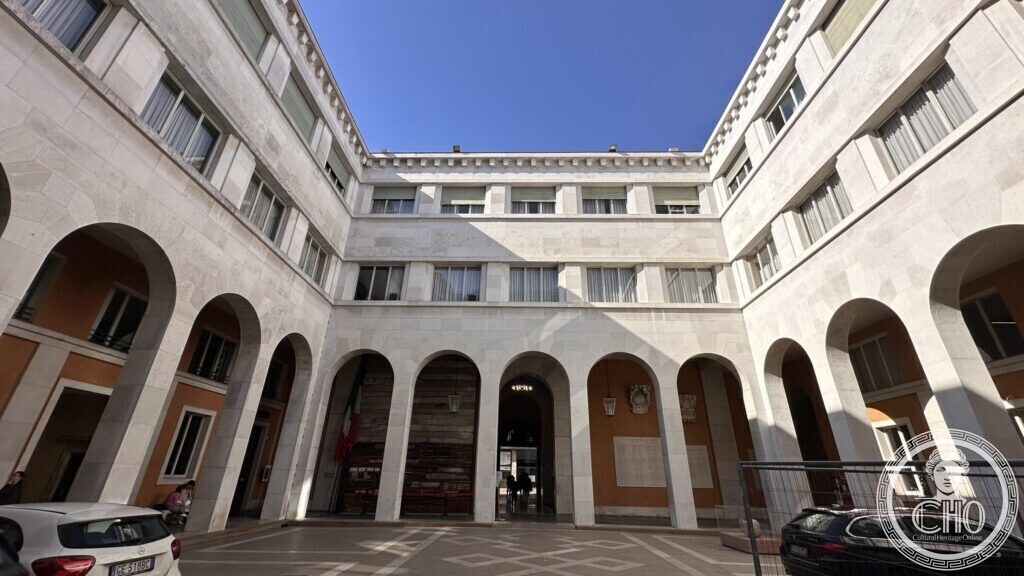
This is the New Courtyard of Palazzo del Bo, the main seat of the University of Padua on Via VIII Febbraio. The courtyard is part of a complex that has served the university since the sixteenth century, and it is documented as the work of architect Ettore Fagiuoli, under the rectorship of Carlo Anti.
Key facts
- Where: Palazzo del Bo, 2, Via Otto Febbraio, Padova
- What: Palace
- When: 1939–1941
- GPS: 45.4067, 11.8773 · Open in Google Maps
History
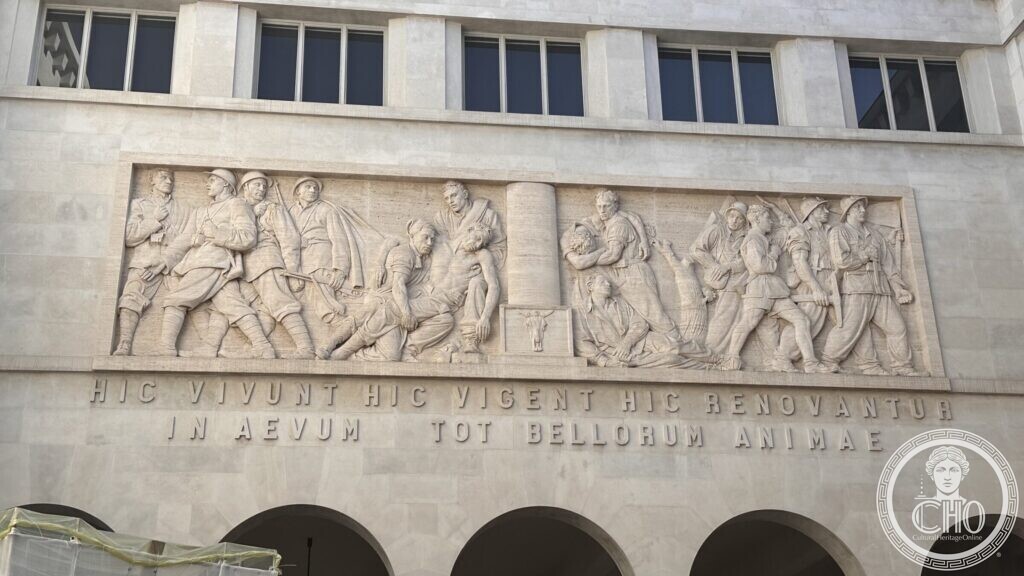
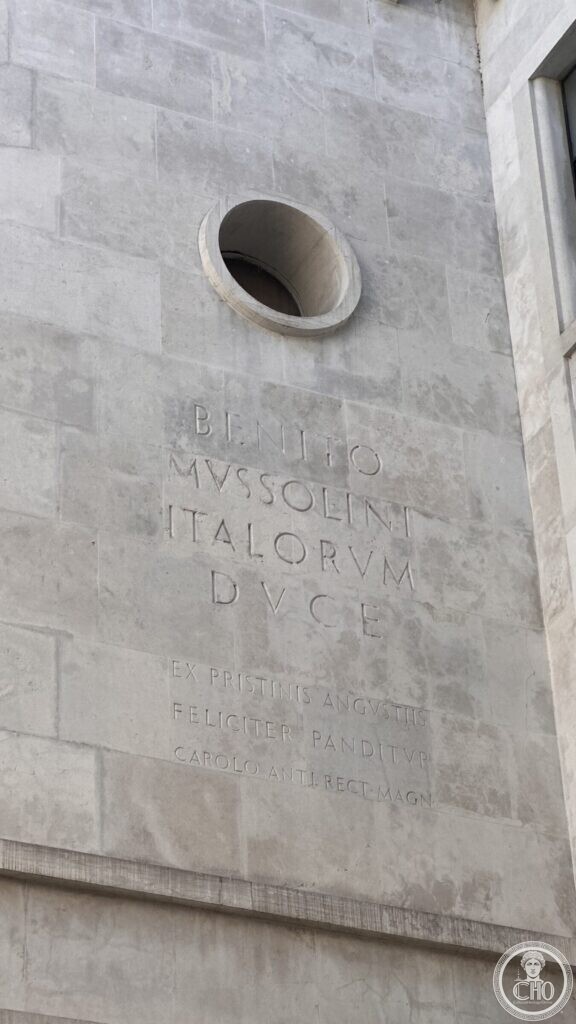
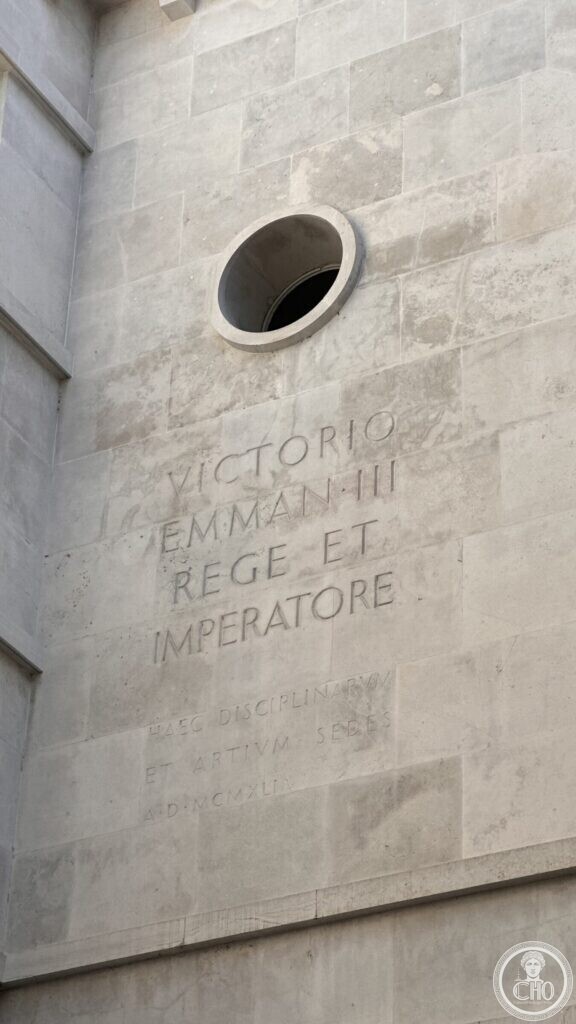
The University of Padua was founded in 1222 by scholars who left Bologna. It did not have a fixed seat until 1539, when the Palazzo del Bo became the official home of the university. The building takes its name from the ox emblem of a hotel previously on the site, the Hospitium Bovis. In the first half of the twentieth century, the palazzo was expanded with the construction of the New Courtyard. The initiative came from Rector Carlo Anti, who entrusted the work to the Veronese architect Ettore Fagiuoli. The courtyard was built in a neoclassical style using Orsera stone during the years of fascism, and it connects the various structures of the complex. The University of Padua’s own description confirms that the New Courtyard dates to the twentieth century, while the FLT inscription database records that the high relief sculpture above the first inscription was created in 1939 by Attilio Selva, and that the inscription itself marks the inauguration in 1941. This period also saw the involvement of the designer Giò Ponti, who supervised the redefinition of the rectorate spaces and the restyling of the Aula Magna, and who is credited by the University with having overseen the decoration of the rooms leading from the New Courtyard. The Latin text under the relief was composed by Concetto Marchesi, professor of Latin language and literature, and commemorates the fallen from several conflicts of the modern Italian state.
What you see
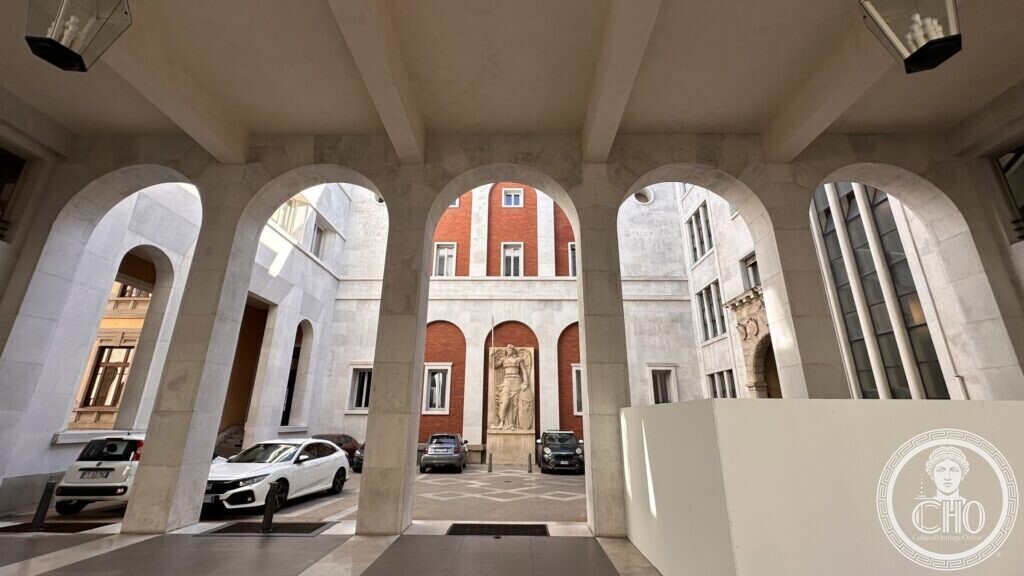
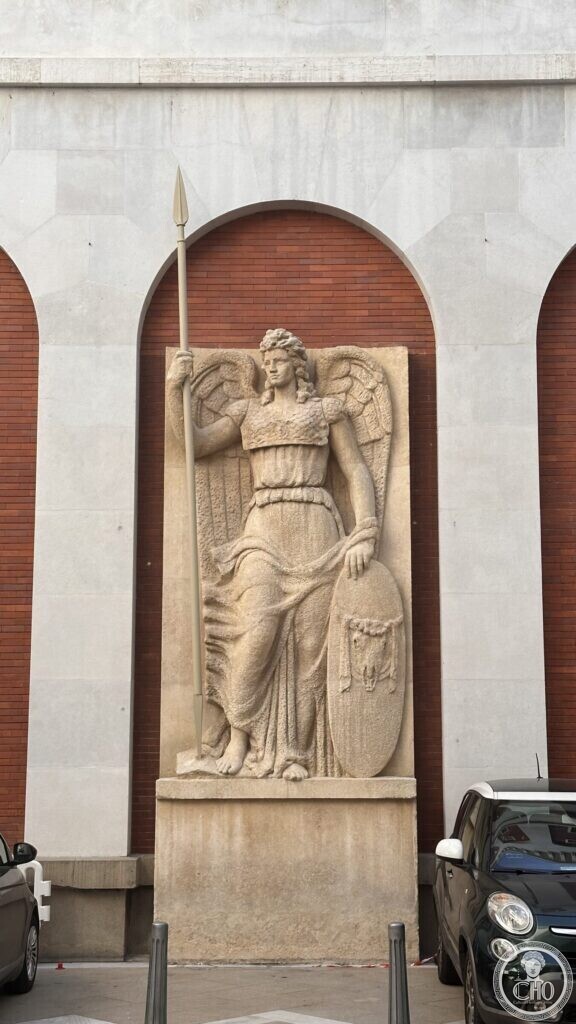
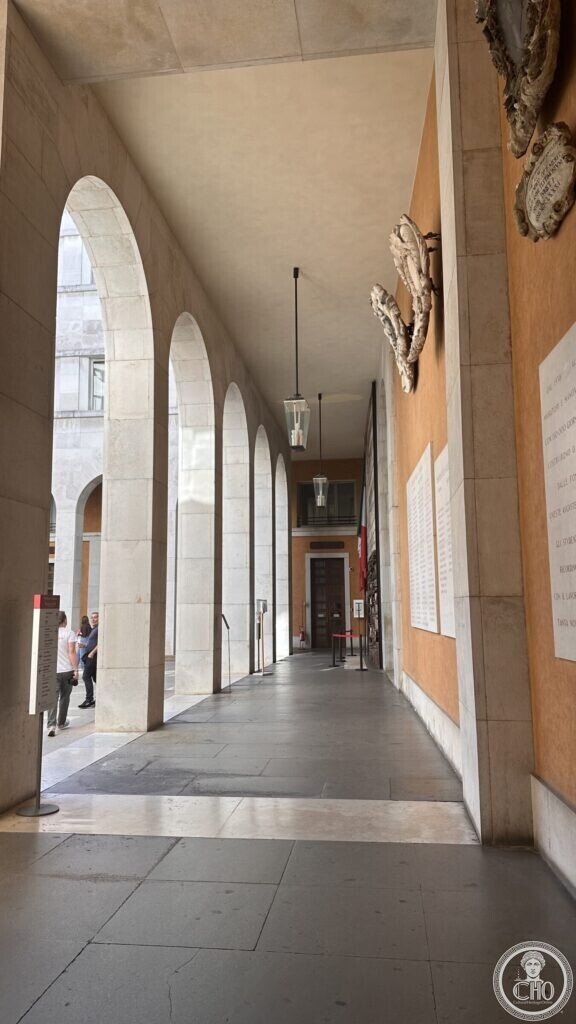
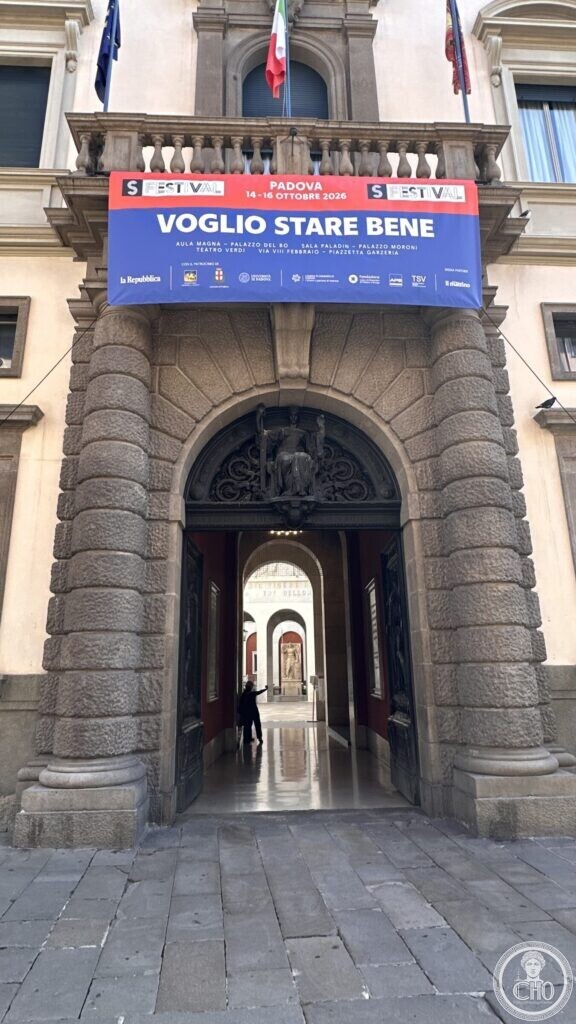
The photographs show the New Courtyard, also described in documents as the Cortile Nuovo. On the east wall, a large travertine high relief by Attilio Selva from 1939 dominates the view. Beneath it, a marble inscription in Roman capitals contains a Latin couplet: “Hic vivunt, hic vigent, hic renovantur in aevum tot bellorum animae.” Other photographs show an interior arcade passage lined with plaques and carved ornaments, a stone statue of a winged female figure holding a spear and shield set into a red brick niche, and a view through the ground-floor arcade toward a courtyard. A stone facade bearing a Latin inscription naming Benito Mussolini is also visible on the side of the building that houses the Faculty of Law; the database records that Mussolini’s name was chiselled away but has become legible again over time due to weathering. The second inscription, split into two parts on the left and right of the facade, commemorates the completion of the courtyard in 1941 under King Victor Emmanuel III and under Mussolini, and includes the name of Rector Carlo Anti. A corner of the courtyard contains a bronze and granite monument dedicated to Galileo Galilei, made by Giò Pomodoro, while another wall holds Jannis Kounellis’s sculpture “Resistance and Liberation.”
Do you know more about this place?
If you know a date, a name, a document, a plaque or a photograph that tells its story, write to Sofia at sofia@culturalheritageonline.com or through the contact page. What arrives with a source goes into this page, with your name as the contributor.
Nearby
- Bo Palace – University of Padua – Virtual Tour — the principal courtyard and historic seat of the same university
- Palazzo Liviano — Gio Ponti University Building in Padova — another University of Padua building from the same period
- Caffè Pedrocchi — historic café near the main entrance of Palazzo Bo
Gallery
Sources
- FLT Inscription Database, FLT Inscription: Padua (IT), Palazzo del Bo, New Courtyard [extant]: inscriptions, dates, names of artists and patrons, and architectural information
- Padova.com, Palazzo Bo, Padua: history of Palazzo Bo, the New Courtyard, and the modern decoration
- Università di Padova, Palazzo del Bo and Anatomical Theatre: twentieth-century palace and the role of Gio Ponti
- OpenStreetMap, Palazzo del Bo: address and coordinates
- Arch Luigidemarchi, photographs and notes to the editorial staff (2026): identification of the subject. Not a published source
Find it on the map
See this place and what’s around it →📷 Become a Cultural Heritage Online photographer
Share your photos of places: they stay published under your name as the author. The more they're seen, the more you get noticed — and soon a contest will reward the most appreciated photos.
Log in or sign up free to add a photoIs this page about you?
This page is read by travellers and heritage enthusiasts who find it on Google. Tell us how you are connected to this place and we will take it from there.