
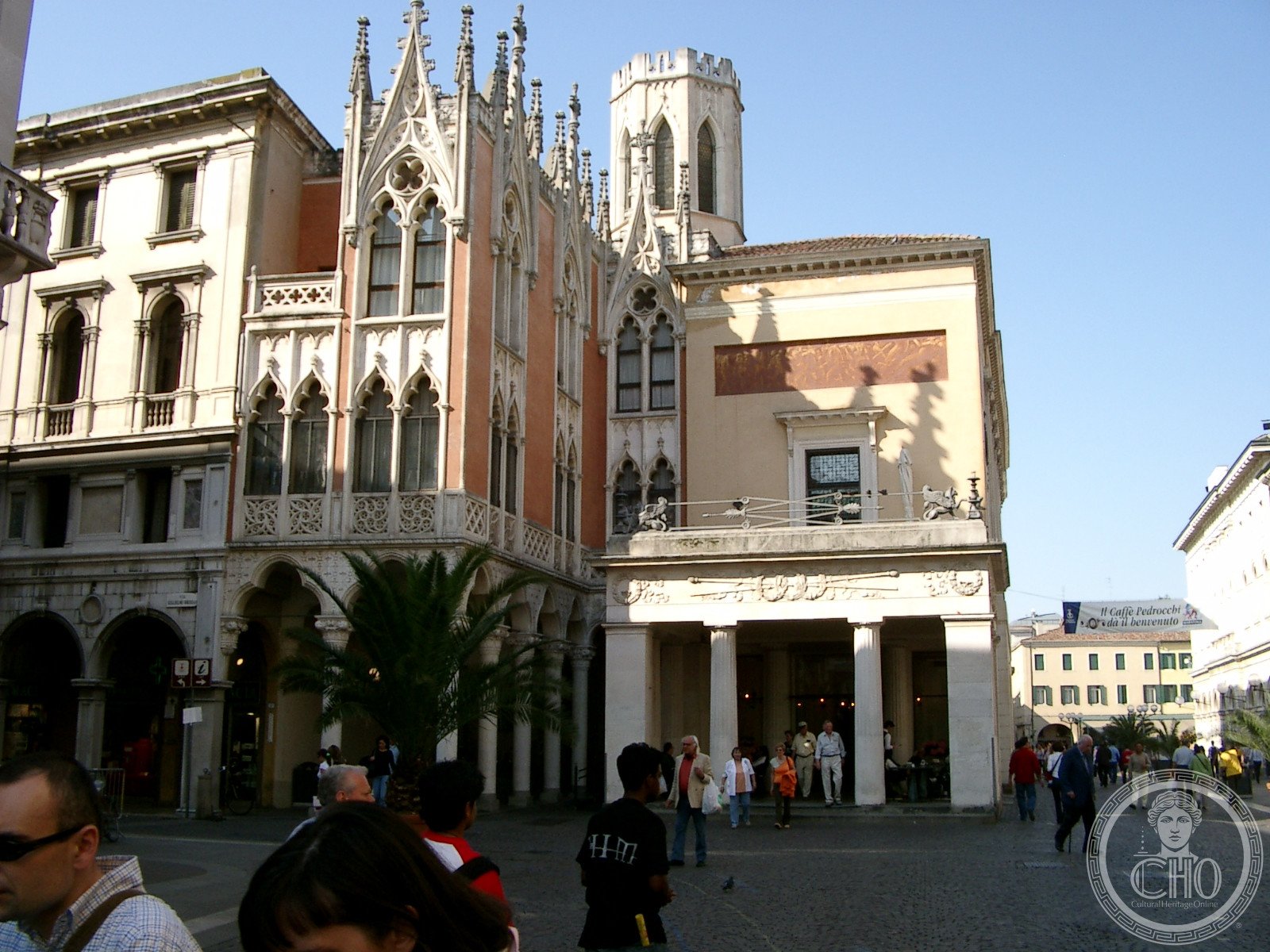
The neoclassical café that Giuseppe Jappelli built for Antonio Pedrocchi in the heart of Padua, opened in 1831 and for almost a century never closed its doors, day or night.
At a glance
Caffè Pedrocchi is the café that the coffee-maker Antonio Pedrocchi commissioned from the Venetian architect and engineer Giuseppe Jappelli, a few steps from the University’s Palazzo del Bo. The ground floor opened in 1831; a neo-Gothic annex for the pastry shop, the Pedrocchino, followed from 1836; the upper floor, the piano nobile, was inaugurated in 1842. The building is neoclassical, with Venetian Gothic and Egyptian touches typical of nineteenth-century eclecticism. It was called “the café without doors” because it stayed open day and night until 1916.
History
Antonio Pedrocchi turned to Jappelli around 1816, and the new café was inaugurated in 1831: the centenary is recorded by a stone tablet on the building, placed by a citizens’ committee on 9 June 1931, which calls Pedrocchi “humble and great creator of this historic building conceived by the genius of Giuseppe Jappelli”. In 1842 the piano nobile, a sequence of rooms for receptions and performances, was opened for the fourth Congress of Italian Scientists, held in Padua that year.
On 8 February 1848 the café was one of the scenes of the clashes between students, citizens and the Austrian army that are among the first episodes of the revolutions of that year; the White Room still keeps the mark of a bullet fired that day. In 1891 Domenico Cappellato Pedrocchi, Antonio’s adopted son, left the café to the City of Padua, on condition that it be kept as the first establishment of its kind in Italy. The piano nobile houses today the Museum of the Risorgimento and the Contemporary Age.
What you see
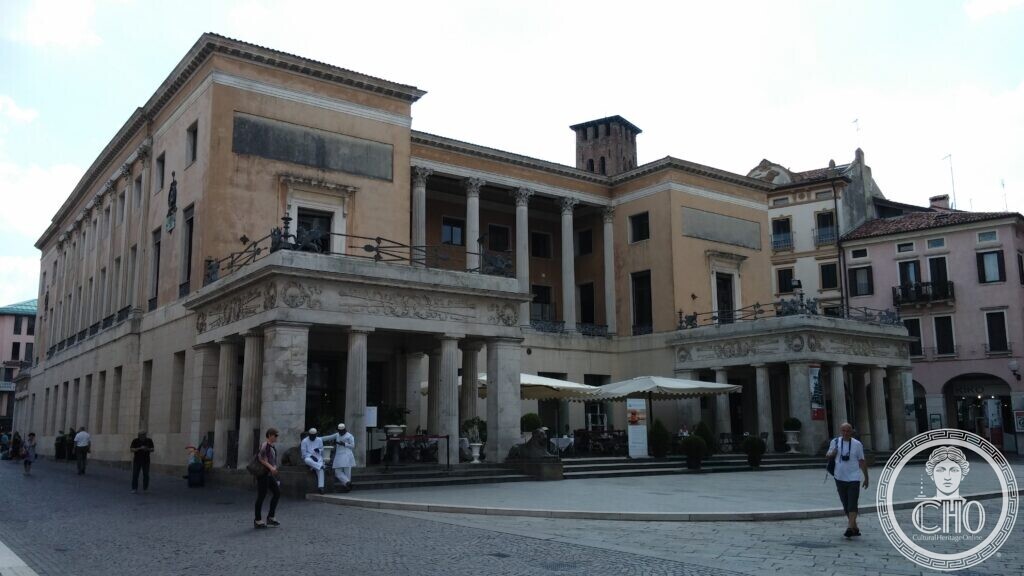
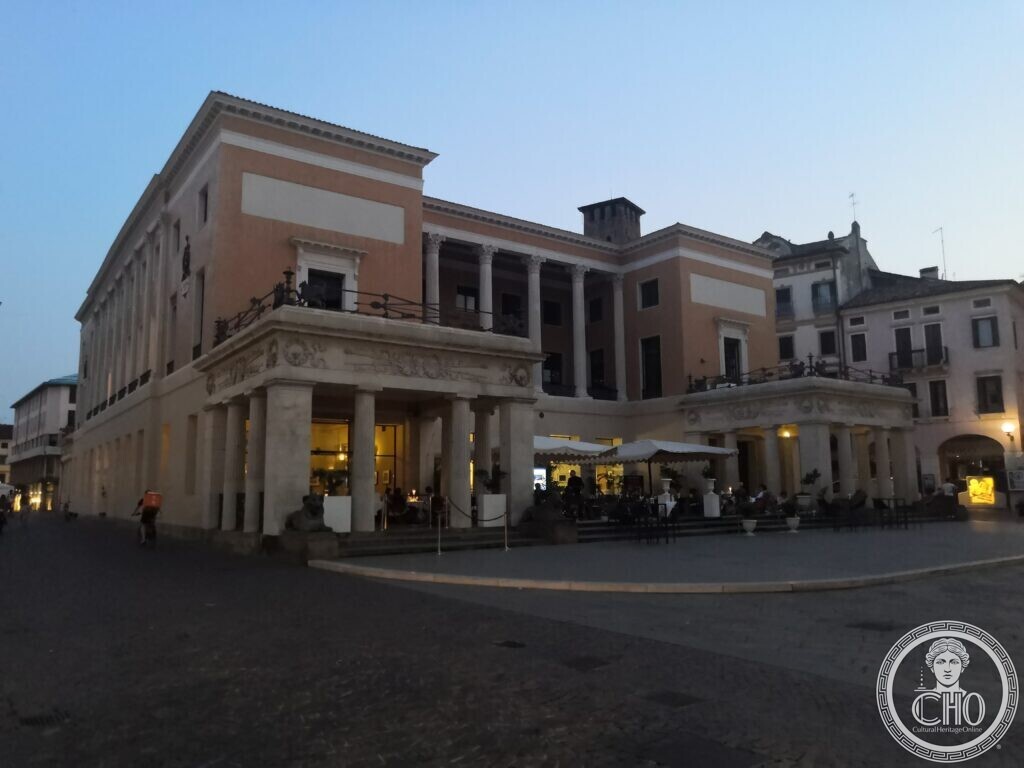
From the square, the long pale front with its two porches of Doric columns, guarded by stone lions, and the loggia of the piano nobile above them. At ground level are the three rooms named after their colours, white, red and green. Upstairs, each room of the piano nobile is decorated in a different historical style, one of them Egyptian. Stefano Vigolo’s photographs show the south front by day, in 2015, and lit for the evening, in 2021.
Cultural significance
Caffè Pedrocchi represents a crucial moment in European social history, when public gathering spaces began to reshape intellectual life. Its role in the 1848 uprising and its enduring appeal to Padua’s academic community made it a symbol of civic consciousness and collective thought.
Key facts
- Architect: Giuseppe Jappelli, for Antonio Pedrocchi
- Opened: 1831 (ground floor); Pedrocchino from 1836; piano nobile 1842
- Open day and night until 1916
- Owner: the City of Padua, by bequest of 1891
- Address: Via VIII Febbraio, 15, 35122 Padova
- Coordinates: 45.4077121, 11.8770797
- Website: https://www.caffepedrocchi.it/
Practical information
The café operates as both a functioning establishment and cultural venue. Contact the café directly or visit the official website for current hours, event schedules and any admission details.
Getting there
Caffè Pedrocchi is located in central Padova at Via VIII Febbraio, 15. Its position in the city center makes it accessible by foot from Padova’s main train station and other central landmarks.
Sources & resources
- Caffè Pedrocchi, Storia: Jappelli, the neoclassical building, 1831, the piano nobile of 1842, the bequest of 1891
- Università di Padova, 800 anni, Il Caffè Pedrocchi: 8 February 1848, the bullet mark in the White Room, the doors open until 1916, the three rooms
- Turismo Padova and Comune di Padova, Caffè Pedrocchi: the commission of 1816, the Pedrocchino from 1836, the eclectic style
- The centenary tablet of 9 June 1931 on the building, read from Stefano Vigolo’s photograph of 2015
Correction, 25 September 2026. An earlier version of this page described the café as an Art Nouveau (Liberty) building of the early twentieth century and its Egyptian room as Art Nouveau. The building is neoclassical and dates from 1831-1842. We also removed a statement about the University hymn that we could not verify.
Gallery
Find it on the map
See this place and what’s around it →Historical events at this place (1)
- 2019 800 PadovaFestival
📷 Become a Cultural Heritage Online photographer
Share your photos of places: they stay published under your name as the author. The more they're seen, the more you get noticed — and soon a contest will reward the most appreciated photos.
Log in or sign up free to add a photoIs this page about you?
This page is read by travellers and heritage enthusiasts who find it on Google. Tell us how you are connected to this place and we will take it from there.