
Situated along Gropegårdsgatan in the Lundby district of Gothenburg, the historic assembly campus of AB Volvo marks the birthplace of Swedish commercial road transport. Here, in February 1928, Volvo completed its very first motor truck—the Series 1 (LV40)—initiating a legacy of heavy-vehicle engineering, crashworthiness research, and durable freight haulage that shaped twentieth-century global logistics.
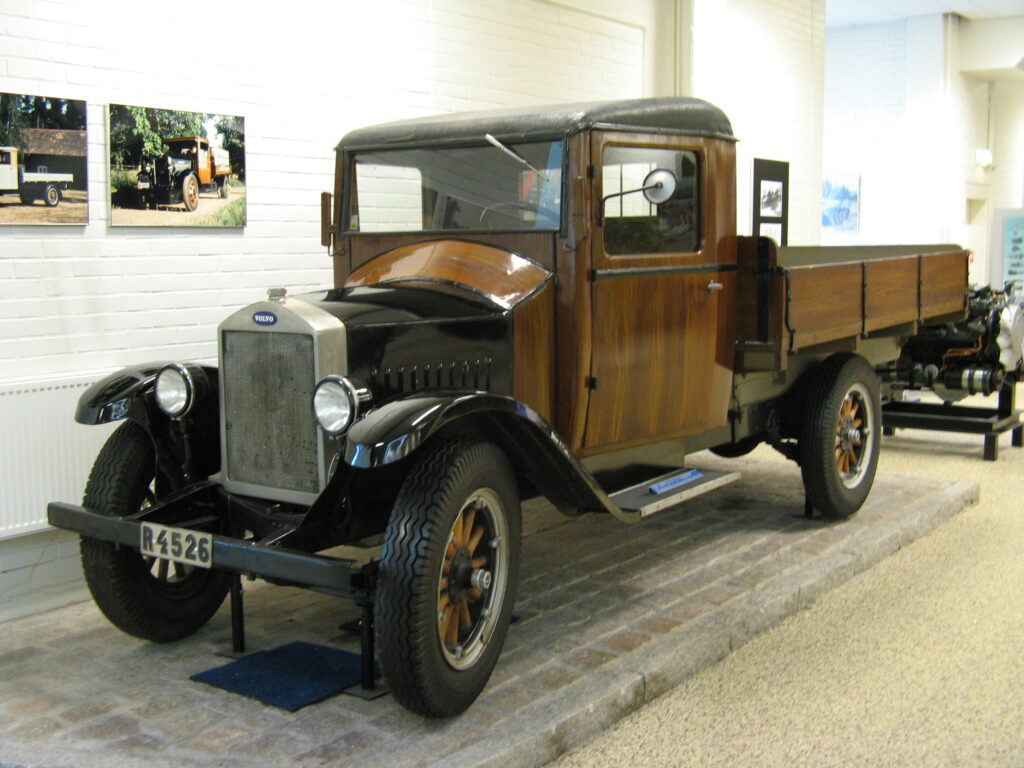
At a glance
The industrial enclave of Lundby on Hisingen island in Gothenburg holds a revered position in Scandinavian manufacturing history. Originally established as a ball-bearing production shed by parent company SKF, the facility was converted in late 1926 under company founders Assar Gabrielsson and Gustaf Larson to house Volvo’s first assembly lines. While initial automobile sales developed modestly, the debut of the purpose-built Volvo Series 1 truck in February 1928 became an immediate commercial triumph, proving that heavy haulage would drive the company’s worldwide growth. Today, the Lundby campus functions as an advanced engineering, technological research, and executive center for the Volvo Group.
Key facts
- Location: Gropegårdsgatan 2, Lundby, 417 15 Göteborg, Västra Götaland, Sweden
- Operational debut: February 1928, with the roll-out of the first production Volvo LV40 Series 1 truck
- Original facility: Converted SKF ‘Nordkulan’ industrial shed adapted for chassis assembly and wood-and-sheet-metal cab construction
- Industrial significance: First mass-produced commercial vehicle designed specifically for Nordic winter conditions and unpaved logging roads
- Modern status: Operating corporate and engineering campus for Volvo Group headquarters and technological research
- Public experience: Exterior industrial architecture viewable from municipal avenues; historic vehicles exhibited at World of Volvo in central Gothenburg
- Coordinates: 57.71546, 11.92450 · open in Google Maps
History and automotive heritage
In the late 1920s, Swedish freight transport struggled with American and continental European lorries that quickly failed on rough gravel roads and severe sub-zero winter freeze-thaw cycles. Recognizing an unfulfilled domestic market, Gustaf Larson drew up plans for a dedicated heavy truck chassis with sturdy steel channel rails, high ground clearance, and an indigenous 28-horsepower four-cylinder powertrain.
Assembly commenced at the Lundby workshop in late 1927. When the Series 1 was officially announced in February 1928, all five hundred planned units were pre-sold before full assembly was achieved. The immediate success provided the financial capital required to expand the Lundby site, erect modern press shops, and establish dedicated engine casting networks in Skövde. Throughout the subsequent decades, the Gothenburg plants introduced landmark innovations, including the all-steel safety cab, heavy turbo-diesel propulsion, and cab-over-engine ergonomics.
Architecture and the Lundby campus
The Lundby industrial landscape displays the physical transition from early-twentieth-century brick workshop architecture to expansive contemporary corporate design. The original assembly blocks featured utilitarian masonry facades, pitched monitors for clerestory roof illumination, and deep delivery bays designed for rail freight connections to the adjacent Gothenburg harbor network.
Subsequent post-war expansions integrated reinforced concrete assembly blocks and steel-and-glass testing centers. Although the physical assembly of complete heavy trucks was later decentralized to specialized assembly campuses at Tuve (further north on Hisingen) and Umeå, the Lundby site remains the symbolic home of the enterprise, retaining historic street footprints and administrative structures along Gropegårdsgatan and Götaverksgatan.
What you see today
The Lundby complex remains an active, secure commercial research and corporate campus rather than a museum. The exterior buildings, contemporary glass atriums, and security gates are clearly visible from Gropegårdsgatan and surrounding public roads. Modern electric and autonomous prototype trucks are frequently seen moving between campus test gates.
For visitors wishing to experience the historic 1928 trucks in person, the company’s historical vehicle collection—formerly held at the Arendal museum—has been relocated to World of Volvo, the monumental timber-framed civic exhibition and cultural center located in central Gothenburg near Liseberg, where the original 1928 LV40 and succeeding models are prominently displayed.
Practical information and visits
- Lundby campus access: Internal corporate offices, design studios, and testing yards are restricted to authorized personnel and invited business partners.
- Exterior touring: Public streets surrounding the campus, including Gropegårdsgatan, offer public pedestrian sidewalks from which the historic district can be explored.
- Museum exhibition: Original 1928 Volvo trucks and complete historical archives are open to the public daily at World of Volvo in central Gothenburg.
Getting there
The Lundby site is situated on Hisingen, directly across the Göta älv river from central Gothenburg. From Gothenburg Central Station (Centralstationen), take tram line 5, 6, or 10 over the Hisingsbron bridge to the “Wieselgrensplatsen” or “Rambergsvallen” tram stop, which is located a short five-minute walk from the historic Gropegårdsgatan entrance.
Related enterprise history
This place card documents the physical cradle of assembly in Lundby, its industrial topography, and its surviving urban site. For the commercial history, Gabrielsson’s business strategy, and technical specifications of the 1928 hauler, read our companion magazine feature on the founding history of Volvo Trucks (1928).
Sources
- Volvo Group Historical Archives and Heritage Department: Archival records on the conversion of the SKF Lundby factory shed, early production runs, and the February 1928 roll-out of the LV40 Series 1 truck.
- Göteborgs Stadsmuseum, Industrihistoriska Samlingar: Municipal industrial collections documenting heavy engineering and automotive production across Hisingen.
- Riksantikvarieämbetet (Swedish National Heritage Board): National inventory of twentieth-century mechanical manufacturing and transportation heritage in western Sweden.
- OpenStreetMap: Street topography and parcel boundaries of Gropegårdsgatan, Lundby (Way 152049780), Göteborg, Sweden.
Find it on the map
See this place and what’s around it →📷 Become a Cultural Heritage Online photographer
Share your photos of places: they stay published under your name as the author. The more they're seen, the more you get noticed — and soon a contest will reward the most appreciated photos.
Log in or sign up free to add a photo