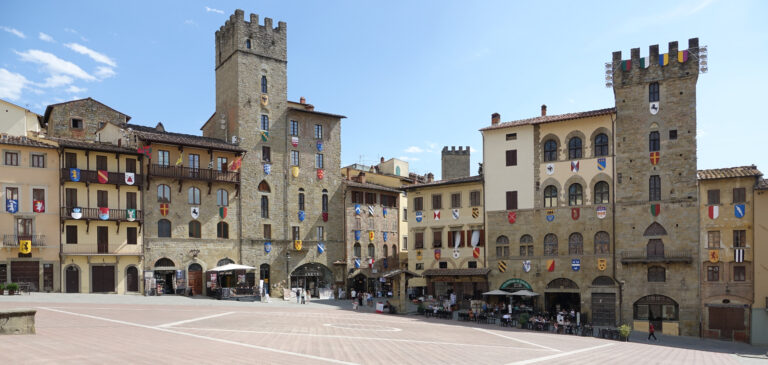
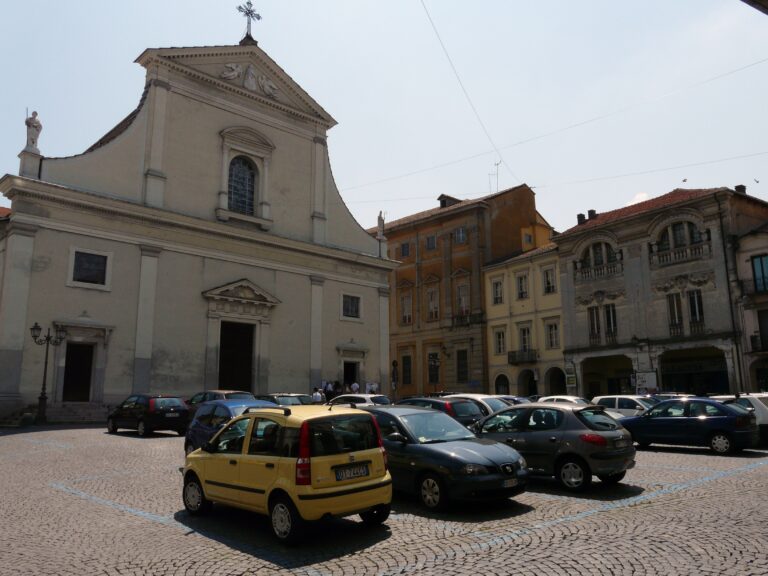
In 1925, young Tyrolean pastry chef Alfons Loacker opened a small confectionery workshop beside Bolzano’s Franciscan cloisters, reinventing the crispy Viennese wafer with pure Italian hazelnuts.
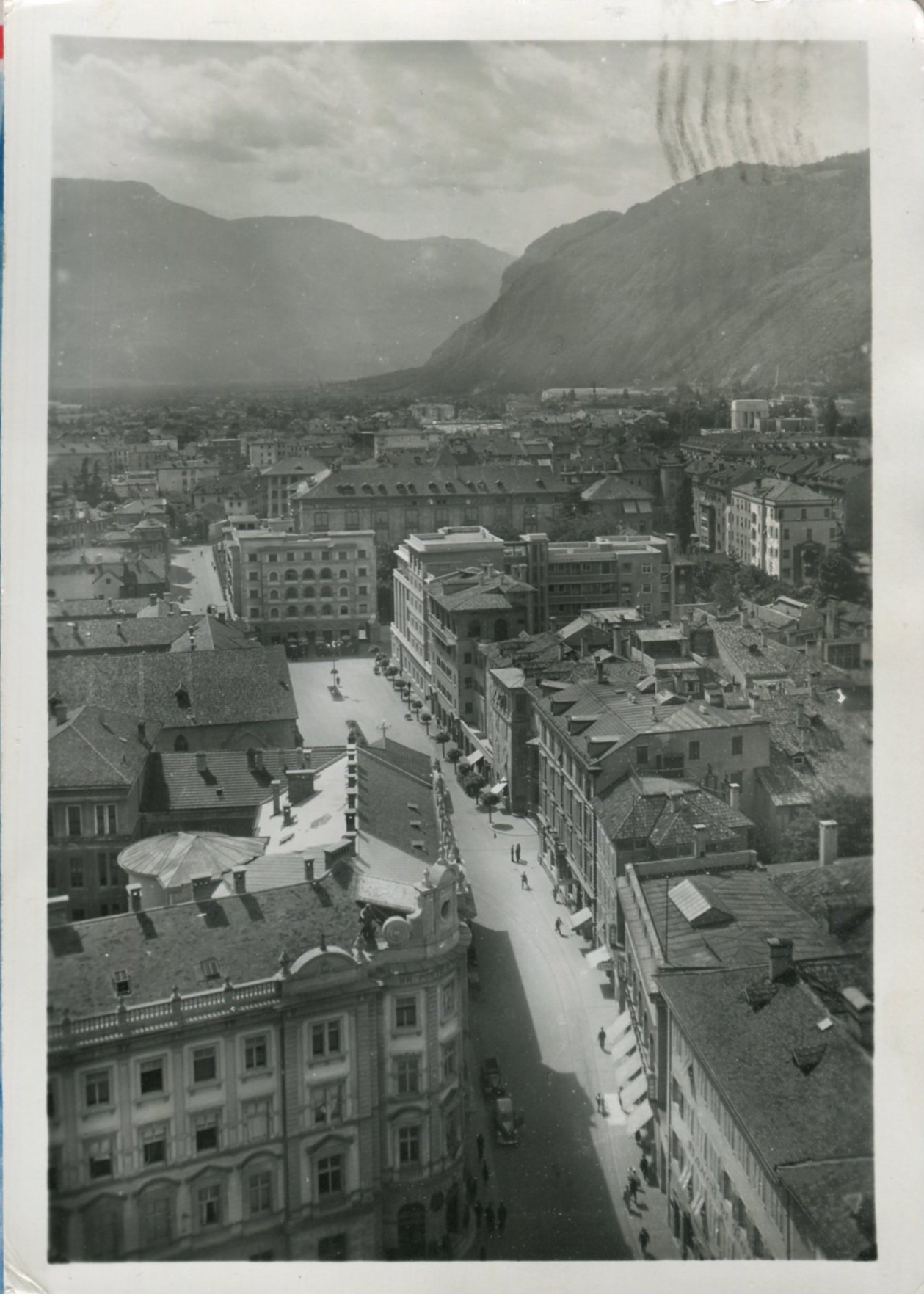
Bolzano in 1925 was a city undergoing profound political and cultural transition. Following the 1919 Treaty of Saint-Germain, South Tyrol had been incorporated into the Kingdom of Italy. The town beneath the dramatic porphyry cliffs of the Rosengarten balanced centuries-old Austrian confectionery traditions with new Mediterranean trading networks. Along the cobbled arcades (*Lauben*), traditional pastry chefs prepared Austrian Sachertorten and Linzertorten alongside Italian marzipan.
That spring, twenty-four-year-old Alfons Loacker (1901–1970), who had completed rigorous baking apprenticeships in Feldkirch and Innsbruck, acquired a tiny pastry shop at Piazza Domenicani 3 in the heart of Bolzano. Rather than competing in perishable cream cakes that spoiled during summer heat, Loacker had an ambition: to create an alpine wafer that stayed fresh, crisp, and transportable for mountaineers heading into the Dolomites.
The wafer and the Italian hazelnut
The traditional Viennese wafer was often stuffed with heavy, artificial sugar pastes. Loacker discarded synthetic aromas, committing to a revolutionary recipe: wafer sheets baked to paper-thin delicacy between gas-fired waffle irons, sandwiched with cream made strictly from roasted Italian hazelnuts (from Piedmont and Campania) and genuine Bourbon vanilla. He called his creation Bolzano Wafer (*Bozner Waffeln*).
Packed in airtight wax paper decorated with the jagged skyline of the Sciliar mountain, the wafers became an immediate regional sensation. Local families, hikers, and railway travelers stopped at Piazza Domenicani to buy fresh wafers still warm from the ovens. By the 1930s, Loacker had opened a specialized bakery in Via dei Bottai (Bindergasse), supplying grocers across northern Italy.
Ascending to the clean air of the Renon
Following Alfons’s death in 1970, his children Armin and Christine Loacker took a daring strategic decision. Instead of relocating to a crowded industrial zone on the plains of Verona or Milan, they looked up at the mountains. In 1974, they moved the entire manufacturing complex to Auna di Sotto (Unterinn) on the Renon plateau, situated at 1,000 metres above sea level.
The reasoning was ecological and sensory: wafer sheets require pure, unpolluted mountain air and crystal-clear alpine water to achieve maximum crispness without chemical drying agents. Directly facing the Schlern/Sciliar massif that had graced its wrappers since the 1920s, Loacker turned alpine geography into its core ingredient.
What remains today
A century later, Loacker remains an independent family enterprise, exporting to over a hundred countries while refusing artificial flavourings or hydrogenated fats. In Bolzano, the historic pasticceria in Piazza Domenicani and the Loacker Café on Piazza Walther commemorate the company’s urban origins. Up on the Renon plateau, the Loacker World of Taste and company archives preserve Alfons’s original handwritten recipe books, hand-operated waffle irons, and vintage packaging, testifying to how an apprentice’s devotion to honest ingredients built a global alpine legend.
Historic Views & Archives
From the Archives: Historical Newsreels
Italia: scorci e vita quotidiana a Bolzano negli anni Trenta
Historic newsreel footage capturing Bolzano during the interwar era: Piazza Walther, the market arcades beneath traditional wrought-iron guild signs, and the surrounding Dolomite peaks.
Visiting the Site: Street View & Modern Geography
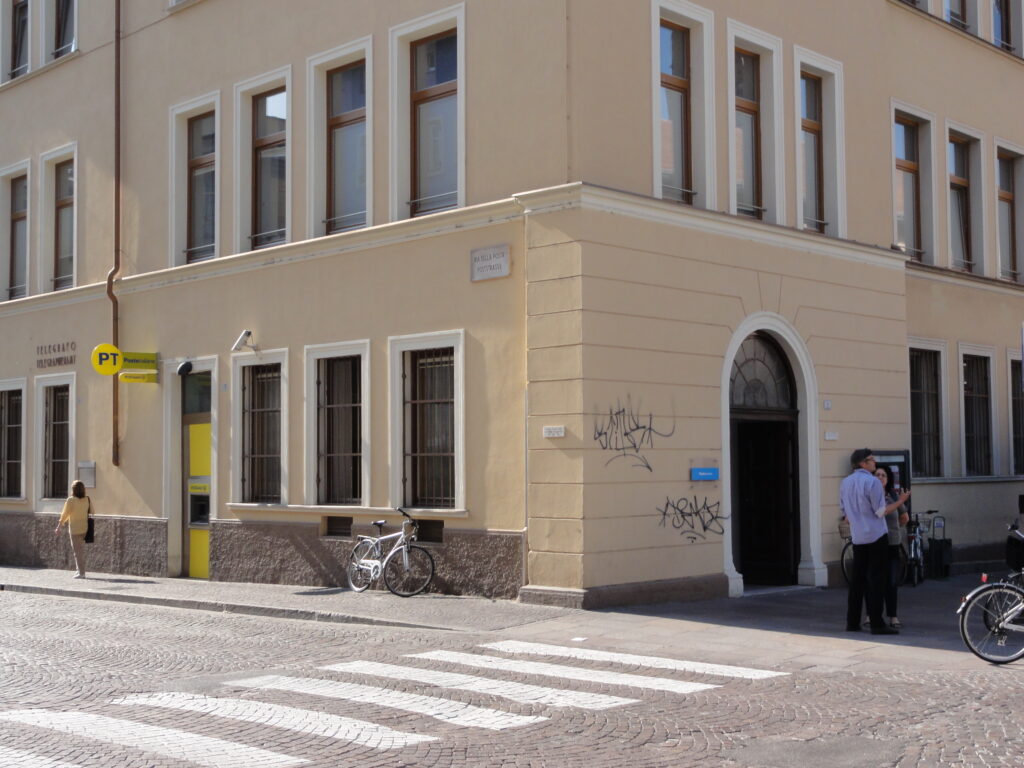
Piazza Domenicani sits in the medieval and Renaissance core of Bolzano, shaded by the historic Dominican monastery. The ground-floor arches sheltered Alfons Loacker’s first wafer-baking iron plates, before the family moved production to 1,000 metres altitude in Auna di Sotto (Renon).
Historic Address: Piazza Domenicani 3 & Via dei Bottai (Bindergasse), 39100 Bolzano (BZ), Italy
Sources
- Handelskammer Bozen (Camera di Commercio di Bolzano), Handelsregister Bozen: Alfons Loacker Konditorei (1925)
- Christine Roilo, Handwerk und Gewerbe in Bozen zwischen den Weltkriegen, Südtiroler Landesarchiv, Bozen, 2005
- Loacker Corporate Archives, Die Geschichte einer Waffel: 100 Jahre Loacker (1925–2025), Auna di Sotto, 2025
- Helmut Stampfer, Bozen: Stadtführer durch Geschichte und Architektur, Folio Verlag, Vienna-Bozen, 2012