
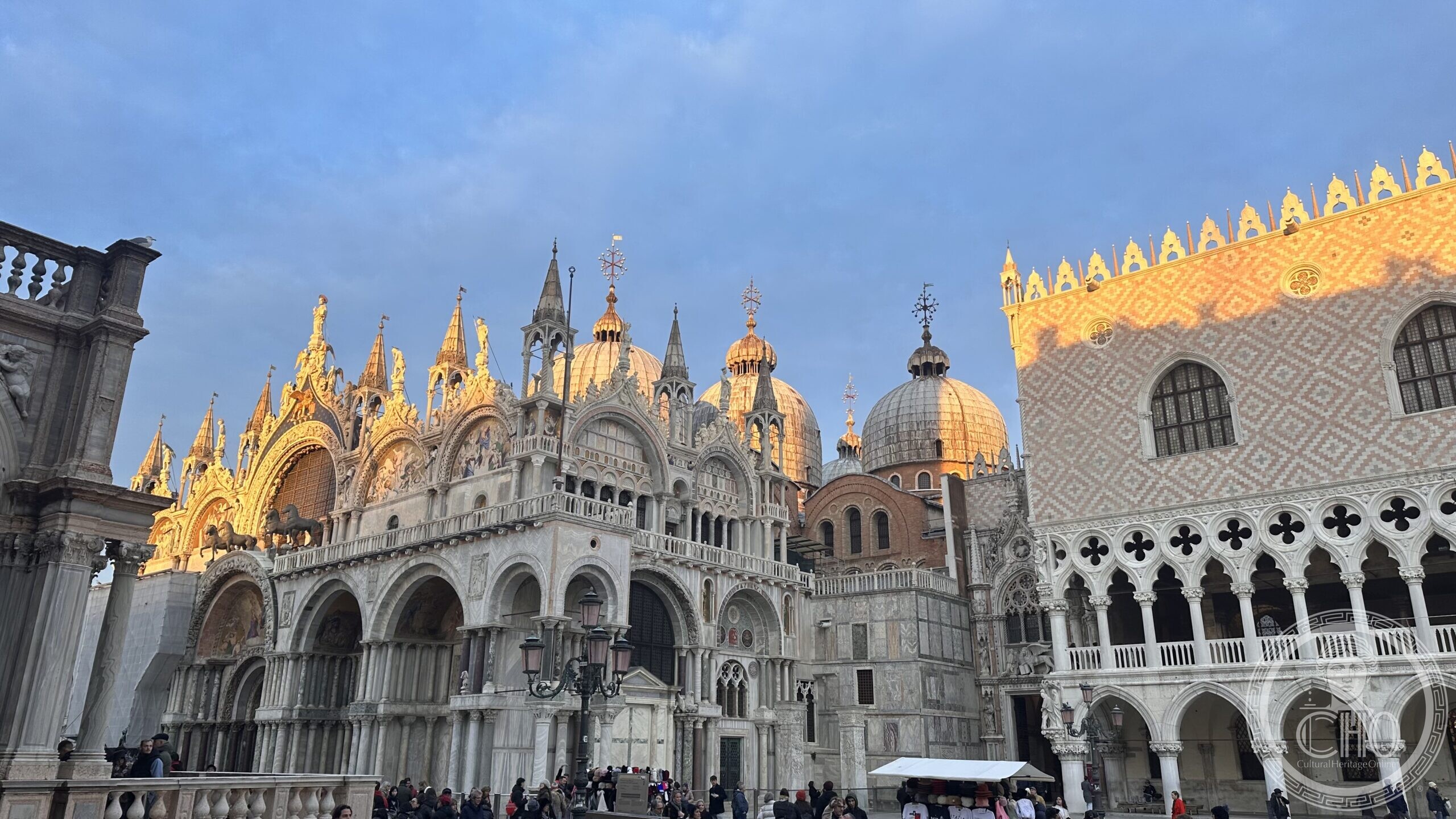
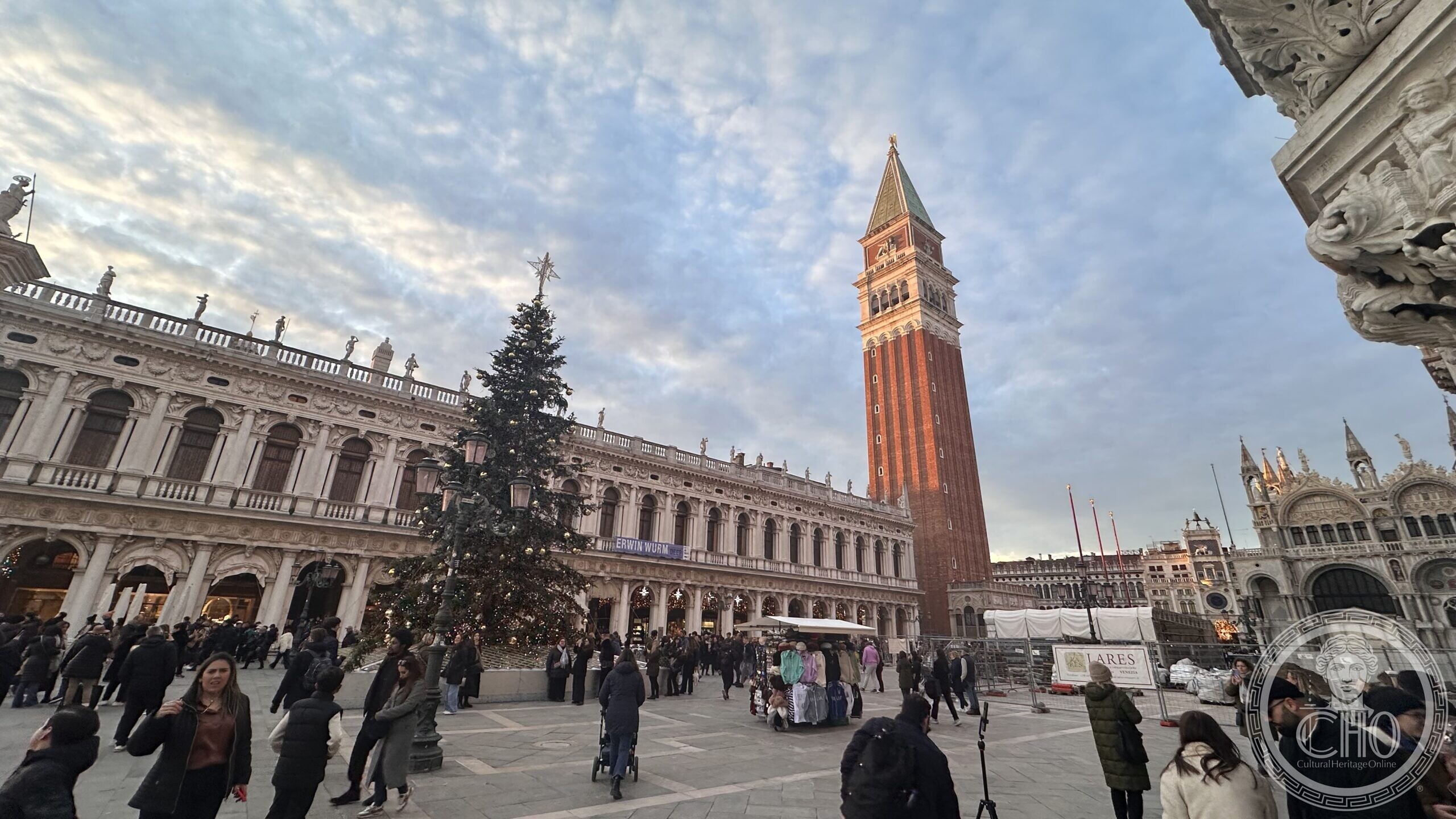
The only piazza in Venice grand enough to be called by that name rather than campo, framed by five centuries of building — the Basilica, the Doge’s Palace, the Campanile, and the long arcaded wings of the Procuratie — and dressed every December with a fifteen-metre fir tree and lights strung the length of its porticoes.
At a glance
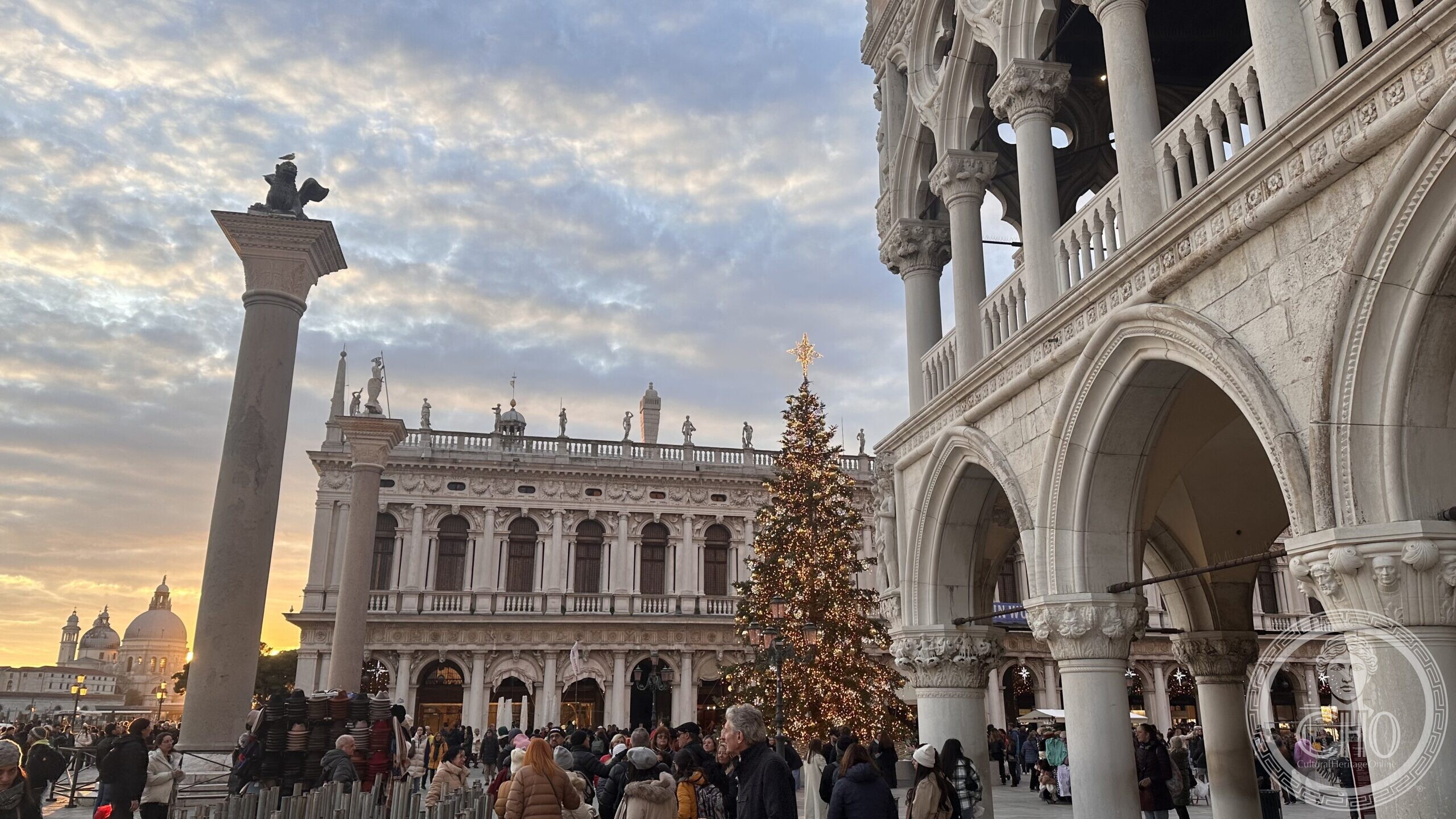
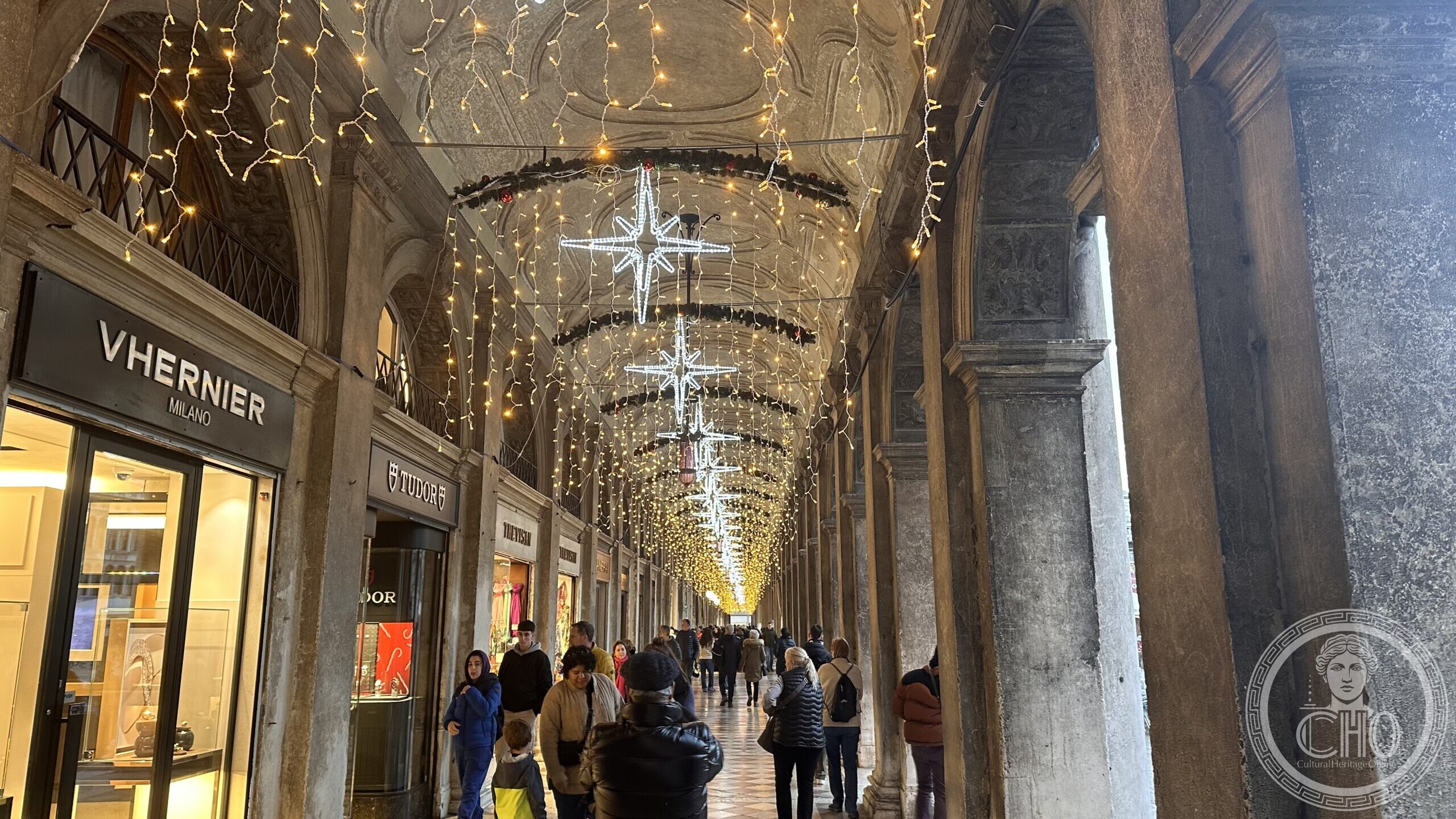
Piazza San Marco is the civic and religious centre Venice built for itself: a rectangular square closed at its eastern end by the Basilica di San Marco and the Doge’s Palace, and flanked on the long sides by the Procuratie Vecchie and Procuratie Nuove, with the Campanile rising free-standing near the corner where the square opens onto the Piazzetta and the lagoon. Napoleon, on taking the city in 1797, is said to have called it the finest drawing room in Europe. Every year in late November or early December the square is dressed for Christmas: a large fir tree, some fifteen metres high, is raised between the Doge’s Palace and the Marciana Library beside the Basilica, and the arcades of the Procuratie are hung with lights.
Key facts
- Where: San Marco, Venice, at the edge of the Bacino di San Marco
- Procuratie Vecchie: built 1495–1517, originally housing the Procurators of St Mark; the same years saw the Clock Tower built
- Procuratie Nuove: built by Jacopo Sansovino in the later sixteenth century, echoing the older wing’s design
- Ala Napoleonica: built after 1807, when Napoleon had the church of San Geminiano demolished to close the square’s western end with a new wing and ballroom, today part of the Museo Correr
- Christmas tree: raised annually beside the Basilica, between the Doge’s Palace and the Biblioteca Marciana, roughly 15 metres high
Five centuries of building one square
The square took its present shape gradually. The Procuratie Vecchie, on the north side, went up between 1495 and 1517 to house the Procurators of St Mark, the republic’s senior lay officials after the doge; the Clock Tower closing their western end dates from the same years. Later in the sixteenth century, Jacopo Sansovino built the Procuratie Nuove on the south side, deliberately matching the older wing’s rhythm of arches so the two long sides would read as a single design, decades apart. Under Austrian rule the Procuratie Nuove briefly served as a royal palace.
The square’s final side came latest, and most abruptly. When Napoleon’s troops took Venice in 1797 and ended the Republic, the French had the medieval church of San Geminiano, which had stood at the square’s western end since the eleventh century, torn down; in its place rose the Ala Napoleonica after 1807, a new wing intended to house Napoleon’s own ballroom and to complete the piazza as a closed rectangle. It later passed to the Habsburgs and then to the Kingdom of Italy, and today holds the Museo Correr.
What you see
Standing in the square with your back to the Ala Napoleonica, the view runs the length of the piazza to the Basilica’s golden, many-domed facade and the Gothic tracery of the Doge’s Palace beside it, with the red brick shaft of the Campanile rising free-standing to one side. The two Procuratie wings run away on either hand in matching arcades, their ground floors given over to the same kind of shops — jewellers, watchmakers, cafés — that have traded from under these porticoes for centuries. At Christmas the arcades are strung with lights and stars, and the fir tree beside the Basilica is lit each evening through the holiday season.
Do you know more?
We have not found a date for when the Christmas tree tradition in the square began. If you know it, or have more on the square’s history, write to Sofia, who looks after these pages.
Write to Sofiaor send a message on WhatsApp
Please start your message with the title of this page, so it reaches the right file. Every contribution is checked against independent sources before it goes on the page, and we always say where a piece of information came from.
Getting there
Piazza San Marco is reached on foot from any direction through Venice’s calli, or by vaporetto to the San Marco Vallaresso or San Zaccaria stops, both a few minutes’ walk away.
Nearby, on this site
- The Clock Tower of Piazza San Marco, at the end of the Procuratie Vecchie.
- The columns of San Marco and San Todaro, in the Piazzetta.
Sources
- venetostoria.com, on the Procuratie Vecchie and Nuove and the Ala Napoleonica.
- Comune di Venezia / press coverage (ANSA, VeneziaToday, Il Resto del Carlino) on the annual Christmas tree and lights in the square.
- Luigi De Marchi, who photographed the square at Christmas.
Gallery
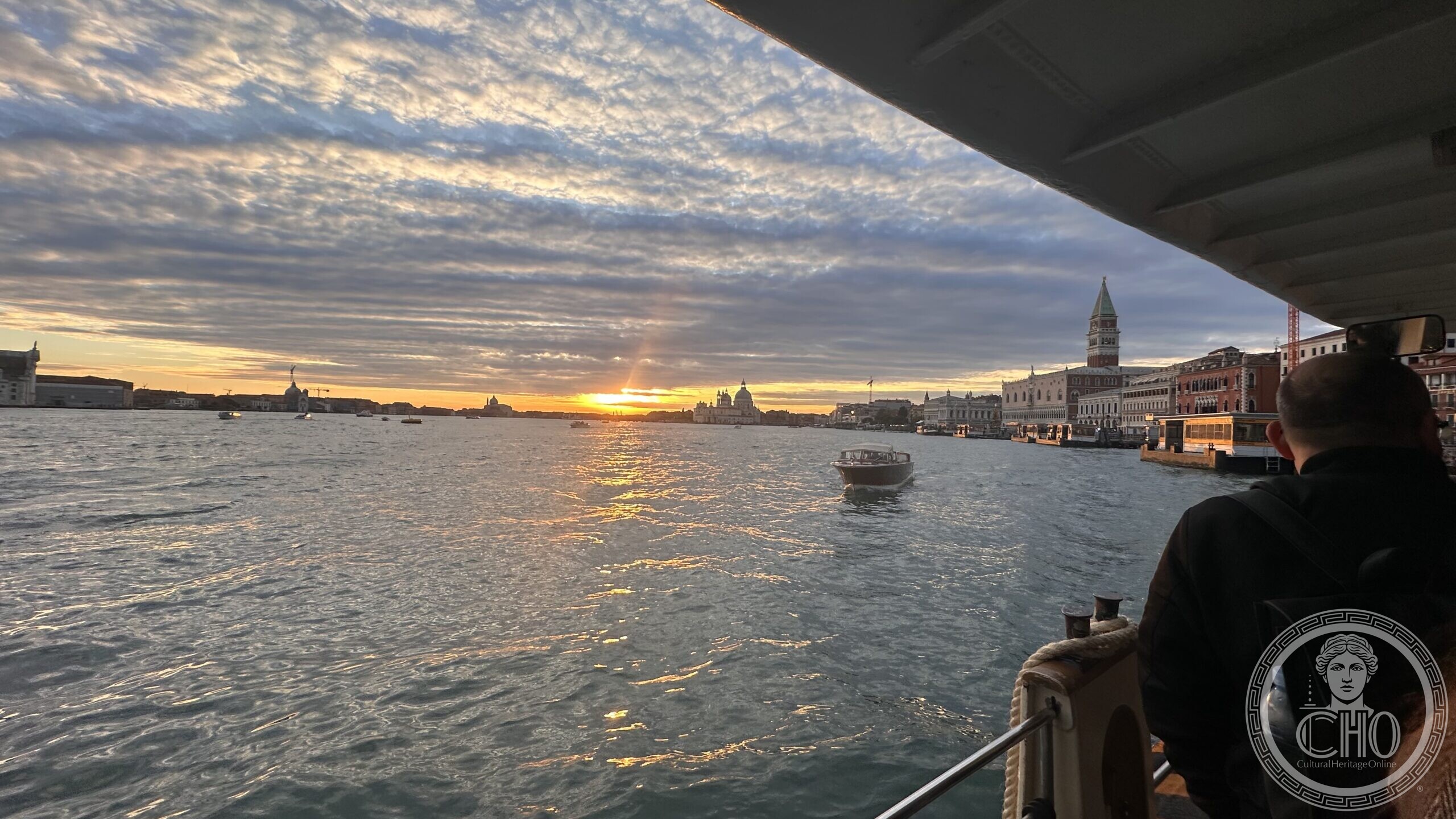
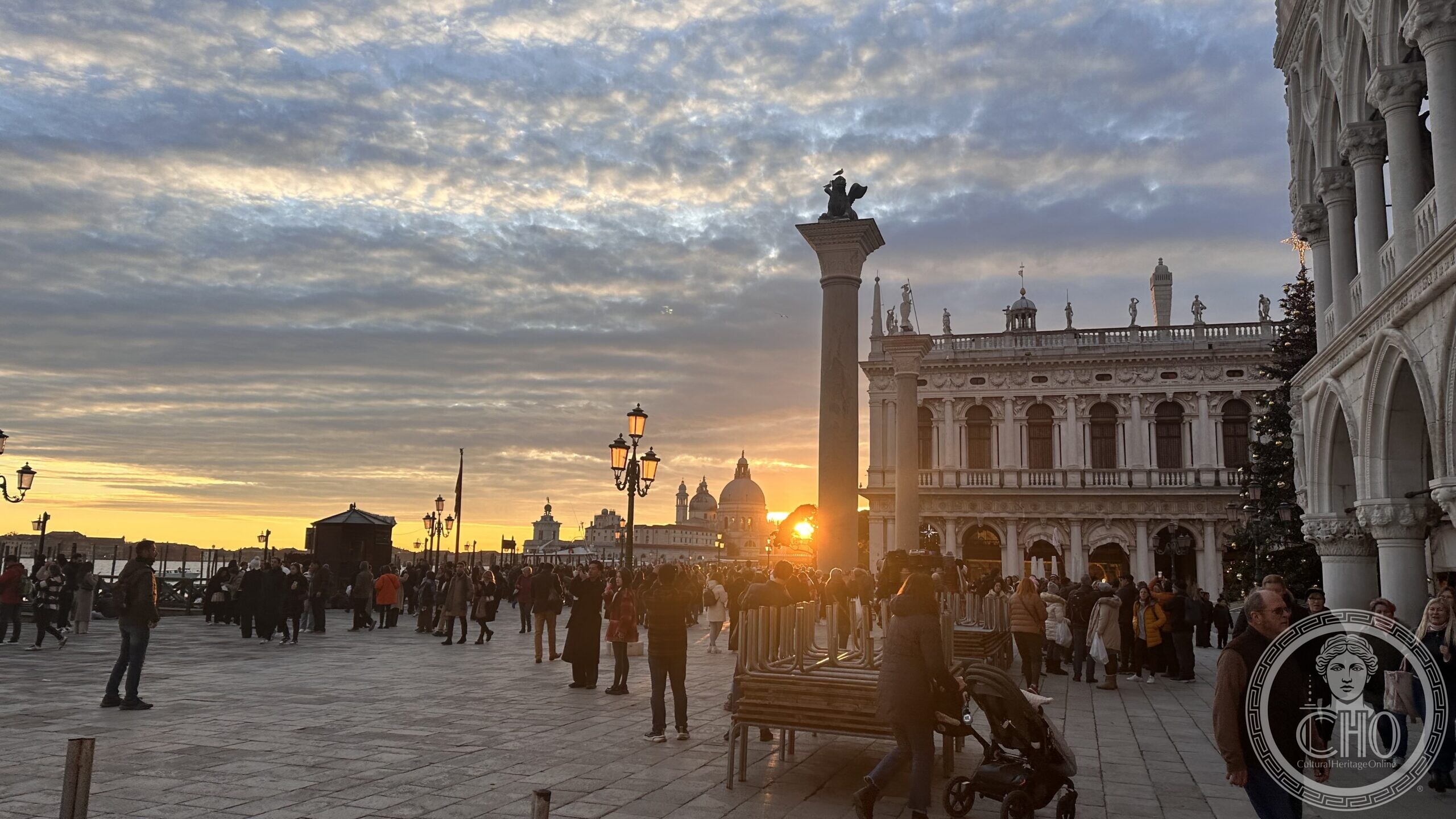
Photographs by Luigi De Marchi.
Find it on the map
See this place and what’s around it →Record researched and written by Luigi De Marchi for Cultural Heritage Online, 2026.
📷 Become a Cultural Heritage Online photographer
Share your photos of places: they stay published under your name as the author. The more they're seen, the more you get noticed — and soon a contest will reward the most appreciated photos.
Log in or sign up free to add a photo