
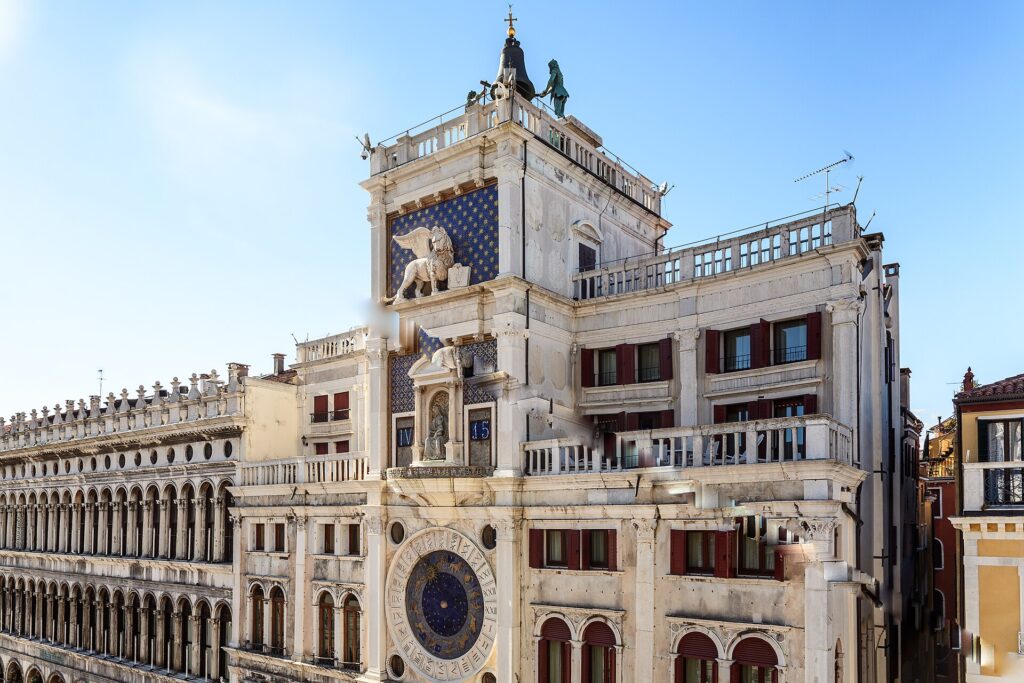
The Republic put its clock over the street that leads to the market, not over the church. Everything on the face — hours, saint’s day, moon, zodiac — was meant to be legible from the paving below.
At a glance
In 1493 the Senate commissioned a new clock from Zuan Carlo Rainieri of Reggio Emilia. In 1495 it decided where to put it: over the archway at the entrance to the Merceria, the street that runs from the square to Rialto. Demolition of the houses in the way began on 10 June 1496, and the clock was uncovered for the first time on 1 February 1499. The tower itself carries no signed design; the attribution to Mauro Codussi rests on how its orders and ornament compare with his other buildings.
What you see
A blue and gold dial, the hours in Roman numerals around the rim, the moon turning through its phases and the sun moving against the signs of the zodiac. Above it the Virgin and Child, and the two doors from which the Magi come out in procession on Epiphany and Ascension. At the top, two bronze figures — the Moors, so called from the colour the metal has taken — swing their hammers at the bell. The side wings went up in the five years after the rulings of 1500, restated in 1503. In the middle of the eighteenth century Giorgio Massari raised them, added eight columns and new balustrades. In the nineteenth the wooden stairs were replaced by metal spirals, the timber roof by brick vaults and marble, and the two Moors were lifted about a metre.
Why it matters
A clock this elaborate was not built to tell the time; hourly bells already did that. It was built to be looked at by everyone crossing the square, and it said what the Republic wanted said: that Venice commanded astronomy, metalwork and the calendar of the church at once. The story that the clockmakers were blinded so they could never build another belongs to the same appetite for wonder, and it is untrue. The Rainieri outlived their machine and were paid to maintain it for years.
Practical information
- The interior is visited by guided tour only, booked in advance through the Fondazione Musei Civici di Venezia
- The stairs are steep and narrow; the tour reaches the terrace beside the bell
- The dial can be seen at any hour, free, from the square
Getting there
Waterbus to San Marco Vallaresso or Rialto. The tower stands on the north side of Piazza San Marco, at the mouth of the Merceria.
Sources
- Fondazione Musei Civici di Venezia, Torre dell’Orologio — Building and history, torreorologio.visitmuve.it
- Marin Sanudo, Diarii, on the unveiling of 1 February 1499, as quoted by the museum
Editorial text © Cultural Heritage Online, 2026. Video filmed and narrated on site by Andrea Manzo.
Photo gallery
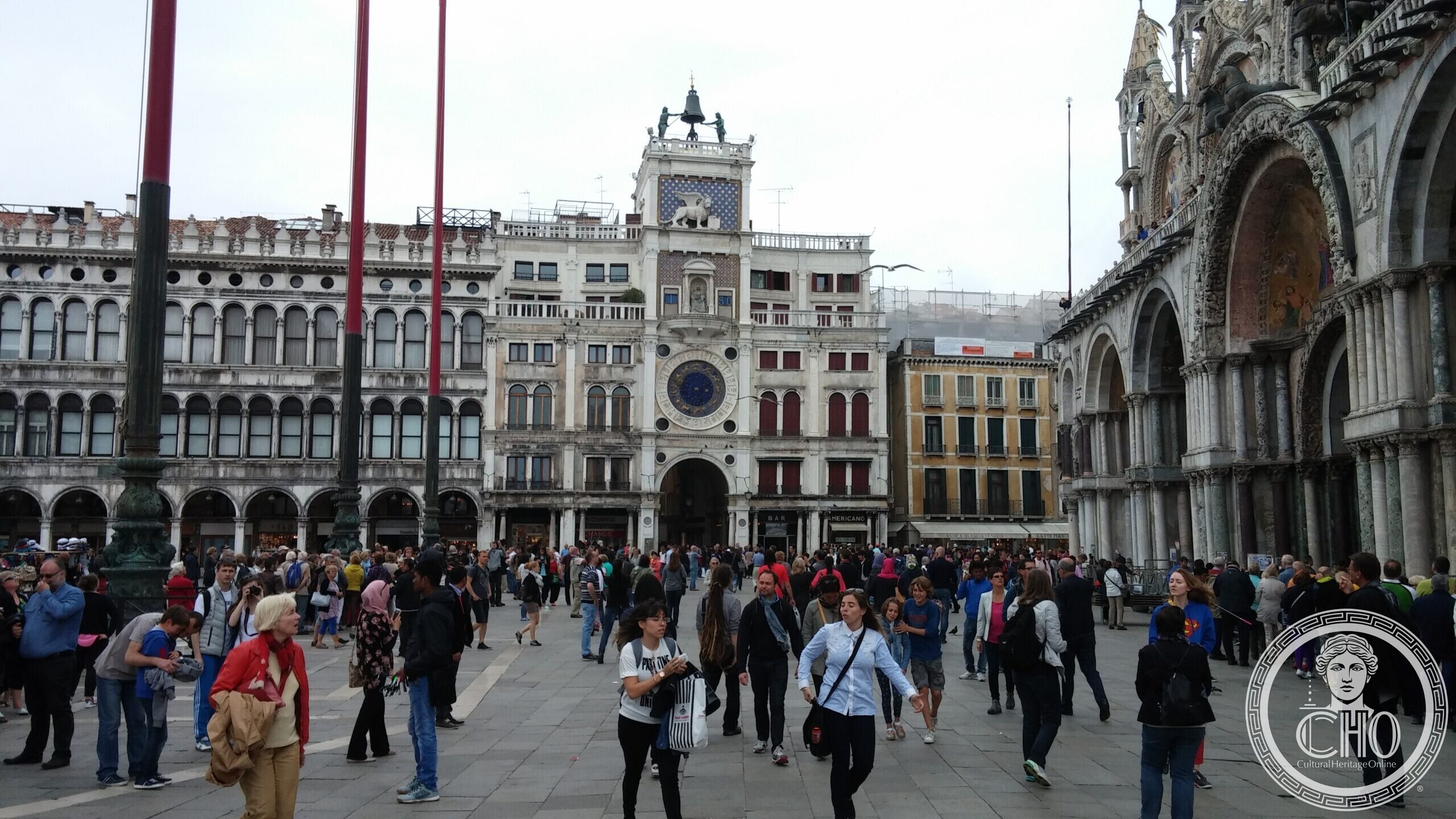
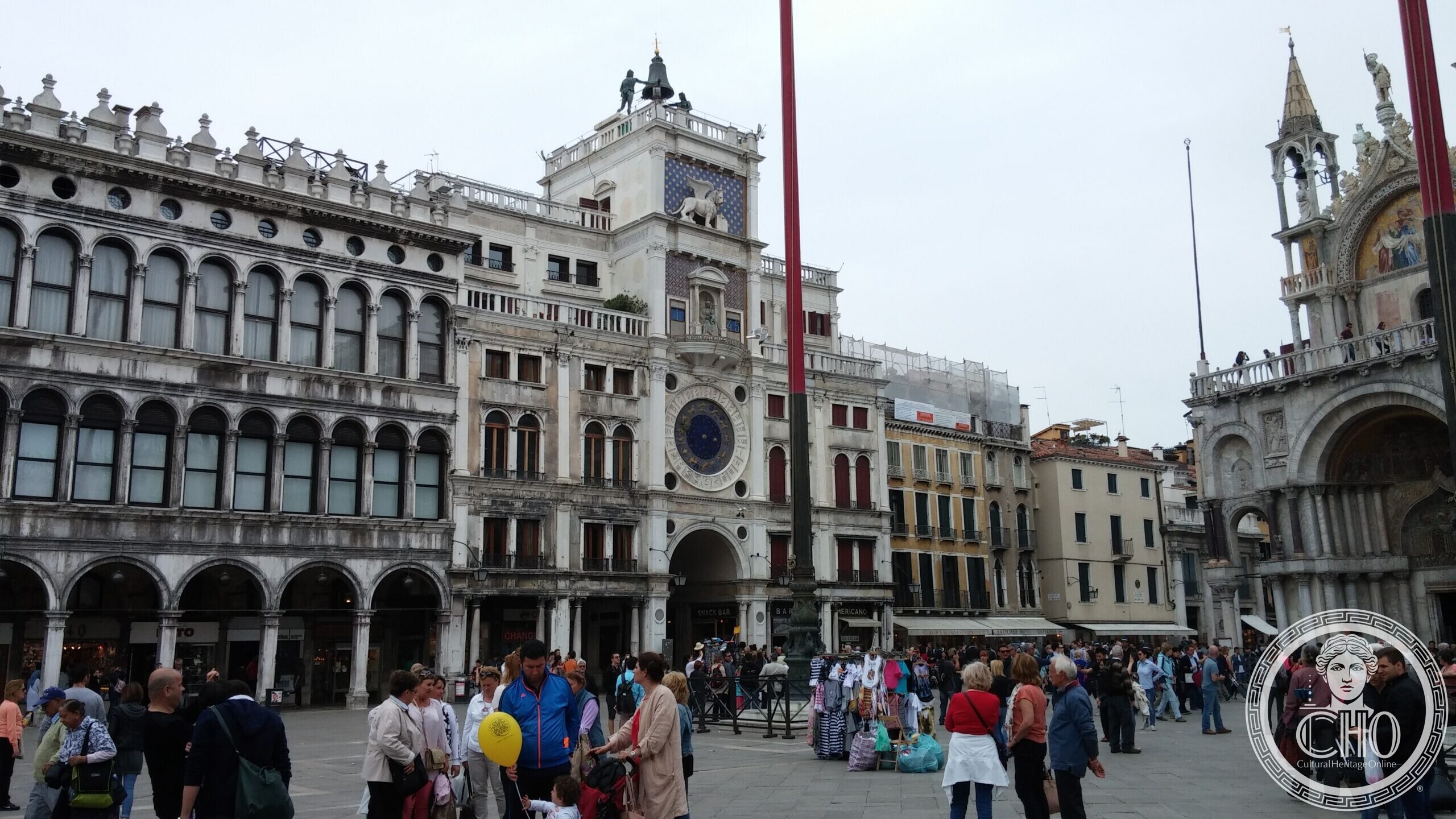
Photographs contributed by a Cultural Heritage Online member.
Find it on the map
See this place and what’s around it →
📷 Become a Cultural Heritage Online photographer
Share your photos of places: they stay published under your name as the author. The more they're seen, the more you get noticed — and soon a contest will reward the most appreciated photos.
Log in or sign up free to add a photoIs this page about you?
This page is read by travellers and heritage enthusiasts who find it on Google. Tell us how you are connected to this place and we will take it from there.