
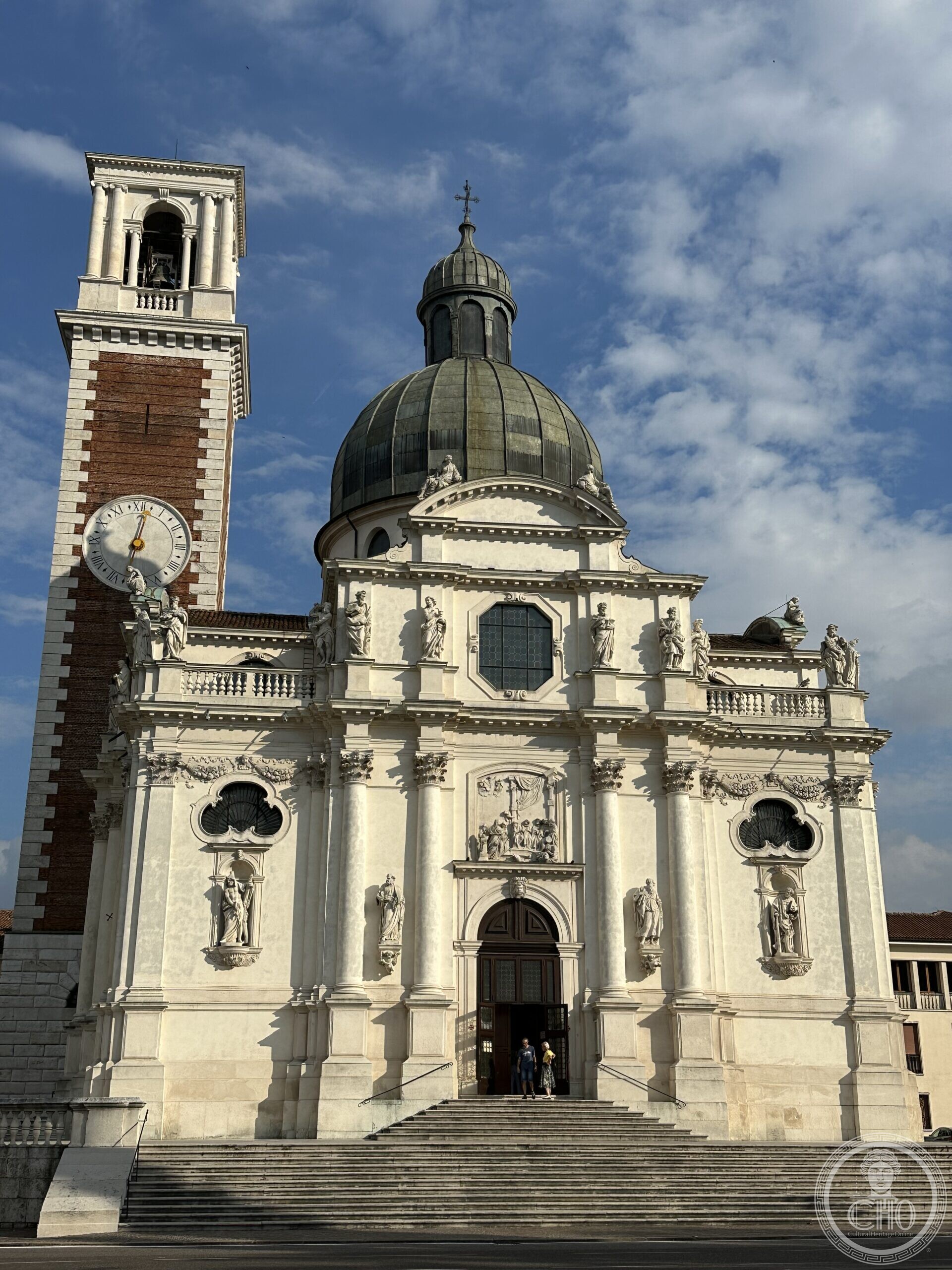
A hill above Vicenza where two apparitions of the Virgin in 1426 and 1428 gave rise to a sanctuary rebuilt in Baroque style in 1688, reached by a covered portico of 150 arches, and fronted since 1924 by a war memorial square inaugurated by Mussolini — with sweeping views over the city and its Palladian domes below.
At a glance
Monte Berico rises just south of Vicenza’s historic centre, and has drawn pilgrims and visitors for six centuries for two different reasons: the Marian sanctuary at its top, and the view over the city it commands. The elderly Vincenza Pasini reported seeing the Virgin here on 7 March 1426 and again on 1 August 1428, the second time asking that a church be built on the spot in exchange for the city’s protection from the plague. The church that followed was reworked by Andrea Palladio in 1578 and then largely rebuilt in Baroque form in 1688 — the building visitors see today. A long covered portico climbs the hill to meet it, and the piazza in front, the Piazzale della Vittoria, was built in 1920–24 as a First World War memorial and inaugurated by Benito Mussolini.
Key facts
- Where: Monte Berico, Vicenza, on Viale Dieci Giugno — a street named for the day in 1848 the city defended itself against Austria
- Sanctuary founded: after apparitions of the Virgin to Vincenza Pasini, 7 March 1426 and 1 August 1428
- Church rebuilt: reworked by Andrea Palladio, 1578; rebuilt in Baroque form, 1688 (the building standing today)
- Portico: 150 arches, built 1746–1780 by the architect Francesco Muttoni, with larger chapels every ten arches following the fifteen mysteries of the Rosary
- Piazzale della Vittoria: built 1920–1924 as a First World War memorial square, inaugurated by Benito Mussolini on 24 September 1924
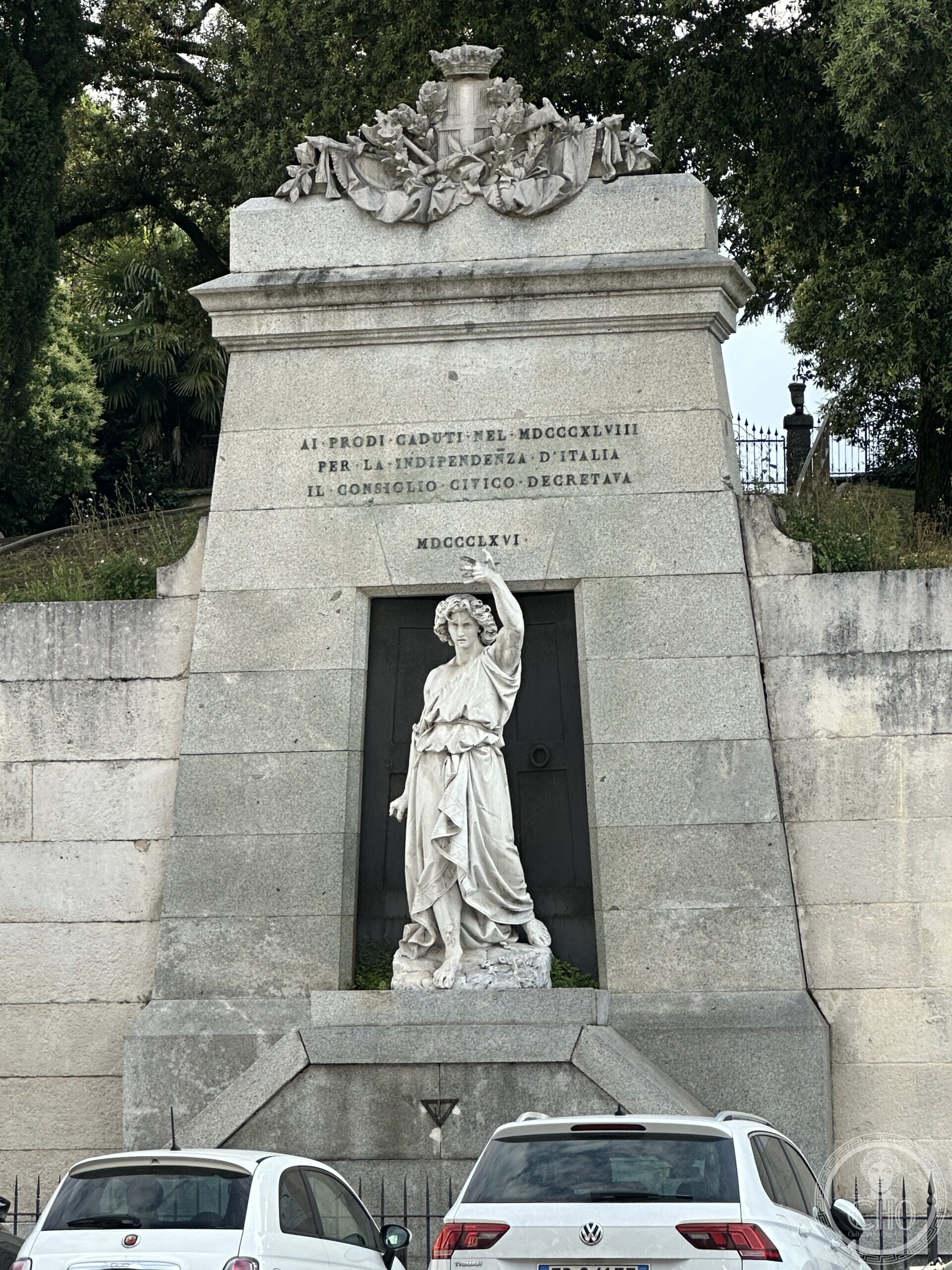
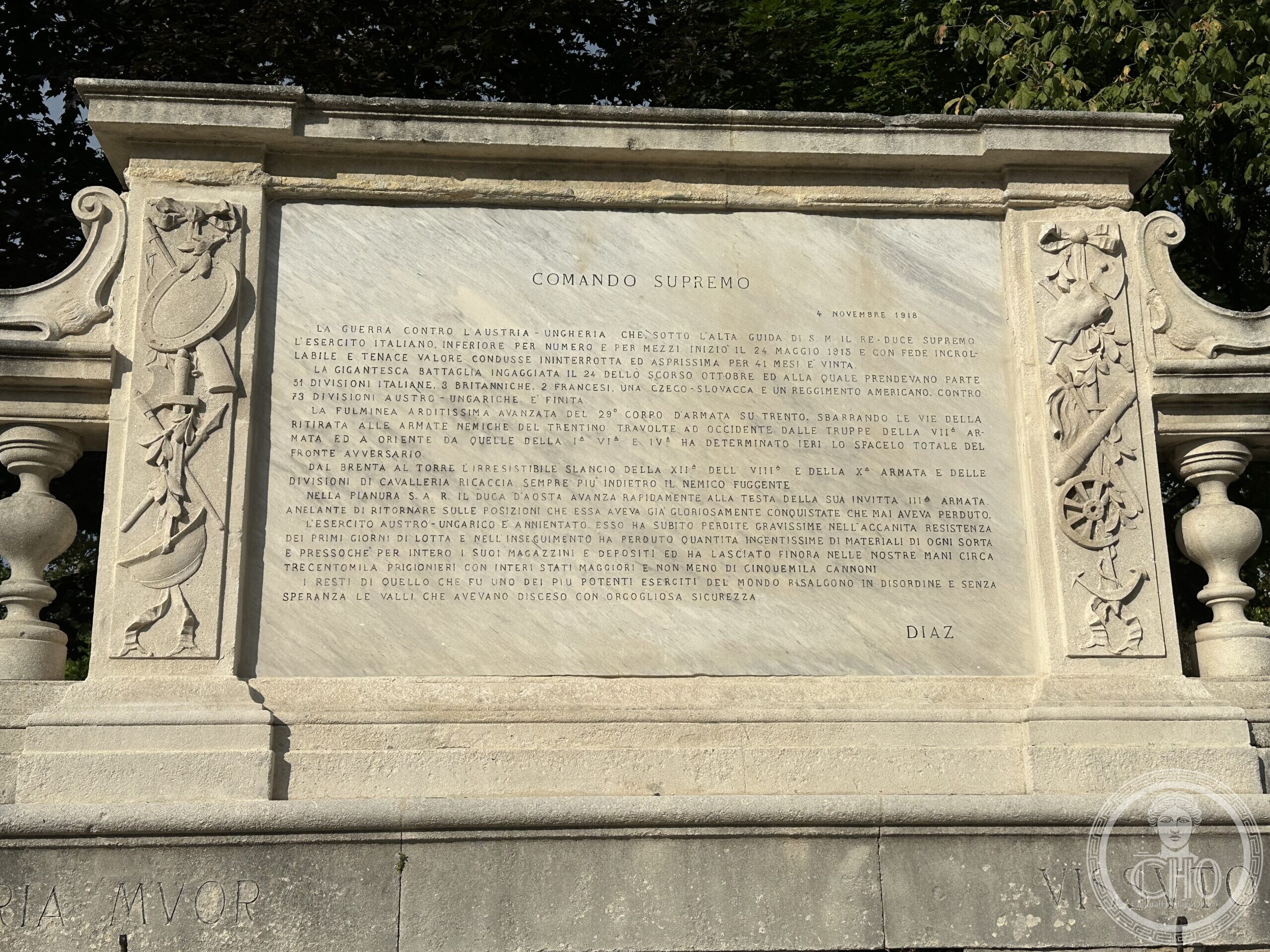
- Monuments in the square: the 1848 monument to Vicenza’s fallen defenders (Antonio Tantardini, 1871, moved here in 1924) and a plaque carrying General Armando Diaz’s Bollettino della Vittoria of 4 November 1918
Six centuries on one hill
The sanctuary’s origin is the two apparitions of 1426 and 1428, after which Vicenza built a Gothic church on the site of the plague-ending promise. Andrea Palladio reworked the building in 1578, and a further rebuilding in 1688 gave the sanctuary its present Baroque form: two churches effectively fused into one, the older Gothic nucleus absorbed into the larger Baroque basilica that stands today.
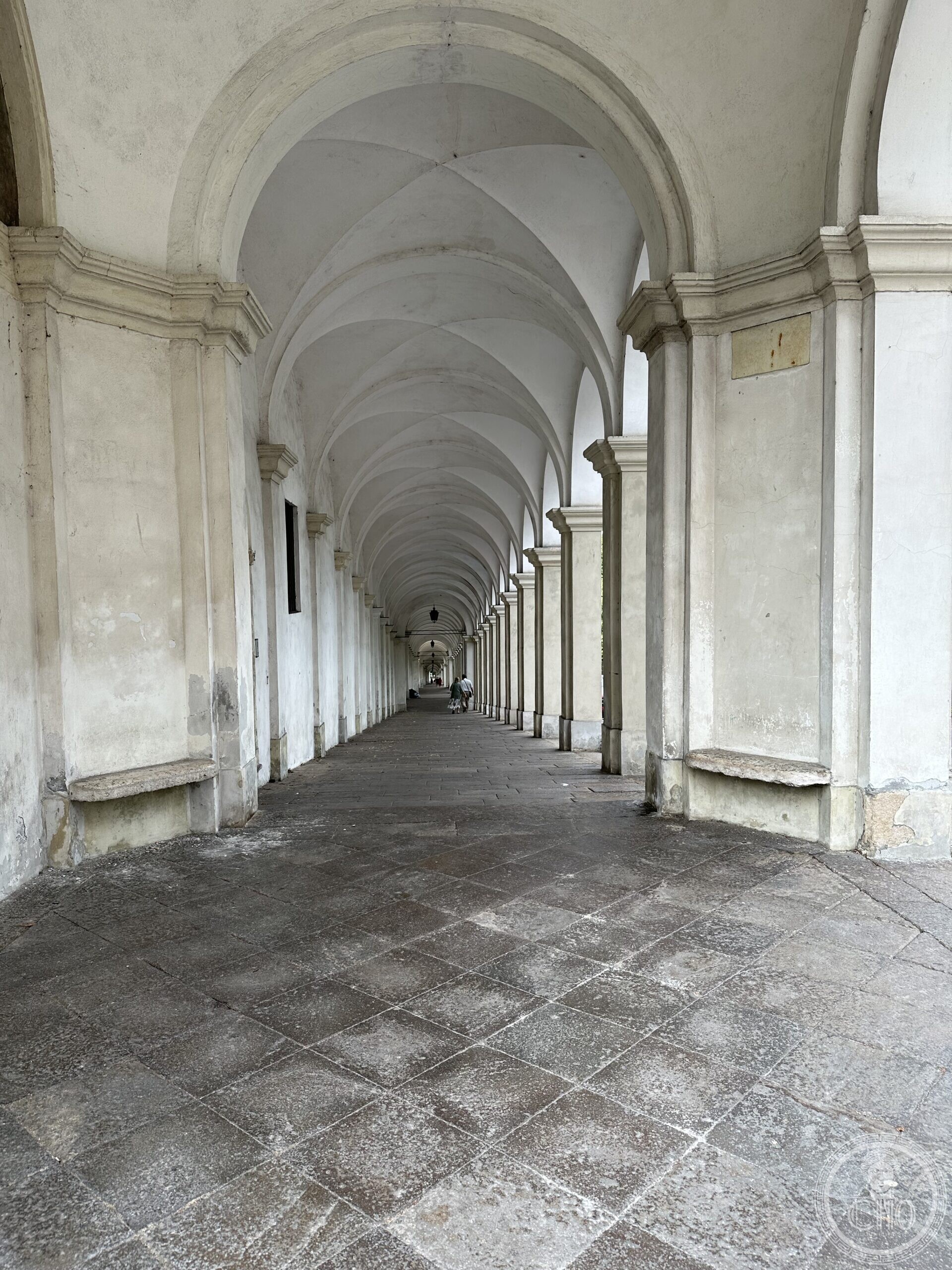
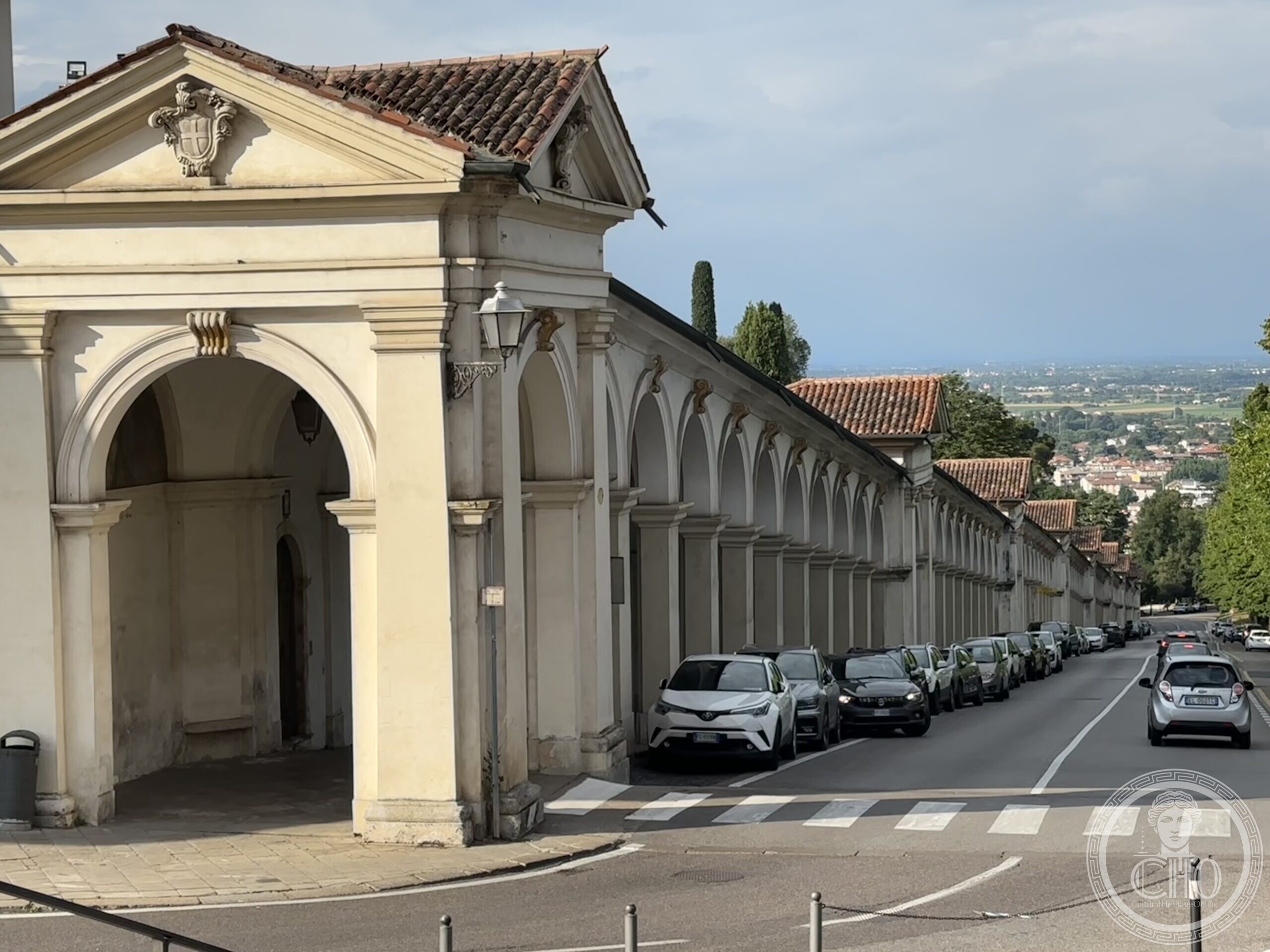
Between 1746 and 1780 the architect Francesco Muttoni built the covered portico that still carries pilgrims and visitors up the hill: 150 arches in total, with a larger chapel set every ten arches, the whole sequence corresponding to the fifteen mysteries of the Rosary.
The square in front of the basilica has its own, more recent history. After the First World War, a citizens’ committee proposed donating a grand piazza to the sanctuary in memory of the war dead; work began in 1920, cutting into the hillside facing the basilica’s front and causing some structural difficulty for the sanctuary itself. The Piazzale della Vittoria was inaugurated by Benito Mussolini on 24 September 1924. Two monuments stand in it. The older is a memorial to Vicenza’s own dead of 1848, when the city was besieged and defended against Austrian troops on 10 June of that year; sculpted by Antonio Tantardini and inaugurated in 1871, it originally stood beside the sanctuary and was moved to the new square in 1924. The other is a stone plaque carrying the full text of the Bollettino della Vittoria, the victory bulletin General Armando Diaz issued on 4 November 1918 announcing Austria-Hungary’s defeat — one of the best-known texts of the Italian war, reproduced on memorials across the country.
What you see
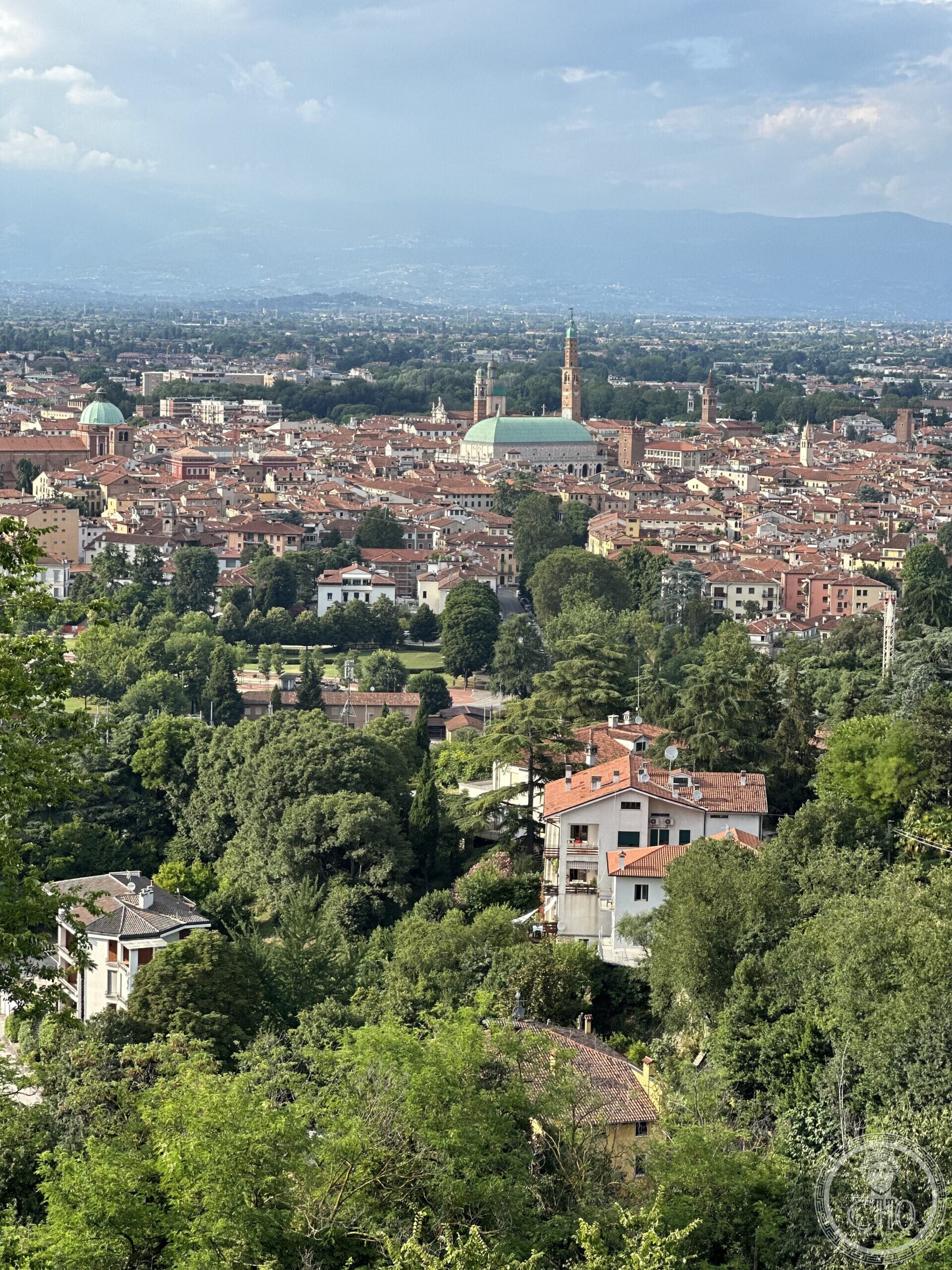
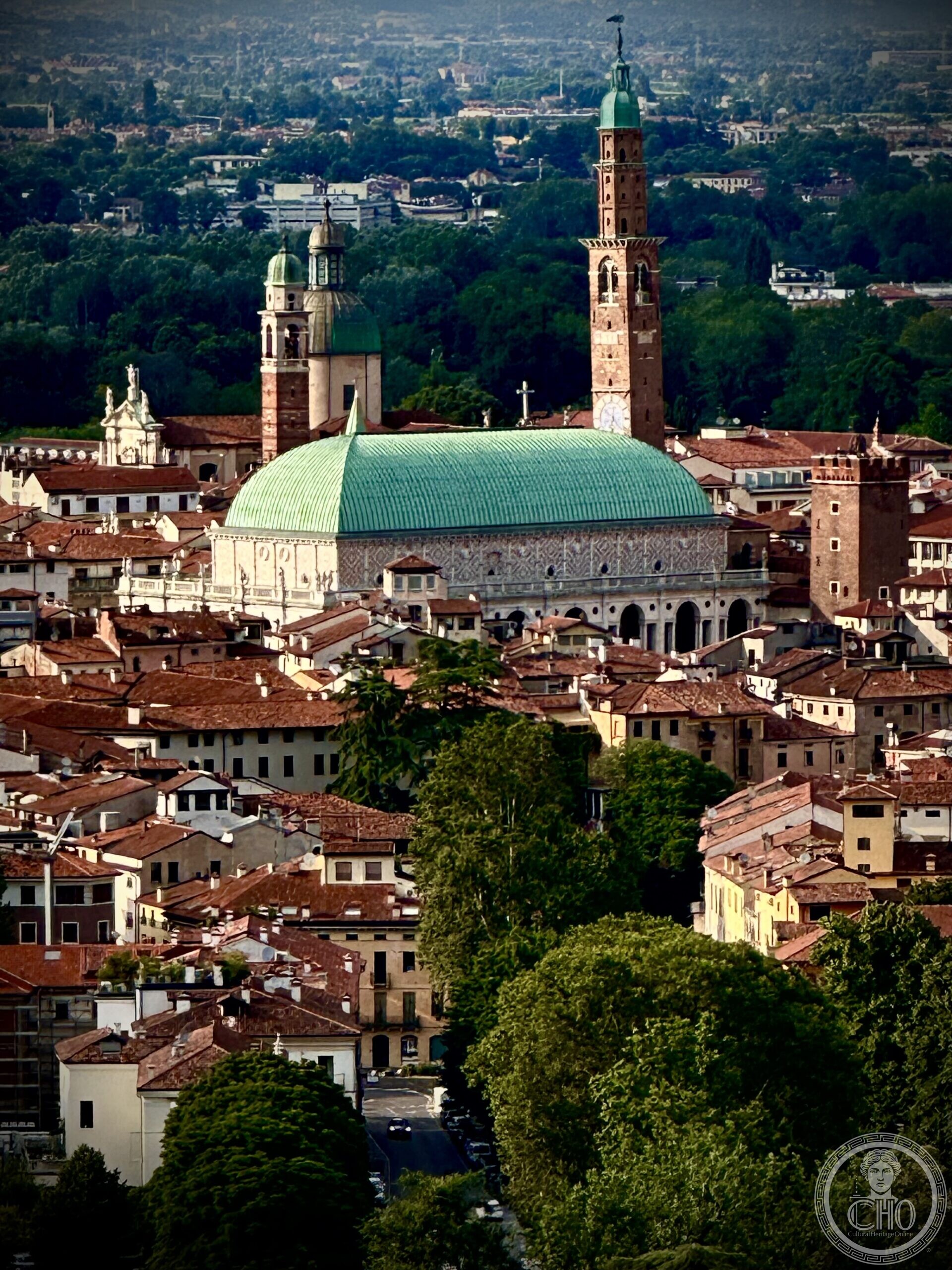
The basilica’s Baroque facade rises in pale stone with a green dome and clock tower beside it, reached by a broad flight of steps from the square. Below, the portico descends the hill in an unbroken run of white arches under a vaulted ceiling, a covered walk of the kind common to Italian pilgrimage sites but rarely built at this length. From the Piazzale della Vittoria, the view opens out over the roofs of Vicenza to the green-domed Basilica Palladiana and the Torre Bissara in the old centre below — the same city Palladio helped build seen from the hill where he also left his mark.
Do you know more?
If you know more about the sanctuary’s art collections, the Muttoni portico, or the Piazzale della Vittoria, write to Sofia, who looks after these pages.
Write to Sofiaor send a message on WhatsApp
Please start your message with the title of this page, so it reaches the right file. Every contribution is checked against independent sources before it goes on the page, and we always say where a piece of information came from.
Getting there
Monte Berico is a short walk or bus ride south of Vicenza’s historic centre, at the top of Viale Dieci Giugno. The portico offers a sheltered route on foot from the city below.
Sources
- Wikipedia (Italian), “Santuario della Madonna di Monte Berico” — on the apparitions, the 1578 and 1688 rebuildings, and the Muttoni portico (1746–1780, 150 arches).
- Wikipedia (Italian), “Piazzale della Vittoria (Vicenza)” — on the square’s construction (1920–24) and inauguration by Mussolini on 24 September 1924.
- salutidavicenza.it, “Monumento ai Caduti di Monte Berico” — on the 1848 monument by Antonio Tantardini (1871) and its move to the Piazzale della Vittoria in 1924.
- Comune di Vicenza, press material on the 1848 siege of the city and the Gold Medal for Military Valour awarded in 1866.
- Luigi De Marchi, who photographed the sanctuary, the portico, and the memorial square.
Gallery
Photographs by Luigi De Marchi.
Find it on the map
See this place and what’s around it →Record researched and written by Luigi De Marchi for Cultural Heritage Online, 2026.
📷 Become a Cultural Heritage Online photographer
Share your photos of places: they stay published under your name as the author. The more they're seen, the more you get noticed — and soon a contest will reward the most appreciated photos.
Log in or sign up free to add a photo