
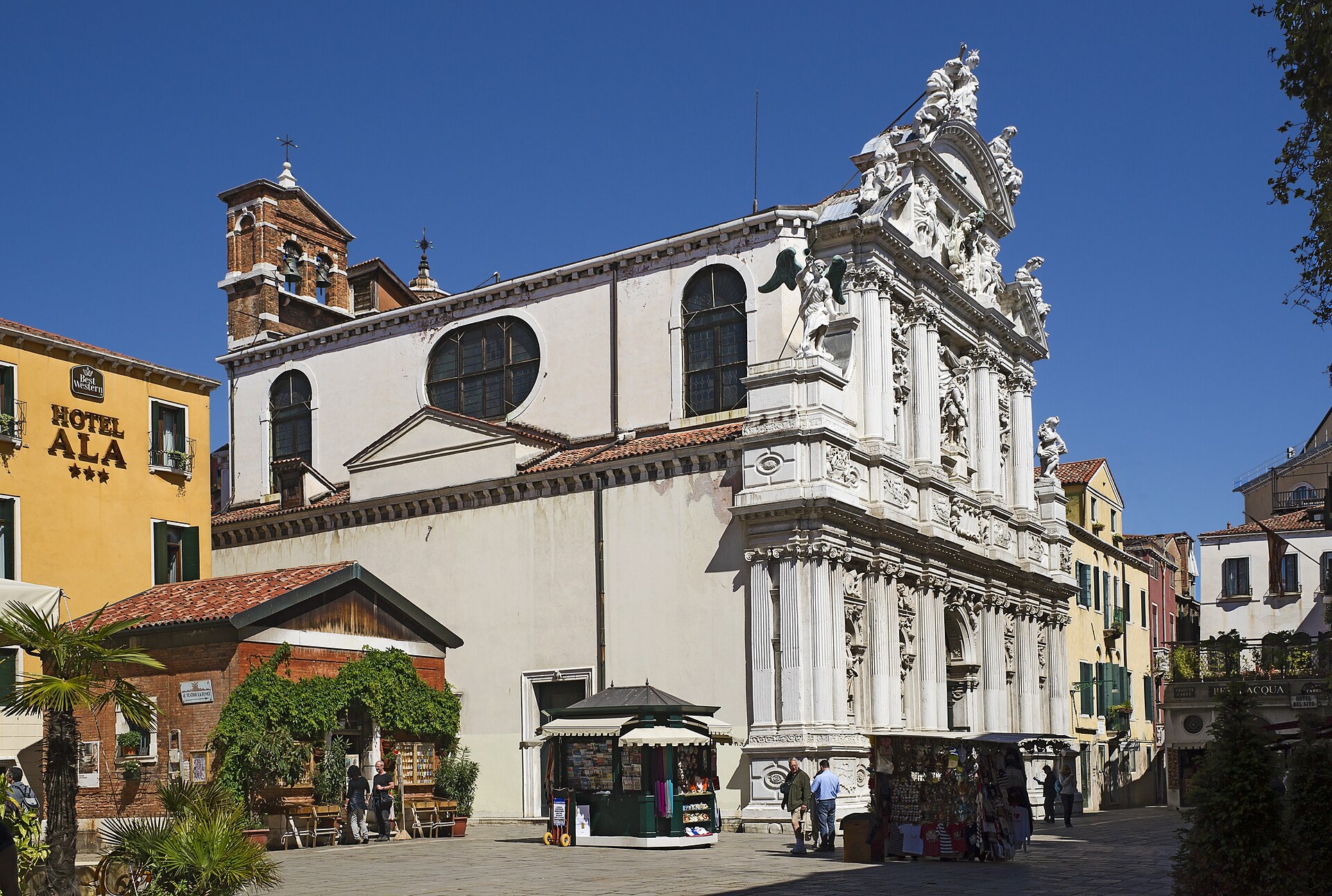
Venice, Veneto · Baroque facade, 1678–1681 · a church front with no Christian image on it
At a glance
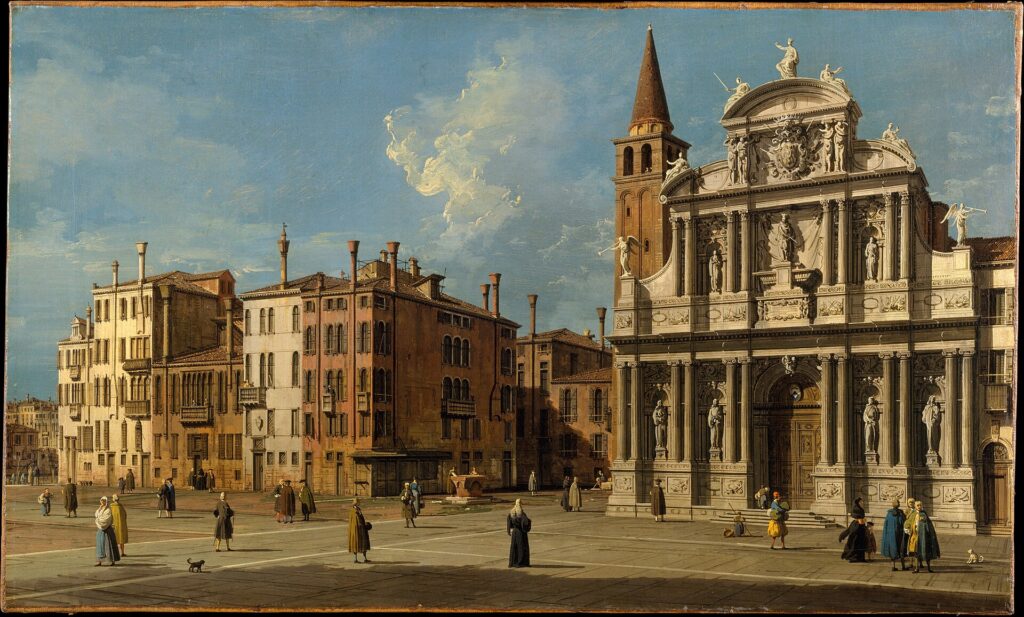
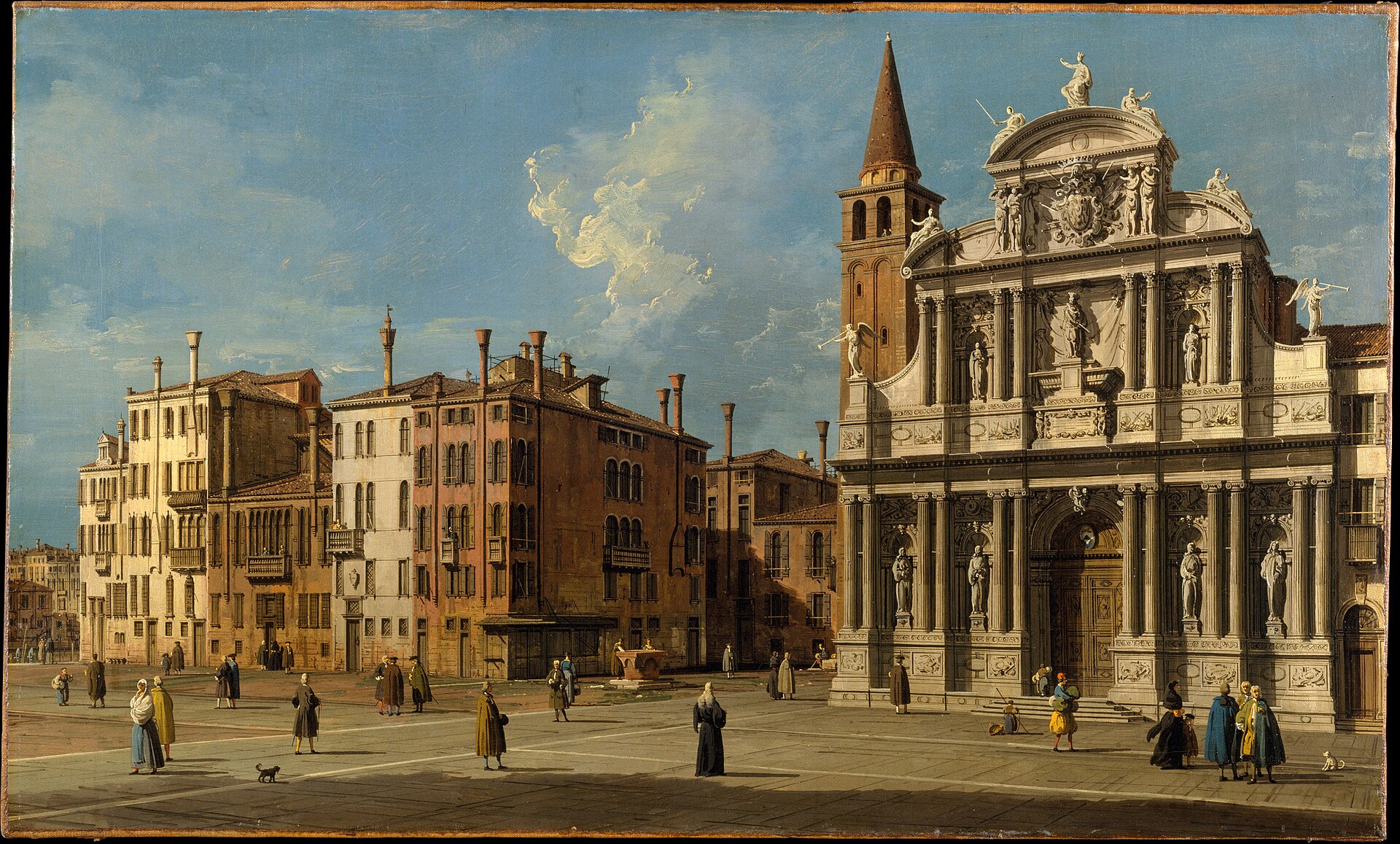
Every Venetian church facade is an argument about who paid. This one makes the argument without embarrassment: on the front of Santa Maria del Giglio there is not a single saint, not a Virgin, not a cross. There is Antonio Barbaro in armour, there are his four brothers, there are trophies and Fames and Virtues — and there are six carved maps of the places where Barbaro served the Republic. John Ruskin, who hated it, called this front and that of San Moisè a manifestation of insolent atheism, dedicated to the celebration of two families rather than of God. He was not wrong about the subject matter. He simply did not enjoy it.
Key facts
- Also known as Santa Maria Zobenigo, after the Jubanico family who founded it
- Rebuilt after fires in 966 and 1105; the present appearance dates from the campaign of 1678–1681
- Facade by Giuseppe Sardi, from Morcote, paid for by a legacy of 30,000 ducats from Antonio Barbaro
- Ionic columns below, Corinthian above; the central niche holds Barbaro himself, in armour, above his sarcophagus
- Sculpture attributed to Giusto Le Court (Josse de Corte), Enrico Merengo and Tommaso Rues
- Six relief maps at eye level: Candia, Corfu, Padua, Rome, Split and Zadar
- The fourteenth-century bell tower was demolished in 1775; its base is now a shop
- Part of the Chorus Venezia circuit of churches
History
The church is old — founded by the Jubanico family, whose name survives in the vernacular Zobenigo, and rebuilt twice after fires, in 966 and again in 1105. Until 1807 it was a collegiate and mother church with jurisdiction over a long list of dependent parishes across the sestiere: San Moisè, San Fantin, San Maurizio, Sant’Angelo, San Vidal, San Samuele, San Trovaso, San Barnaba and others. Today the relationship is reversed, and Santa Maria del Giglio depends on San Moisè.
What made it famous happened late. Antonio Barbaro left 30,000 ducats for a new marble front, and Giuseppe Sardi built it between 1678 and 1681. Barbaro had spent his career in the service of the Republic without ever reaching the rank he wanted: he was provveditore generale between 1658 and 1661, never captain general. His will is unusually specific about the statue he wanted — armoured, in general’s dress, with a cap on his head, a baton and a sword. The baton mattered: by a long iconographic convention it belonged almost exclusively to captains general. A preparatory drawing attached to the will shows an obelisk with a six-pointed crown beside the figure, another emblem of that dignity; in the end it was replaced by a simple statue of Fame. Whatever the Republic had declined to give him in life, Barbaro arranged to be shown holding in marble, forever, on the front of a church.
What you see
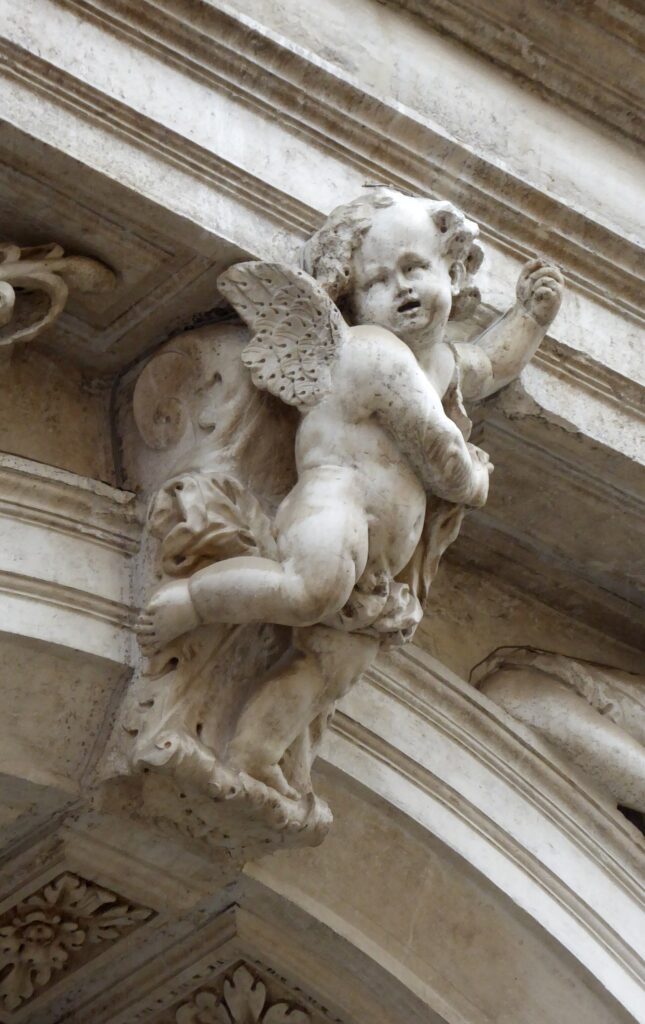
Approach from Campo Santa Maria del Giglio and the building reads as two different works of architecture stuck together. The flank is bare rendered wall and brick, with plain round windows and a tiled roof — the low brick volume at the corner is the stump of the demolished bell tower, which has spent the last two centuries as a small shop. Then the facade begins, and the wall becomes a wall of figures: paired free-standing columns, niches, broken pediments, Victories in the spandrels, straining Atlantes below.
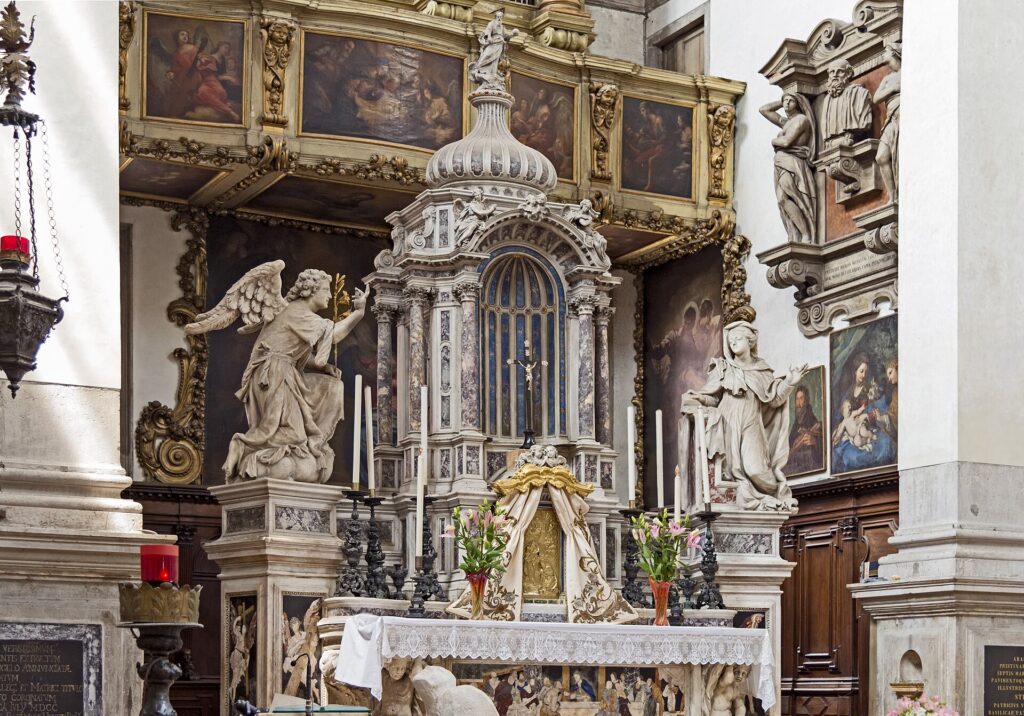
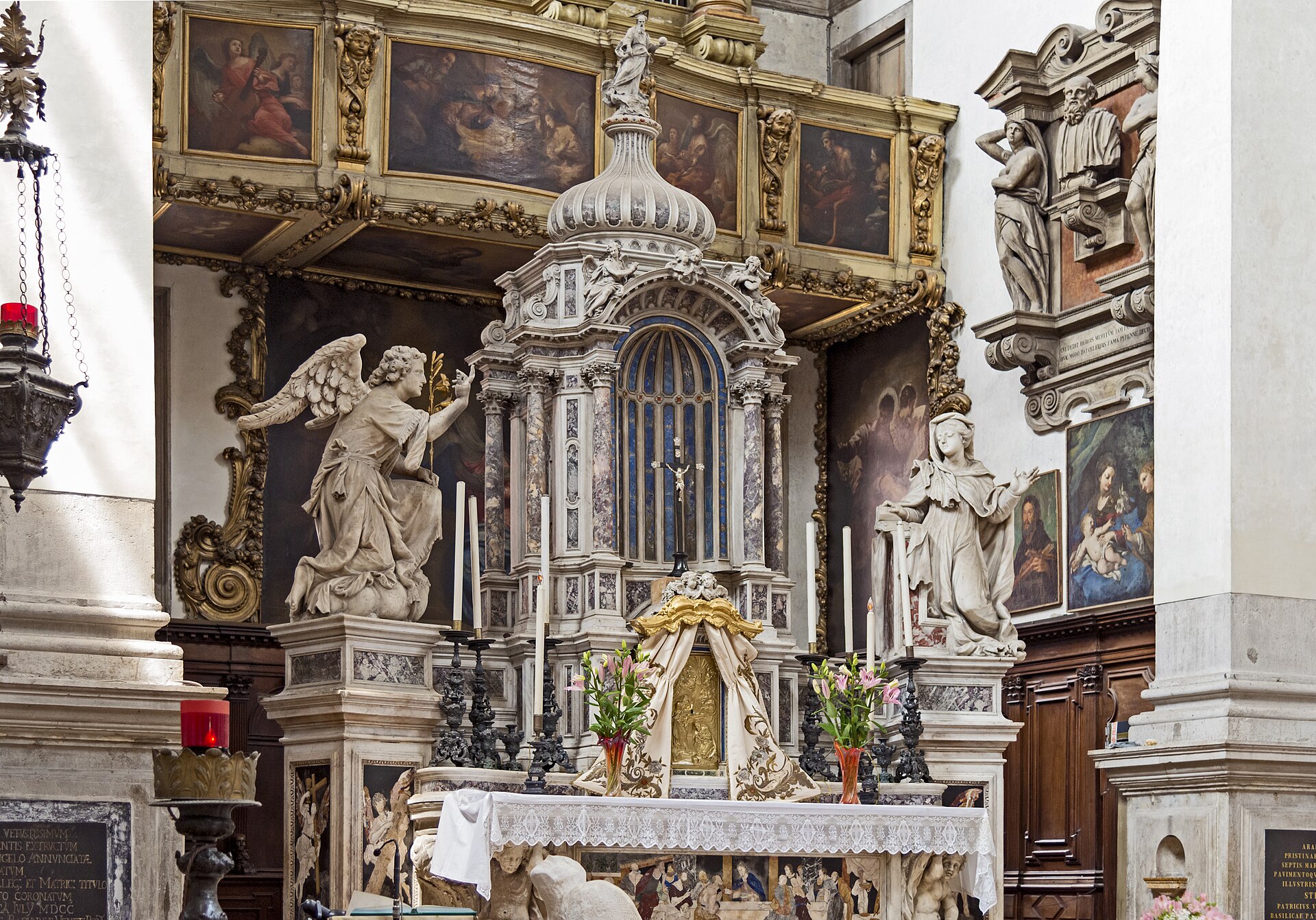
The detail worth crouching for is at the bottom. Set into the base are six stone relief maps of Candia, Corfu, Padua, Rome, Split and Zadar — the cities and fortresses of Barbaro’s career, carved as plans with their bastions and streets. They are among the very few town plans in Europe carved into the front of a church, and they turn a devotional building into a curriculum vitae. Inside, the plan is simple: a single nave with three shallow chapels on each side and a square-ended chancel under a lunette vault. Antonio Zanchi painted the nave ceiling canvas; the Stations of the Cross along the nave were painted in 1755–1756 by a group that includes Francesco Zugno, Giambattista Crosato, Gaspare Diziani and Jacopo Marieschi. Two figures of the Annunciation by Enrico Merengo flank the tabernacle on the high altar.
Photographs
Practical information
- The church belongs to the Chorus Venezia association, which charges a single admission for entry and offers a pass valid across its member churches; opening hours follow the Chorus calendar and are reduced on Sundays and holidays
- The facade can be read at any hour from the campo and needs no ticket — the relief maps are at street level
- Late afternoon light rakes across the columns and is the best time for the sculpture
Getting there
The church stands on Campo Santa Maria del Giglio, a few minutes west of St Mark’s Square along the Calle Larga XXII Marzo. The Giglio stop on the Grand Canal, served by the vaporetto, is a two-minute walk through the calle beside the church; the traghetto across to the Salute leaves from the same point.
Nearby
- Palazzo Zaguri and Campo San Maurizio, immediately west
- The Teatro La Fenice, three minutes north
- St Mark’s Square and the Basilica of San Marco, ten minutes east
Sources
- Wikipedia, Chiesa di Santa Maria del Giglio (Venezia) (Italian): the Jubanico foundation and the name Zobenigo; the rebuildings of 966 and 1105; the 30,000-ducat legacy of Antonio Barbaro and the facade by Giuseppe Sardi da Morcote; the attributions to Giusto Le Court, Enrico Merengo and Tommaso Rues; Ruskin’s judgement; the wording of Barbaro’s will and the obelisk replaced by a Fame; the bell tower demolished in 1775 and its base used as a shop; the six carved maps; the interior, the Zanchi canvas and the Stations of the Cross of 1755–1756.
- Wikipedia, Santa Maria Zobenigo (English), read as an independent check: the rebuilding by Sardi for Antonio Barbaro between 1678 and 1681, the absence of Christian images on the exterior, the relief maps of Candia, Zadar, Padua, Rome, Corfu and Split, and the present dependence on the parish of San Moisè.
- Chorus Venezia, the association of Venetian churches to which Santa Maria del Giglio belongs, for its status and visiting arrangements.
Gallery
Find it on the map
See this place and what’s around it →📷 Become a Cultural Heritage Online photographer
Share your photos of places: they stay published under your name as the author. The more they're seen, the more you get noticed — and soon a contest will reward the most appreciated photos.
Log in or sign up free to add a photoIs this page about you?
This page is read by travellers and heritage enthusiasts who find it on Google. Tell us how you are connected to this place and we will take it from there.