Partner ContentContent published in partnership with Cultural Heritage Online.
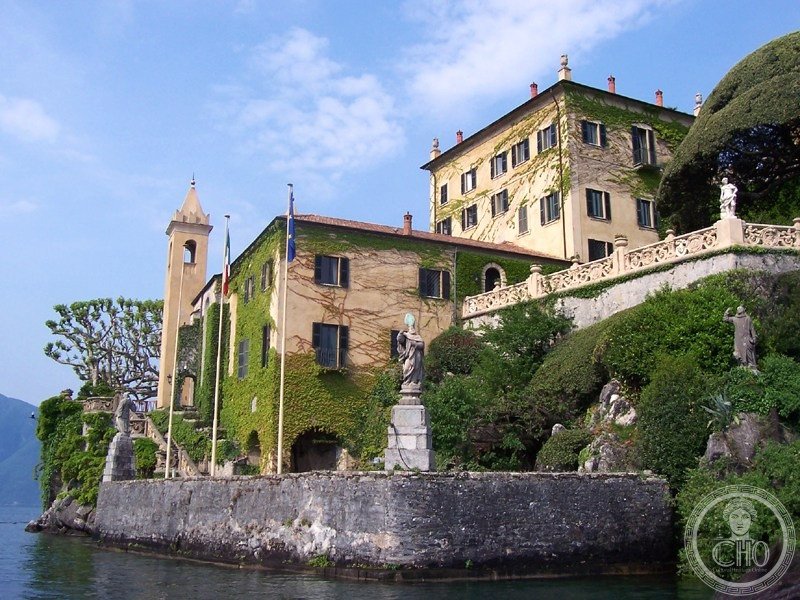
Cultural Heritage Online holds entries for the specific villas and lakes this piece is about, each with its own sources, dates and photographs. Read together with the essay below, the archive fills in what the essay states in general terms — which estate was a monastery first, which rock had no soil on it, whose name appears twice, on two different lakes, in the same decade.
Before the lakes were a stage
On Lake Como, the habit of building beside the water for pleasure rather than trade is older than the eighteenth century, but what changed was the reason for it. The Roman writers Pliny the Elder and Pliny the Younger, both born nearby, already owned villas on the lake’s shores and wrote about it; through the medieval period, though, Como and Lecco grew as trading towns, not resorts, and it was only from the Renaissance onward that Lombard nobility began commissioning the garden villas the lake is known for today. Villa del Balbianello’s own ground had a working, monastic use before it had an aesthetic one: the promontory at Lenno held a small Franciscan hermitage, founded around 1600, and when Cardinal Angelo Maria Durini bought the site in 1785 he built the villa’s three-arched loggia around the old chapel’s stone walls — which still form its inner structure two years before the terraces below it were even planted.
Isola Bella, on Lake Maggiore, tells the same story in a more literal form. Before 1632 it was a bare rock with a few fishermen’s houses on it; Carlo III Borromeo had to import thousands of tonnes of soil by boat from the Piedmontese shore before the first of its ten terraces could be planted, let alone admired. Lake Garda carried the weight of strategy rather than scenery for longer than either of the others: the Romans knew it as Benacus, and through the medieval centuries its shores were fortified and fought over by the Scaligeri of Verona, the Visconti of Milan and the Venetian Republic, each leaving a tower or a fortress where a later century would plant a garden.
Villas, Lakes and the Invention of the Romantic Journey
The idea that a journey can be romantic in itself, rather than simply a means of reaching somewhere, has a traceable history. It was largely constructed in the eighteenth and nineteenth centuries, and a substantial part of that construction happened on the Italian lakes.
Understanding how it happened explains a good deal about why these places still function as they do, and why the architecture around them takes the particular forms it does.
Before the lakes were scenery
For most of their history, Como, Maggiore and Garda were working landscapes. They were transport corridors, fishing waters and agricultural terrain. The villas that lined them were productive estates belonging to Milanese and Lombard families, with gardens organised around cultivation as much as display.
The shift from working landscape to admired landscape occurred alongside a broader change in European sensibility. Mountains, previously regarded as obstacles and hazards, became objects of aesthetic appreciation. Water views acquired value. The picturesque became a category people organised their travel around.
The Grand Tour is usually described in terms of Rome, Naples and the classical past. In practice the northern lakes became an established stage of the route, partly because they lay on the Alpine crossings and partly because they offered exactly the combination of cultivated landscape and dramatic setting that the new taste demanded.
What the villas were designed to do
The great lakeside villas of this period were built around a specific relationship between architecture and view.
Villa Carlotta at Tremezzo, begun in the late seventeenth century and substantially developed afterwards, organises its terraced gardens as a sequence of framed prospects descending toward the water. Villa del Balbianello, on its promontory at Lenno, exploits an extraordinary site where the building’s loggia becomes an instrument for looking in three directions simultaneously.
Villa Melzi at Bellagio, built in the early nineteenth century, adopted the English landscape garden model then fashionable, replacing formal geometry with apparently natural composition that was in fact meticulously designed.
What unites these buildings is that the view is not incidental to the architecture. It is the organising principle. Rooms, terraces, stairs and planting are all arranged to control what is seen and in what order.
Those framed prospects are the reason these same properties still anchor practically every Italian honeymoon tour built around the northern lakes, several centuries after they were laid out for entirely different purposes.
The literary layer
The lakes acquired their romantic associations partly through architecture and substantially through writing.
Manzoni set the opening of his novel on the Lecco branch of Como, describing the landscape in a passage that generations of Italian schoolchildren have memorised. Stendhal wrote about the region with an enthusiasm that shaped French perceptions for decades. Shelley, Byron and later Henry James all contributed.
Music added another layer. Verdi, Liszt and Bellini all worked in the area, and the association between the lakes and operatic romanticism became self reinforcing.
By the middle of the nineteenth century, visiting these places carried a set of cultural references that visitors arrived already holding. They were not discovering the landscape. They were confirming an image they had acquired elsewhere.
The wedding tradition and its origins
The specific association between the Italian lakes and marriage celebration is more recent than the romantic associations generally, and has a fairly practical origin.
The villas that had been private estates became, over the twentieth century, increasingly difficult to maintain privately. Many passed to public institutions, foundations or hospitality use. Opening them for events provided revenue that justified their upkeep.
This created an unusual situation: buildings designed for aristocratic display in the eighteenth century became accessible for private celebration in the twentieth. The visual language of the villas, terraces, water, cypresses, framed views, mapped almost perfectly onto what the emerging wedding and honeymoon market wanted.
A celebration held in one of these villas today is essentially retracing an itinerary constructed two centuries ago for entirely different reasons, which is a reasonable definition of how heritage tourism works.
Conservation questions
The commercial use of historic villas raises genuine conservation issues that the sector discusses less openly than it might.
Event use brings loads, wear and infrastructure requirements that these buildings were not designed for. Lighting, catering, sound and guest numbers all impose demands on fabric that is often fragile.
Set against this, the revenue frequently funds conservation that would otherwise not happen. Several major lakeside properties are maintained substantially through event and visitor income.
The balance is managed case by case, and the results vary. The properties under institutional stewardship generally impose stricter limits than those in private hands.
What survives and what is reconstructed
A note of caution is warranted for anyone visiting with historical interest.
Much of what appears original at these sites is nineteenth century, replacing or heavily modifying earlier work. The English landscape gardens in particular represent a deliberate erasure of formal seventeenth century planting.
This does not diminish their interest. It does mean that reading these places as unchanged survivals misunderstands them. They are palimpsests, each generation having rewritten the previous one according to its own idea of what a beautiful landscape should be.
The current generation, arranging celebrations against these backdrops, is doing precisely the same thing.
The names the villas kept
The literary chain the essay above traces is documented on the ground as much as in anthologies. After Cardinal Durini’s death, Villa del Balbianello passed through several noble Como families; it was Marchese Luigi Porro Lambertenghi, who owned it in the early nineteenth century, who hosted Manzoni, Stendhal and Byron there between 1810 and 1815 — the same three names that fixed the lake’s reputation in print. Stendhal returned the favour on the neighbouring lake: his description of Isola Bella appears in La Chartreuse de Parme, and J. M. W. Turner painted the island from the water in 1826, decades before the Borromeo family began selling tickets to see it.
Lake Garda’s own record runs further back and never really stopped. Virgil, born nearby in Mantua, praised the lake under its Roman name, Benacus, in the Georgics; Catullus kept a family villa on the Sirmione peninsula, whose ruins survive as the Grotte di Catullo; and centuries later Goethe gave the lake a chapter in the Italienische Reise that helped fix the Grand Tour’s northern Italian route. The habit of treating a lakeside villa as a stage rather than a residence is, in other words, older than any of the three lakes’ current wedding calendars — Villa del Balbianello’s own loggia, built to be looked out from in three directions at once, had already played host to one fictional wedding, in Star Wars: Episode II, filmed on its terrace years before it began hosting real ones.