
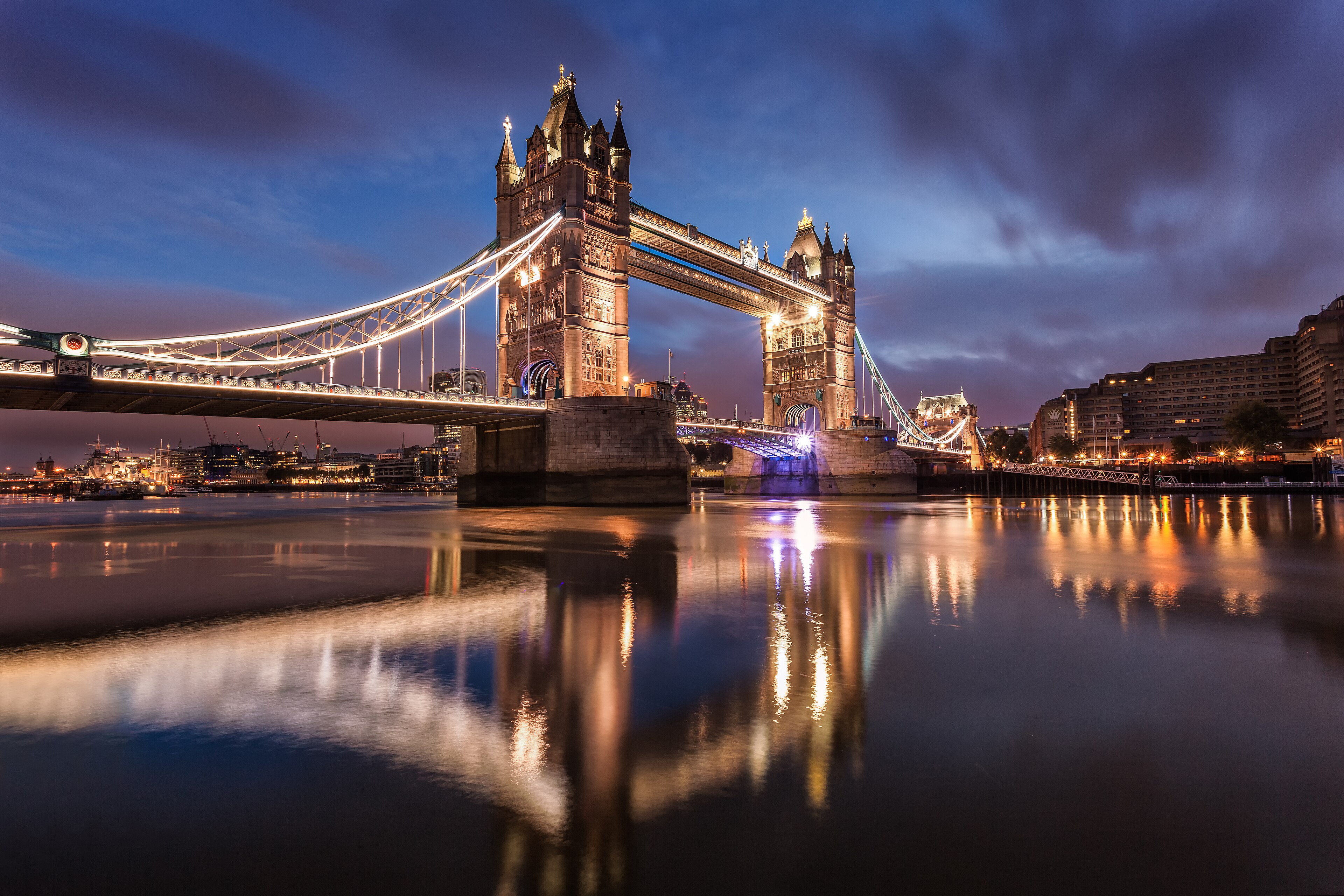
A masterpiece of Victorian engineering, this iconic bascule and suspension bridge spans the Thames near the Tower of London, combining Gothic Revival aesthetics with innovative hydraulic mechanics.
At a glance
Tower Bridge is a Grade I listed structure that opened in 1894 to serve the rapidly growing eastern districts of London. Its twin towers and opening bascules remain among the world’s most recognizable bridge forms.
History
By the late nineteenth century, only London Bridge served the densely populated areas east of central London—a single crossing for nearly four million residents. Tower Bridge was conceived to relieve this congestion while preserving shipping access to the Pool of London, the busy anchorage between the Tower and London Bridge.
Construction ran from 1886 to 1894 under the direction of architect Horace Jones and engineer John Wolfe Barry, with assistance from Henry Marc Brunel. Edward, Prince of Wales, and Alexandra, Princess of Wales, formally opened the bridge on 30 June 1894.
What you see
The bridge spans 940 feet and comprises two 213-foot towers connected by high-level walkways. Central bascules open to permit tall vessels to pass into the Pool of London. Originally powered by hydraulic pressure, the operating mechanism was converted to an electro-hydraulic system in 1972.
The towers display Gothic Revival detailing that complements the nearby Tower of London. The bridge deck remains open to traffic and pedestrians; the towers, walkways, and Victorian engine rooms are accessible via the Tower Bridge Exhibition.
Cultural significance
Tower Bridge has become inseparable from London’s identity. Its distinctive silhouette appears in countless photographs and films, occasionally leading to confusion with London Bridge, some 800 metres upstream.
Key facts
- Location: London Borough of Tower Hamlets, United Kingdom
- Coordinates: 51.5056, −0.0753
- Length: 290 metres (940 feet)
- Opened: 30 June 1894
- Designers: Horace Jones (architect), John Wolfe Barry and Henry Marc Brunel (engineers)
- Bridge type: Bascule, suspension, and formerly cantilever
- Traffic: Approximately 40,000 crossings daily
- Ownership: City Bridge Foundation (charitable trust founded in 1282)
Practical information & getting there
Tower Bridge is freely accessible to vehicles and pedestrians across its main deck. The Tower Bridge Exhibition, including the twin towers and high-level walkways, operates as a paid visitor attraction with extended hours during summer months. The bridge forms part of the London Inner Ring Road and the boundary of the congestion charge zone.
Sources & resources
Find it on the map
See this place and what’s around it →📷 Become a Cultural Heritage Online photographer
Share your photos of places: they stay published under your name as the author. The more they're seen, the more you get noticed — and soon a contest will reward the most appreciated photos.
Log in or sign up free to add a photoIs this page about you?
This page is read by travellers and heritage enthusiasts who find it on Google. Tell us how you are connected to this place and we will take it from there.