
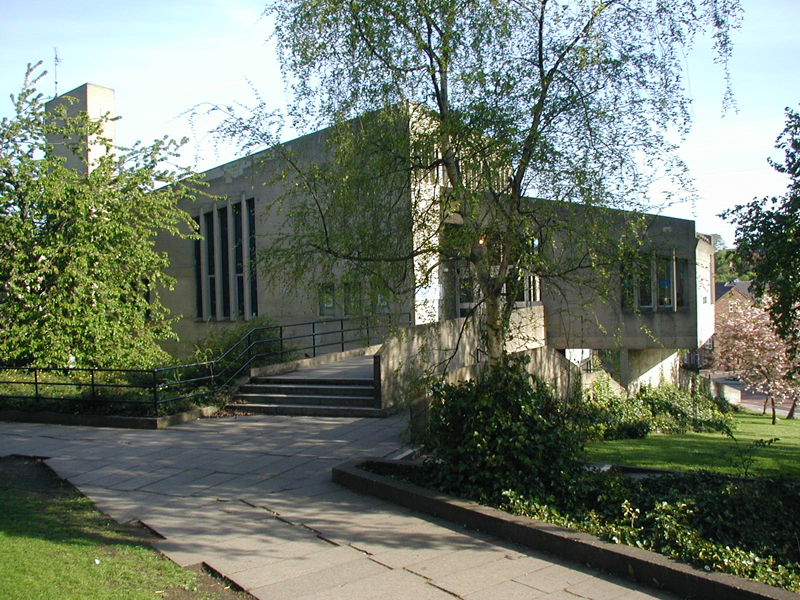
A landmark brutalist structure completed in 1966, Dunelm House stands as the foremost students’ union building of the post-war era in England and a defining statement of architectural modernism.
At a glance
Dunelm House is a Grade II listed building belonging to Durham University, where it serves as the home of Durham Students’ Union. Its bold concrete forms and sculptural massing exemplify the brutalist aesthetic at the moment of its greatest influence on institutional design.
History
Built in 1966, Dunelm House arrived during a period of significant expansion in higher education across Britain. The building was conceived to provide dedicated space for student life and union activities, reflecting a new confidence in purpose-designed social infrastructure on university campuses.
What you see
The building embodies brutalist principles through its expressive use of concrete, bold geometric forms, and integration of function with sculptural presence. Its design represents the latest architectural thinking of the mid-1960s, prioritizing honest material expression and spatial innovation.
Cultural significance
Dunelm House holds formal recognition as “a significant Brutalist building that reflects the latest in architectural thinking for its date.” Its Grade II listing acknowledges its importance as a pioneering example of post-war student accommodation design and its contribution to British modernist architecture.
Key facts
- Country: United Kingdom
- City: Durham
- Built: 1966
- Style: Brutalism
- Status: Grade II listed
- Coordinates: 54.77°N, 1.57°W
Practical information & getting there
Dunelm House is located in Durham and remains an active centre for student life at Durham University. The building is visible from many vantage points within the university precinct.
Sources & resources
- Dunelm House – Wikipedia
- Cultural Heritage Online
Find it on the map
See this place and what’s around it →📷 Become a Cultural Heritage Online photographer
Share your photos of places: they stay published under your name as the author. The more they're seen, the more you get noticed — and soon a contest will reward the most appreciated photos.
Log in or sign up free to add a photoIs this page about you?
This page is read by travellers and heritage enthusiasts who find it on Google. Tell us how you are connected to this place and we will take it from there.