
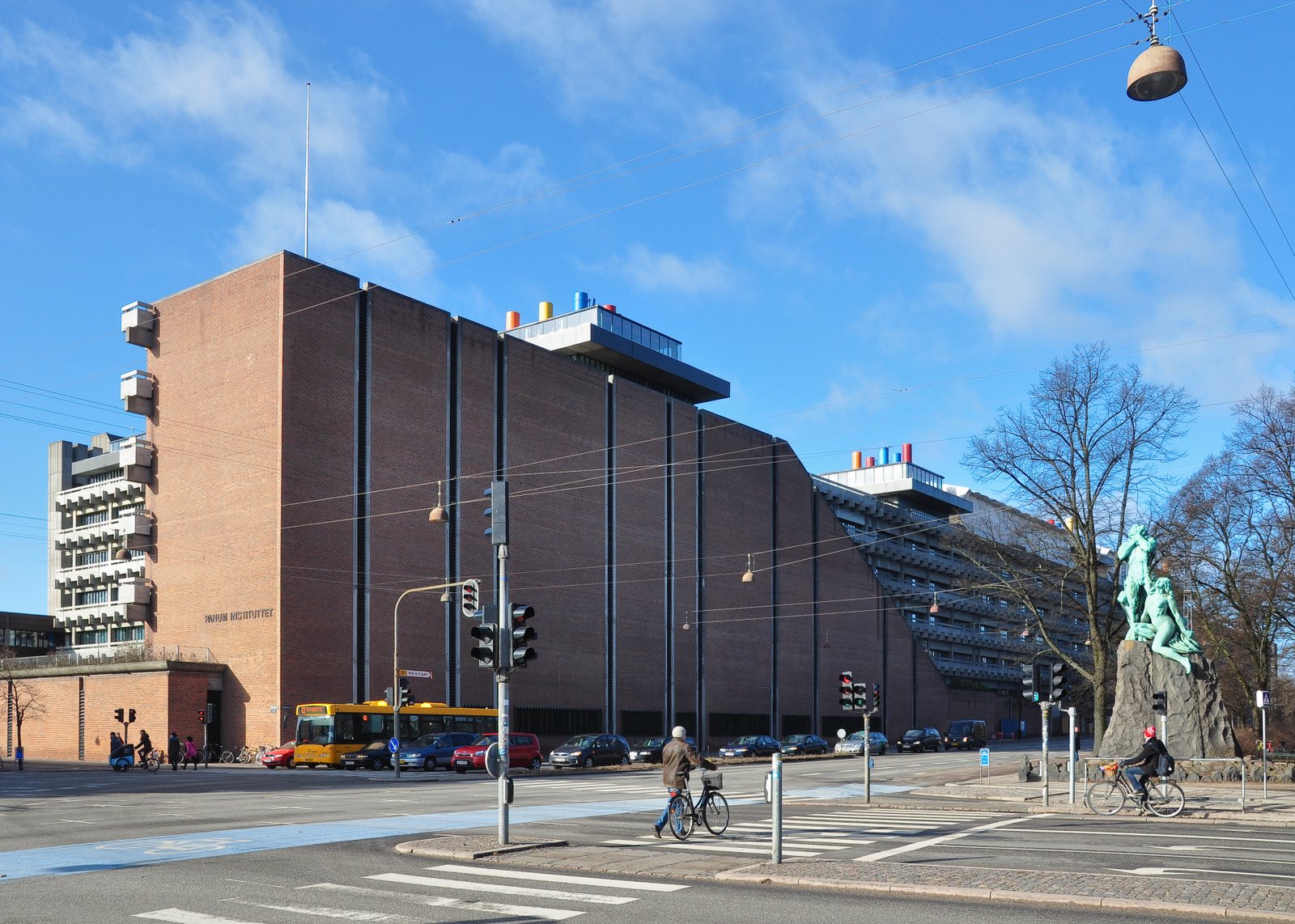
A modern academic complex housing the University of Copenhagen’s Faculty of Health and Medical Sciences, including Denmark’s largest dental clinic.
At a glance
The Panum Building forms the core of the University of Copenhagen’s North Campus. It serves as the primary facility for health and medical education and research in Denmark’s capital, accommodating thousands of students and staff across multiple schools and clinics.
History
Named after Danish physiologist Peter Ludvig Panum (1820–1885), the building honors his contributions to medical science. The complex evolved to meet the growing needs of the university’s health sciences programs.
What you see
The building is designed as a large complex accommodating both teaching and clinical functions. Its facilities include lecture theatres, offices, and specialized medical spaces alongside common areas for student and staff life.
Cultural significance
The Panum Building represents Denmark’s commitment to medical education and public health infrastructure. Home to the nation’s largest dental clinic, with approximately 230 treatment chairs, it serves both as an educational institution and a major healthcare provider for the Copenhagen region.
Key facts
- Location: North Campus, University of Copenhagen
- Country: Denmark
- City: Copenhagen
- Houses: Faculty of Health and Medical Sciences, Dental School, Faculty of Medicine, School of Oral Health Care, School for Dental Technicians
- Coordinates: 55.694°N, 12.564°E
- Named after: Peter Ludvig Panum (1820–1885), Danish physiologist
- Notable feature: Denmark’s largest dental clinic (approximately 230 treatment chairs)
Practical information & getting there
The building is located on the University of Copenhagen’s North Campus in Copenhagen. It includes a library, two canteens, lecture theatres, student clubs, and a bookshop open to the university community. For visiting hours and access information, contact the University of Copenhagen directly.
Sources & resources
Find it on the map
See this place and what’s around it →📷 Become a Cultural Heritage Online photographer
Share your photos of places: they stay published under your name as the author. The more they're seen, the more you get noticed — and soon a contest will reward the most appreciated photos.
Log in or sign up free to add a photoIs this page about you?
This page is read by travellers and heritage enthusiasts who find it on Google. Tell us how you are connected to this place and we will take it from there.