
A living tradition of herbal medicine-making rooted in Java, where generations of healers and street vendors prepare remedies from plants, animal products, and ancestral knowledge.
In UNESCO’s words
Jamu is a form of herbal medicine and treatment that has been practised in Indonesia since the eighth century. It is based on the belief of curing hot diseases with medicines of a cold nature, and cold diseases with medicines of a hot nature, with a healthy condition being a balance between hot and cold elements in the body. The colours and shapes of plants are also associated with the colours and shapes of the organs whose health they promote. Jamu aims to increase immunity and maintain health. Bearers and practitioners include Jamu makers and the people who make, distribute, cultivate and consume the ingredients. People of all ages take Jamu medicine, and though anyone can make Jamu, most Jamu makers are adult women. The medicine is prepared using herbs and spices often planted by Jamu makers themselves, who then concoct recipes tailored to each customer’s age, lifestyle, and health concerns. The practice is transmitted informally, typically within families and among neighbours, although some practitioners are self-taught. Jamu is also taught in universities. It is associated with respect for confidentiality and trust, and its practice is viewed as a means of strengthening social ties.
Official description, UNESCO Intangible Cultural Heritage List — Jamu wellness culture
At a glance
Jamu is a traditional form of herbal medicine practised in Indonesia since the eighth century. It is based on the principle of balancing hot and cold elements within the body to treat illness and maintain health. The colours and shapes of plants are believed to correspond with the organs they benefit. Jamu aims to strengthen immunity and preserve wellbeing, and people of all ages use it.
Origins & history
Jamu developed from Indonesian beliefs about how the body maintains balance through opposing natural forces. Knowledge of which herbs and spices treat which conditions has been transmitted informally, typically within families and among neighbours, though some practitioners are self-taught. In recent years, universities have begun teaching jamu alongside its traditional transmission.
The practice
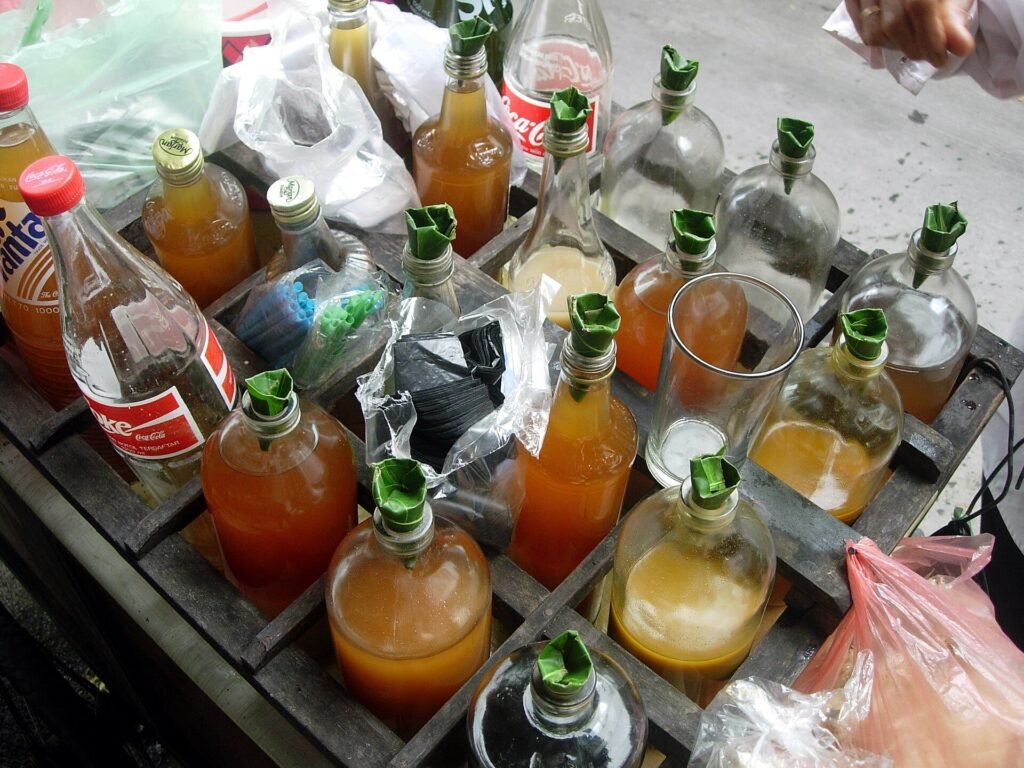
Jamu makers, most of whom are adult women, grow and prepare herbs and spices themselves, creating recipes suited to each customer's age, lifestyle, and health concerns. The medicine combines various plant materials—roots, bark, flowers, seeds, and leaves. Anyone can make jamu, and the practice involves both individual household preparation and wider distribution of ingredients among practitioners and consumers.
Cultural significance
Jamu is valued as a means of strengthening social bonds and is associated with respect for confidentiality and trust between maker and user. The practice connects people across communities through the making, distribution, cultivation, and consumption of ingredients, embedding preventive health care within daily life and family relationships.
Key facts
- Country: Indonesia
- Inscribed: 2023
- UNESCO list: Representative List of the Intangible Cultural Heritage of Humanity
- UNESCO reference: 01972
- UNESCO vocabulary: Beverages; Food preparation; Health; Medical sciences
- Map: not shown — UNESCO’s official description of this element names no locality, and a living tradition is practised across a community, not at one address.
Where to experience it
Jamu is encountered throughout Indonesia as a living everyday practice rather than a formal performance or museum display. In communities across the archipelago, local Jamu makers—mostly adult women—prepare customized herbal remedies from plants they often cultivate themselves, tailoring each batch to individual customers' ages, health concerns, and lifestyles. Visitors can observe this tradition in action through street vendors, traditional carriers, and neighbourhood practitioners who distribute their medicines to people of all ages. Some universities also teach Jamu, offering another window into both its preparation and underlying philosophy of balancing hot and cold elements in the body.
Sources & resources
- UNESCO — official element page: Jamu wellness culture
- UNESCO — open data record: Intangible Heritage List, reference 01972
- UNESCO — official photograph: Lestari has prepared jamu for 50 years — Ganesh Ahsha Dalila — Dwi Ranny Pertiwi Zarman, Indonesia, 2022
- Reference — Wikipedia (secondary): Jamu — consulted as a secondary reference, not as confirmation
- Cultural Heritage Online: Our archive and city guides

Sources
- S1 — Beers, Susan-Jane. Jamu: The Ancient Indonesian Art of Herbal Healing. Tuttle Publishing, 2001. ISBN 978-962-593-503-4.
- S2 — Torri, Maria Costanza. Traditional Medicine in Southeast Asia. Cambridge Scholars Publishing, 2013. ISBN 978-1-4438-4228-0.
Spotted an error? Write to editorial@culturalheritageonline.com and we correct it the same day.