
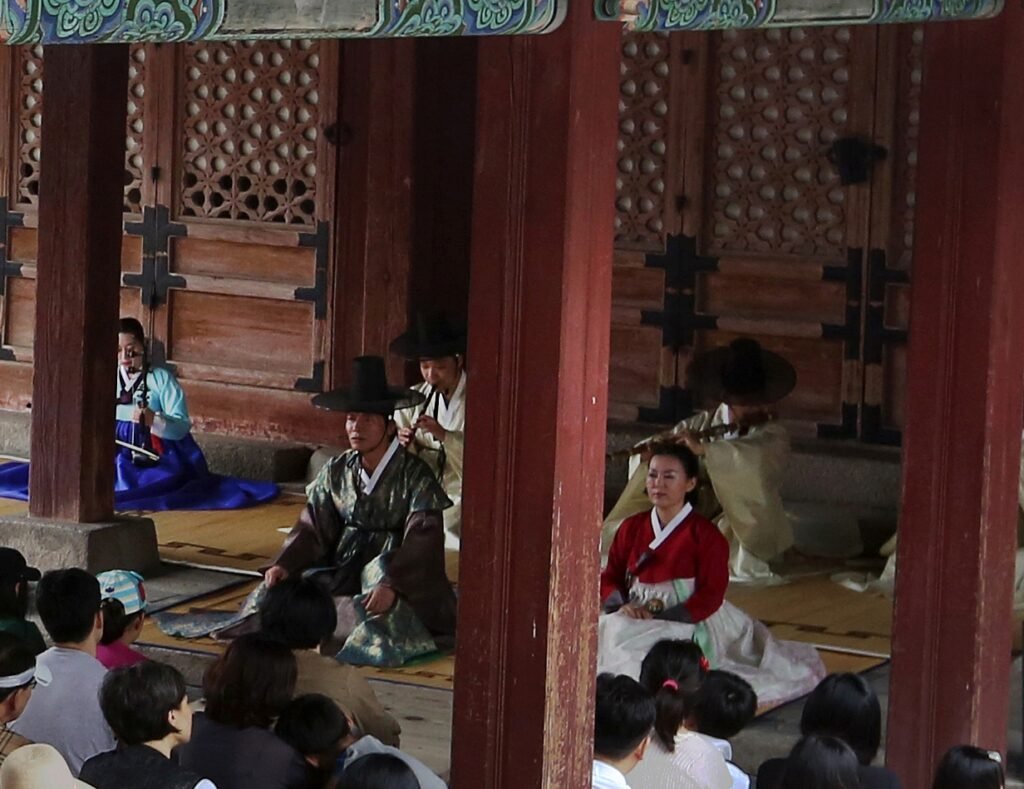
A refined vocal art form for mixed voices, gagok cycles through classical Korean poetry accompanied by ensemble instruments, preserving centuries of aristocratic musical tradition.
At a glance
Gagok is a genre of traditional Korean vocal music in which singers perform lyric cycles—settings of classical sijo poetry—to the accompaniment of an instrumental ensemble. The form accommodates both female and male voices, allowing for solo and group performances. Its sophistication and structural refinement have earned it recognition as one of the most elevated expressions of Korean musical heritage.
Origins & history
Gagok evolved from jeong-ak, a form of refined court music, and traces its ancestry to the sijo sung poetry cherished by the aristocracy during Korea’s Goryeo period (10th–14th century). The genre continued to develop throughout the centuries, reaching its current form—called sakdaeyeop—during the late Joseon dynasty. Earlier styles such as mandaeyeop and jungdaeyeop have largely disappeared from active performance.
The practice
A gagok performance features singers accompanied by an orchestral ensemble playing traditional Korean instruments. The vocalist delivers refined, often melismatic interpretations of classical sijo texts, which are themselves complete poems of philosophical or romantic content. The instrumental accompaniment provides both rhythmic structure and melodic dialogue, with musicians responding to and supporting the singer’s phrasing. The music unfolds at a measured pace, emphasizing emotional depth and artistic control rather than virtuosic display.
Cultural significance
Gagok represents the pinnacle of Korean vocal art and courtly refinement, embodying centuries of aesthetic development within the elite musical tradition. Its preservation carries forward the literary and musical values of Korea’s aristocratic past into contemporary cultural life. The designation as national cultural heritage in the 1960s and UNESCO recognition in 2010 acknowledge its irreplaceable importance to Korean identity and global musical diversity.
Key facts
- Country: South Korea
- Anchor community: Seoul
- UNESCO Intangible Cultural Heritage (2010), reference 00444
- Coordinates: 37.56°N, 126.99°E
- Form: vocal cycles for mixed voices with instrumental ensemble
- Origins traced to sijo poetry of the Goryeo period (10th–14th century)
Where to experience it
Seoul serves as the heartland for gagok performance and preservation. Traditional Korean music venues and cultural institutions in the capital host performances by recognized masters and their students, though specific contemporary festivals and regular performance schedules are best confirmed through local cultural organizations.
Sources & resources
Find it on the map
See this place and what’s around it →📷 Become a Cultural Heritage Online photographer
Share your photos of places: they stay published under your name as the author. The more they're seen, the more you get noticed — and soon a contest will reward the most appreciated photos.
Log in or sign up free to add a photo