
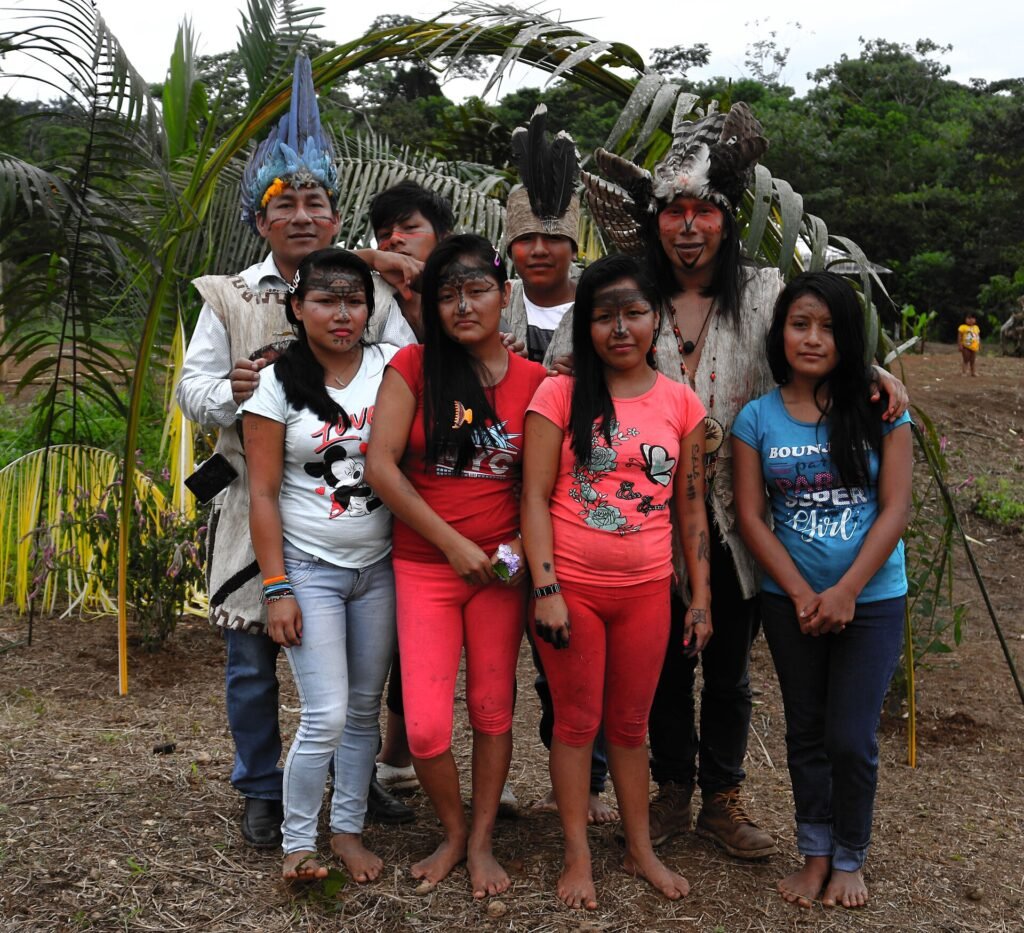
The Sápara people of the Amazon rainforest preserve an intricate oral tradition spanning knowledge of the forest, ritual practice, and language—a living memory system sustained by elders and community bearers across Ecuador and Peru.
At a glance
The Zápara oral heritage encompasses the spoken knowledge, narratives, songs, and cultural practices of an indigenous Amazonian people. Transmitted orally across generations, this heritage documents the Sápara relationship with the rainforest, spiritual beliefs, and social structures. The practice depends on fluent speakers and knowledge-keepers—elders and community members who narrate, teach, and perform within family and ceremonial contexts.
Origins & history
The Sápara have inhabited the Amazon rainforest along the Ecuador–Peru border for centuries, traditionally occupying approximately 12,000 square miles between the Napo and Pastaza rivers. In the early 20th century, the population numbered around 200,000. By the early 21st century, the community had contracted dramatically, intensifying efforts to document and preserve oral knowledge. In 2009, Ecuadorian Zápara officially unified under the name Nación Sápara del Ecuador (NASE), resolving a longstanding internal division between upriver and downriver communities. The Sápara language itself uses an alphabet ending with the letter W—the character Z does not exist in their writing system, a linguistic particularity that influenced how their name is rendered in Spanish.
The practice
Zápara oral heritage manifests through spoken narrative, song, and ceremonial knowledge shared in intimate settings—homes, gatherings, ritual occasions. Elders recount histories of ancestors, forest ecology, hunting and fishing practices, and spiritual encounters with the natural world. These narratives are often rhythmic, employing formulaic phrases and mnemonic patterns that aid transmission. The practice includes traditional ecological knowledge—names, properties, and uses of plants and animals—and ritual speech associated with healing, coming-of-age, and community gatherings. Language itself is the primary instrument; fluency in Sápara, increasingly rare, is essential to full participation in this heritage.
Cultural significance
For the Sápara, oral heritage encodes identity, territory, and survival. As population and fluent speakers have declined, this practice has become an urgent marker of cultural continuity and resistance to erasure. UNESCO recognition affirms the Sápara right to sustain their knowledge on their own terms—not as static artifact but as dynamic living practice. Documentation and community-led education initiatives aim to revitalize transmission to younger generations.
Key facts
- Indigenous people of the Amazon rainforest, Ecuador and Peru
- Anchor community: Puyo, Pastaza Province, Ecuador (−1.48°, −78.01°)
- Official Ecuadorian organization: Nación Sápara del Ecuador (NASE), registered 2009
- Territory: rivers Pindoyacu, Conambo, and Alto Corrientes, Pastaza Province
- UNESCO Intangible Cultural Heritage inscription: 2001 (reference 00007)
Where to experience it
The heartland of Zápara oral heritage is Puyo and the surrounding Pastaza region of Ecuador’s Amazon. Community members and cultural organizations in this area lead education and documentation efforts. Engagement should be undertaken with respect for Sápara autonomy and in direct contact with NASE leadership.
Sources & resources
Find it on the map
See this place and what’s around it →📷 Become a Cultural Heritage Online photographer
Share your photos of places: they stay published under your name as the author. The more they're seen, the more you get noticed — and soon a contest will reward the most appreciated photos.
Log in or sign up free to add a photo