

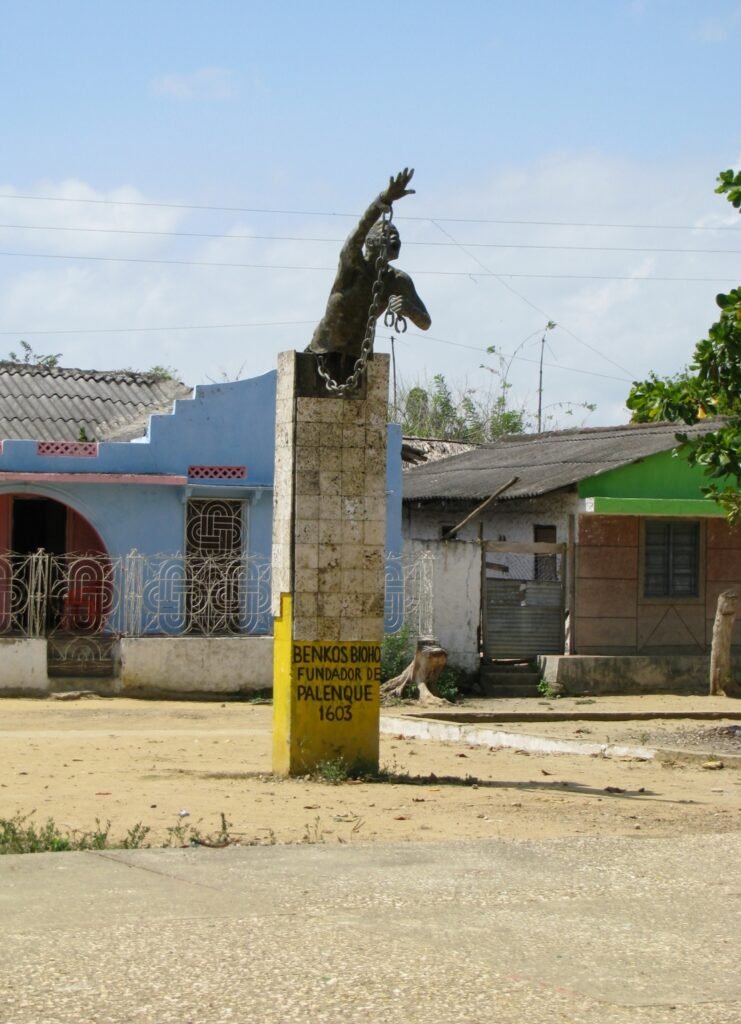
In a remote village fifty kilometres inland from Cartagena, the descendants of formerly enslaved Africans sustain a living cultural world—music, language, ritual, and memory—built by those who escaped bondage to create the Americas’ first free African settlement.
In UNESCO’s words
The village of Palenque de San Basilio, with a population of about 3,500 inhabitants, is located in the foothills of the Montes de María, southeast of the regional capital, Cartagena. Palenque de San Basilio was one of the walled communities called palenques, which were founded by escaped slaves as a refuge in the seventeenth century. Of the many palenques that existed in former times, only San Basilio has survived until the present day. It developed into a unique cultural space. The Cultural Space of Palenque de San Basilio encompasses social, medical and religious practices as well as musical and oral traditions, many of which have African roots. The social organization of the community is based on family networks and age groups called ma kuagro. The kuagro membership comes with a set of rights and duties towards other group members and entails strong internal solidarity. Daily work and special events are jointly undertaken by all kuagro members. The complex funeral rituals and medical practices are evidence of the distinct spiritual and cultural systems framing life and death in the Palenque community. Musical expressions such as the Bullernege sentado, Son palenquero or Son de negro accompany collective celebrations, such as baptisms, weddings and religious festivities as well as leisure activities. Central to the cultural space of Palenque de San Basilio is the palenquero language, the only creole language in Latin America with a lexical Spanish basis and grammatical characteristics of Bantu languages. The language constitutes a vital factor in reinforcing social cohesion among community members. The cultural space of Palenque is not only threatened by economic changes that affect local modes of production, but also by the armed conflict between Colombian paramilitary and local guerrilla groups. Outside Palenque, inhabitants are commonly subjected to discrimination and ethnic stereotyping leading to a denial of their cultural values.
Official description, UNESCO Intangible Cultural Heritage List — Cultural space of Palenque de San Basilio
At a glance
Palenque de San Basilio is a community of about 3,500 people where social, medical, religious, musical and oral traditions form a unified cultural space. The village itself—its social organization, daily practices, and collective life—constitutes the heritage. Central to this is Palenquero, a creole language unique in Latin America, combining Spanish vocabulary with grammatical features of Bantu languages. The community's identity rests on these interconnected cultural practices.
Origins & history
Palenque de San Basilio was founded in the seventeenth century as one of many palenques—walled communities established by escaped slaves as refuges. Of all these settlements, only San Basilio has survived to the present day. The village developed into a distinct cultural space where African-rooted practices merged with New World experience, creating a unique synthesis expressed through language, ritual, music, and social organization.
The practice
Life in Palenque is organized through family networks and age groups called ma kuagro, whose members share rights, duties, and strong solidarity. Daily work and special events are undertaken jointly by kuagro members. The community gathers for baptisms, weddings, and religious festivities accompanied by musical expressions such as Bullernege sentado, Son palenquero, and Son de negro. Complex funeral rituals and medical practices reflect distinct spiritual systems. Knowledge—craft, medicinal practice, history, and moral teaching—passes orally from elders to younger generations.
Cultural significance
Palenquero language reinforces social cohesion and stands as vital to the community's identity. The cultural space as a whole preserves an African-rooted worldview adapted over centuries. Today the community faces threats from economic changes affecting local production, armed conflict in the region, and outside discrimination and ethnic stereotyping that denies recognition of their cultural values.
Key facts
- Country: Colombia
- Inscribed: 2008
- UNESCO list: Representative List of the Intangible Cultural Heritage of Humanity
- UNESCO reference: 00102
- UNESCO vocabulary: Cultural space; Slavery; Socio-cultural practices
- Map: Palenque de San Basilio — the locality named in UNESCO’s official description of this element
Where to experience it
Palenque de San Basilio, a village of about 3,500 inhabitants in the foothills of the Montes de María southeast of Cartagena, is where this cultural space thrives. The village itself—its houses, streets, and gathering spaces—forms the living centre where Palenquero is spoken daily, where musical traditions accompany ceremonies and celebrations, and where knowledge of funeral rituals, medical practices, and social customs passes between generations through family networks and age groups. Respectful engagement with community members offers visitors authentic encounter with this distinctive cultural inheritance.
Sources & resources
- UNESCO — official element page: Cultural space of Palenque de San Basilio
- UNESCO — open data record: Intangible Heritage List, reference 00102
- UNESCO — official video: UNESCO film on this element — embedded on this page
- UNESCO — official photograph: The walled village Palenque de San Basilio was founded as a refuge by escaped slaves in the seventeenth century. The musical and oral traditions, religious festivities, funeral rituals, medical practices and community organization of its residents are still quite distinctive. — Ministry of Culture of Republic of Colombia
- Reference — Wikipedia (secondary): San Basilio de Palenque — consulted as a secondary reference, not as confirmation
- Cultural Heritage Online: Our archive and city guides

Find it on the map
See this place and what’s around it →📷 Become a Cultural Heritage Online photographer
Share your photos of places: they stay published under your name as the author. The more they're seen, the more you get noticed — and soon a contest will reward the most appreciated photos.
Log in or sign up free to add a photo