
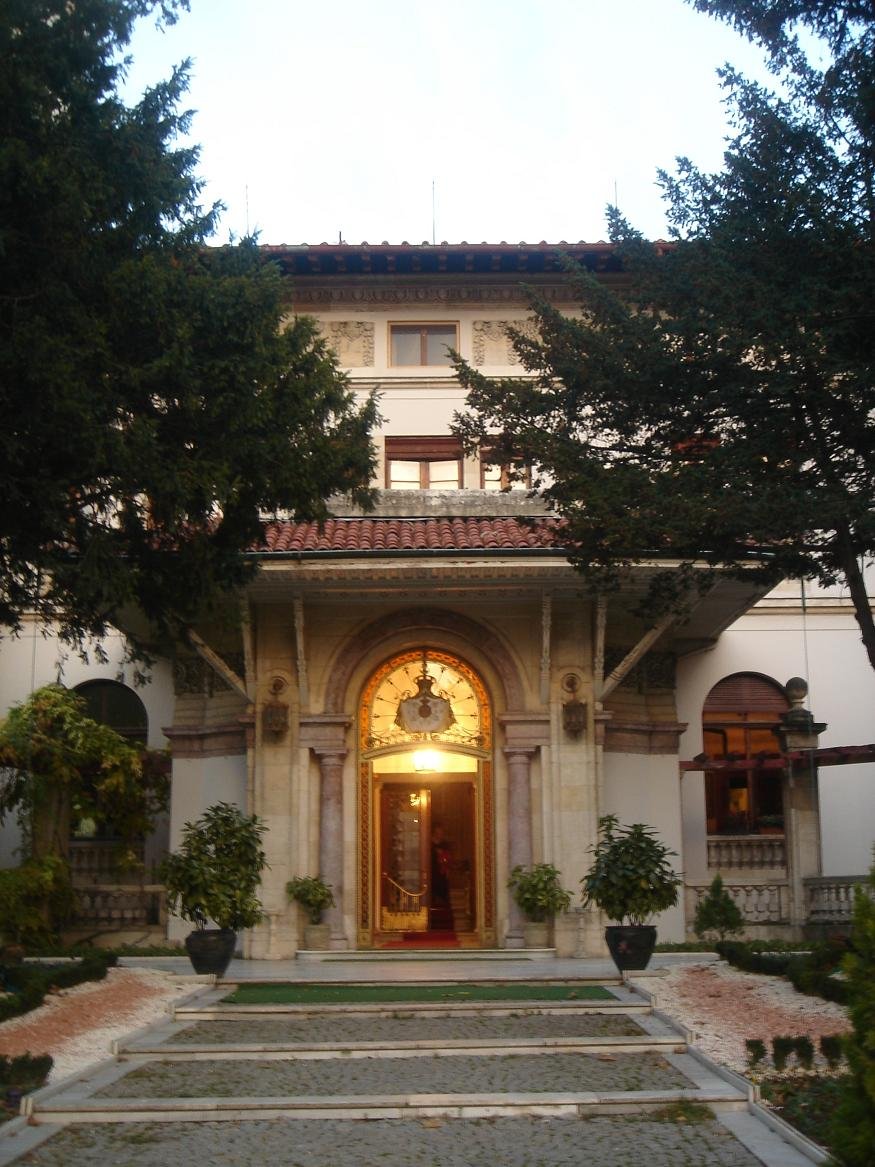
A striking Art Nouveau villa on Istanbul’s Asian shore, completed in 1907 for the khedive of Egypt and Sudan. This three-storey palace overlooks the Bosphorus from a hillside grove, blending European elegance with Ottoman architectural traditions.
At a glance
The Khedive’s Palace (also called Çubuklu Palace or the Khedive’s Pavilion) occupies 1,000 square metres on a 110-hectare hilltop estate in the Beykoz district, commanding views across the Istanbul Strait. Its distinctive square tower is recognizable from the opposite Bosphorus shore. The grounds include formal gardens, fountains and pools, with one of Istanbul’s finest rose gardens.
History
Built for Khedive Abbas II of Egypt and Sudan, the palace was completed in 1907 as a prestigious waterfront residence during the final decades of Ottoman imperial splendour. Its construction reflected both the wealth of Egypt’s ruling family and the cosmopolitan ambitions of late Edwardian Istanbul. A replica was later constructed on the Nile’s shore in Egypt.
What you see
The design synthesizes Art Nouveau style with Italian Renaissance villa proportions and neo-classical Ottoman elements. The east elevation is strictly square; the south and northwest sides feature elegant crescent-shaped porticoes. A monumental fountain rises through the central hall from ground floor to roof, while hand-carved walls, ceilings and marble capitals display European motifs—fruit, flowers and hunting scenes. Stained glass illuminates interior spaces throughout.
The rooftop terrace remains accessible by a historic steam-operated elevator. Gilded flowers ornament the main gate. Ground-floor chambers radiate from the central hall; two bedrooms occupy the upper storey. An exceptional fireplace anchors one principal reception room.
Cultural significance
The Khedive’s Palace exemplifies the cross-cultural architecture of Ottoman-era Istanbul, when European aesthetic movements merged with local tradition. It stands as testimony to both Egyptian diplomatic presence in the Ottoman capital and the cosmopolitan taste of the era’s elite. The building’s prominent tower has made it an enduring visual landmark on the Bosphorus skyline.
Key facts
- Location: Çubuklu, Beykoz district, Asian side of the Bosphorus, Istanbul
- Country: Turkey
- Completed: 1907
- Coordinates: 41.105°N, 29.0738°E
- Building area: 1,000 m² (11,000 sq ft)
- Estate: 110 hectares (270 acres)
- Architectural style: Art Nouveau with Renaissance and neo-classical Ottoman elements
- Original resident: Khedive Abbas II of Egypt and Sudan
Practical information & getting there
The palace is located in the Çubuklu neighbourhood on Istanbul’s Asian shore, accessible from central Istanbul by crossing the Bosphorus. The site sits on a hillside overlooking the strait. Details regarding current opening hours, admission and guided tours should be verified locally, as access policies may vary seasonally.
Sources & resources
Find it on the map
See this place and what’s around it →📷 Become a Cultural Heritage Online photographer
Share your photos of places: they stay published under your name as the author. The more they're seen, the more you get noticed — and soon a contest will reward the most appreciated photos.
Log in or sign up free to add a photoIs this page about you?
This page is read by travellers and heritage enthusiasts who find it on Google. Tell us how you are connected to this place and we will take it from there.