
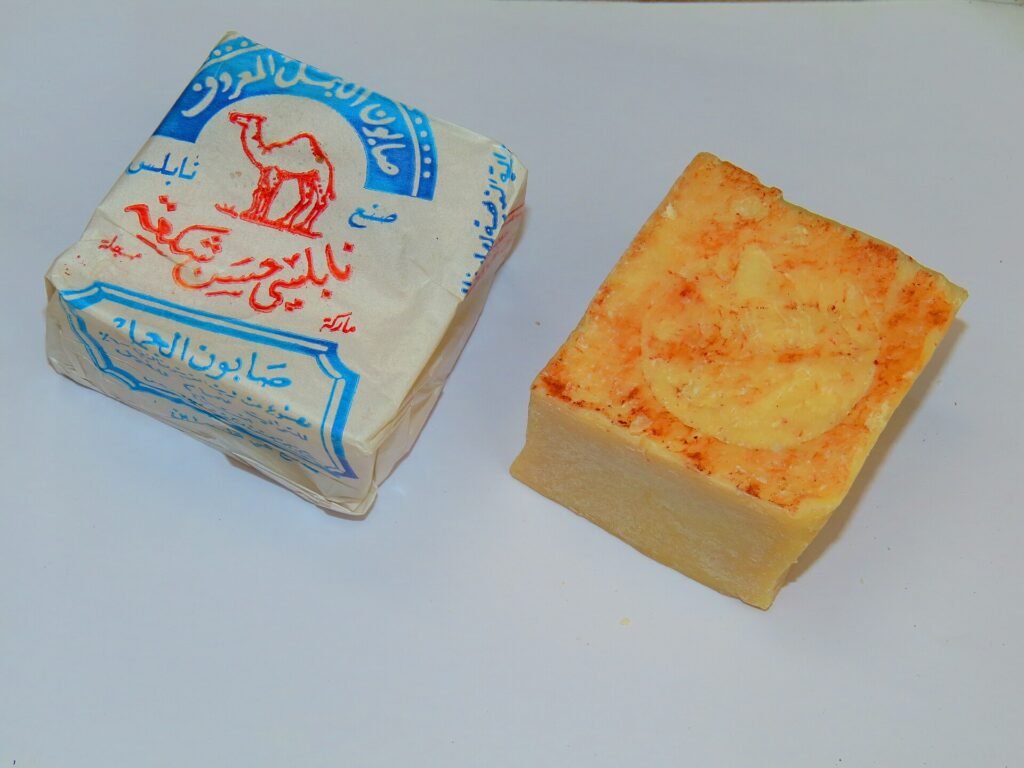
A craft of olive oil, water, and alkaline salts—transformed by hand into pale, nearly scentless bars that have defined Nablus for seven centuries.
At a glance
Nabulsi soap is an olive oil-based hard soap made by combining virgin olive oil, water, and sodium hydroxide or similar alkaline compounds. The process yields ivory-coloured bars with minimal fragrance. Traditionally prepared by women for household use, it evolved into one of the Levant’s most celebrated artisanal industries—a practice rooted in domestic knowledge and shaped by the rhythms of harvest and trade.
Origins & history
The craft emerged as women’s work within Nablus households, gradually professionalising as demand grew. By the 14th century, Nabulsi soap had become a significant commercial enterprise. The city’s soap industry reached its zenith in the early 20th century: in 1907, thirty factories operated in Nablus, supplying half of all soap consumed in Palestine. The mid-20th century brought severe disruption—the 1927 Jericho earthquake damaged the Old City and its production infrastructure, followed by the 1967 Arab–Israeli War and subsequent Israeli occupation of the West Bank. Despite these challenges, at least five factories continue operating in Nablus as of 2022.
The practice
The soap maker combines virgin olive oil with water and sodium hydroxide, blending these simple materials through traditional methods to achieve the characteristic pale, nearly odourless bar. The finished soap is typically uncomplicated in appearance—its plainness is its integrity. Makers work with the materials as generations before them did, though mechanisation has altered some aspects of production. The craft requires intimate knowledge of proportions, timing, and the chemical transformation that occurs when alkaline compounds meet oil.
Cultural significance
Nabulsi soap embodies Palestinian domestic and commercial heritage, representing the resourcefulness of women and the self-sufficiency of local communities. The practice connects to Palestinian identity, livelihood, and the daily life of the city. Its survival through earthquake, war, and occupation testifies to cultural resilience. The soap’s purity—no artificial scents or colours—reflects values of simplicity and authenticity central to Palestinian material culture.
Key facts
- Country: Palestine
- Anchor community: Nablus, Palestine (32.21721°N, 35.26217°E)
- Primary ingredients: virgin olive oil, water, sodium hydroxide
- Colour: ivory
- Scent: minimal to none
- Historical peak: 1907, when 30 factories supplied half of Palestinian soap
- Operating factories (2022): at least five
- UNESCO ICH reference: 02112
Where to experience it
Nablus remains the heartland of this craft. Visitors to the Old City can observe soap-making in the remaining factories and purchase finished bars directly from makers. The tradition continues in a place marked by layers of history—earthquake, war, resilience.
Sources & resources
Find it on the map
See this place and what’s around it →📷 Become a Cultural Heritage Online photographer
Share your photos of places: they stay published under your name as the author. The more they're seen, the more you get noticed — and soon a contest will reward the most appreciated photos.
Log in or sign up free to add a photo