
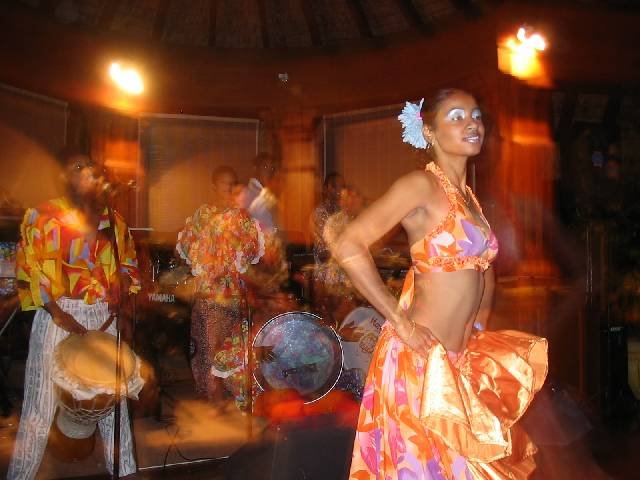
A complete performance art uniting music, storytelling, and traditional dance rooted in the voices of enslaved people and Mauritian Creole communities. Sega remains a living expression of island identity across the Indian Ocean.
At a glance
Sega is one of Mauritius’s major music genres and a performance tradition encompassing music, narrative, and dance. Born from the experiences of enslaved ancestors and their descendants, it persists as a vital cultural practice sung in Mauritian Creole and Réunionese Creole across multiple island communities. The tradition reflects the multi-ethnic composition of Mauritius itself, with distinct regional forms including sega tambour and variations shaped by local influence.
Origins & history
Sega has its roots in the music of enslaved people and their Mauritian Creole descendants. Historically, the tradition served as a vehicle for social critique; a form called Santé engagé used sega music to protest injustices within Mauritian society. Over time, the practice evolved into multiple regional and stylistic variants, each shaped by the cultural identity of its community and neighboring traditions.
The practice
Performers sing in Mauritian or Réunionese Creole, accompanying themselves with traditional percussion. The ravanne—a hand drum—and triangle form the musical foundation of classical sega. The dance itself is integral; movement and music are inseparable elements of the complete performance. Modern forms in Mauritius include seggae fusion and bhojpuri variations, while Réunion’s sega incorporates maloya, music more closely aligned with older influences from Madagascar.
Regional variants reflect local identity: sega tambour thrives on Rodrigues Island and among Chagosian communities, while distinct musical and choreographic forms characterize sega as performed in Agaléga and Seychelles, each sung in the respective creole languages of those islands.
Cultural significance
Sega embodies the resilience and creativity of Indian Ocean Creole cultures. It is a practice born from historical hardship that transformed into celebration, resistance, and collective identity. The music connects multiple island communities and remains a living symbol of Mauritian and Réunion heritage.
Key facts
- Primary country: Mauritius
- Anchor community: Port Louis
- UNESCO ICH inscription: 2003 (Reference 01003)
- Also practiced in Réunion, Rodrigues Island, Agaléga, Chagos, and Seychelles
- Core instruments: ravanne, triangle
- Primary languages: Mauritian Creole, Réunionese Creole
Where to experience it
Port Louis and throughout Mauritius remain the heartland of sega tradition. The practice is performed at cultural celebrations, festivals, and community gatherings across the island and among Mauritian diaspora communities. Specific venues and regular performance schedules are best confirmed locally.
Sources & resources
Find it on the map
See this place and what’s around it →📷 Become a Cultural Heritage Online photographer
Share your photos of places: they stay published under your name as the author. The more they're seen, the more you get noticed — and soon a contest will reward the most appreciated photos.
Log in or sign up free to add a photo