
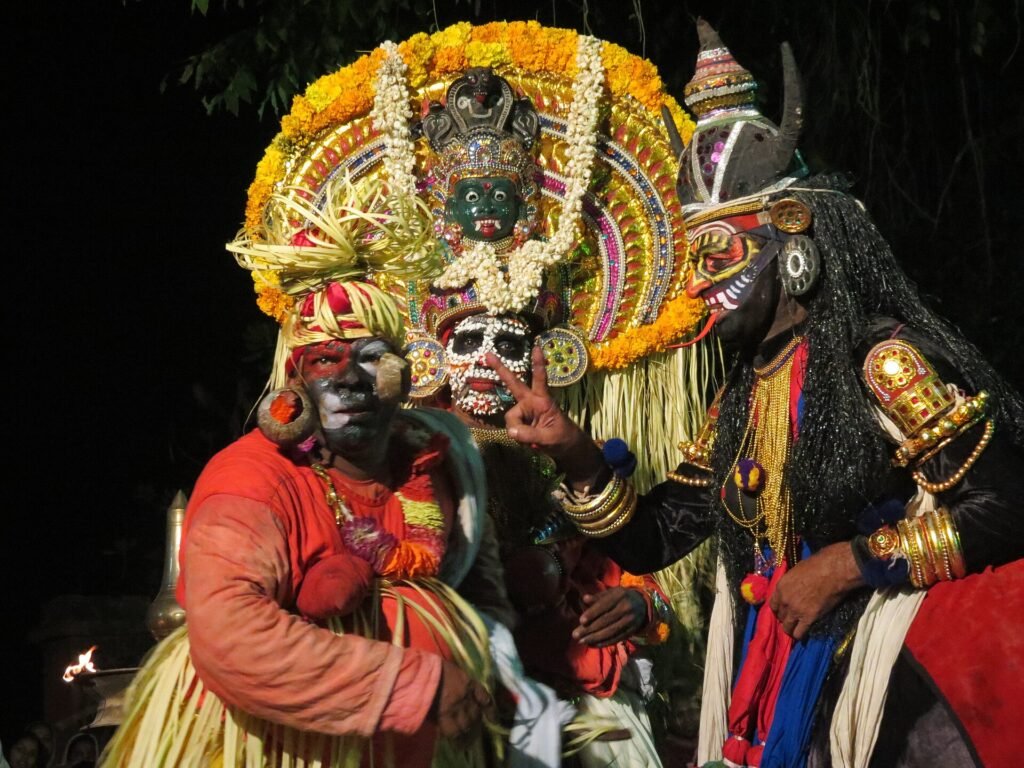
A ritual theatre and folk dance drama performed in Kerala temples, Mudiyettu enacts the mythological battle between the goddess Kali and the demon Darika through elaborate movement, costume, and devotional practice.
At a glance
Mudiyettu is a traditional performance ritual rooted in the Bhagavathi or Bhadrakali cult, a living devotional practice that transforms Kerala’s Mother Goddess temples into spaces of myth and spiritual celebration. Performers embody divine and demonic forces through stylized movement and expressive gesture, enacting an ancient story of cosmic struggle. The performance occurs seasonally, marking the agricultural calendar and the temple’s ritual calendar with equal importance.
Origins & history
Mudiyettu belongs to Kerala’s long theatrical tradition, drawing on the region’s mythology and temple worship practices. The ritual is performed in Bhadrakali temples—sanctuaries dedicated to the fierce mother goddess—where it serves as both artistic expression and religious observance. In 2010, Mudiyettu was inscribed in UNESCO’s Representative List of the Intangible Cultural Heritage of Humanity, becoming the second Keralan art form to receive this recognition after Koodiyattam.
The practice
Mudiyettu performers, their bodies and faces transformed through costume and makeup, enact the mythological narrative of Kali’s triumph over Darika within the temple precinct. The dance incorporates precise hand gestures, rhythmic footwork, and expressive facial movements that convey the story’s dramatic arc. Musicians accompany the performance with traditional percussion and music, creating the ritual’s sonic and visual atmosphere. Performers move through sacred and secular space, their bodies the primary instrument of narrative and spiritual communication.
Cultural significance
For Kerala’s communities, Mudiyettu affirms the power of the mother goddess and the triumph of good over evil through embodied ritual. The practice connects performers, musicians, temple communities, and audiences to a shared mythology and seasonal rhythm. As a performed text, it preserves knowledge of classical gesture, storytelling, and devotional practice—transmitting cultural identity across generations within the temple’s sacred time.
Key facts
- Countries: India
- Anchor community: Kochi, Kerala
- Performance season: February to May, after harvest
- Performance venue: Bhadrakali temples (Mother Goddess temples)
- UNESCO ICH inscription: 2010 (Reference 00345)
- Related practice: Koodiyattam
Where to experience it
Mudiyettu is performed in the Bhadrakali temples of the Kochi region during its February-to-May season. The ritual is integral to temple worship and community life; visitors should approach performances with respect for their sacred context and check with local temples for specific performance dates and protocols.
Sources & resources
- Mudiyettu – Wikipedia
- Mudiyettu: Ritual Theatre and Dance Drama of Kerala – UNESCO Intangible Cultural Heritage
- Cultural Heritage Online
Find it on the map
See this place and what’s around it →📷 Become a Cultural Heritage Online photographer
Share your photos of places: they stay published under your name as the author. The more they're seen, the more you get noticed — and soon a contest will reward the most appreciated photos.
Log in or sign up free to add a photo