
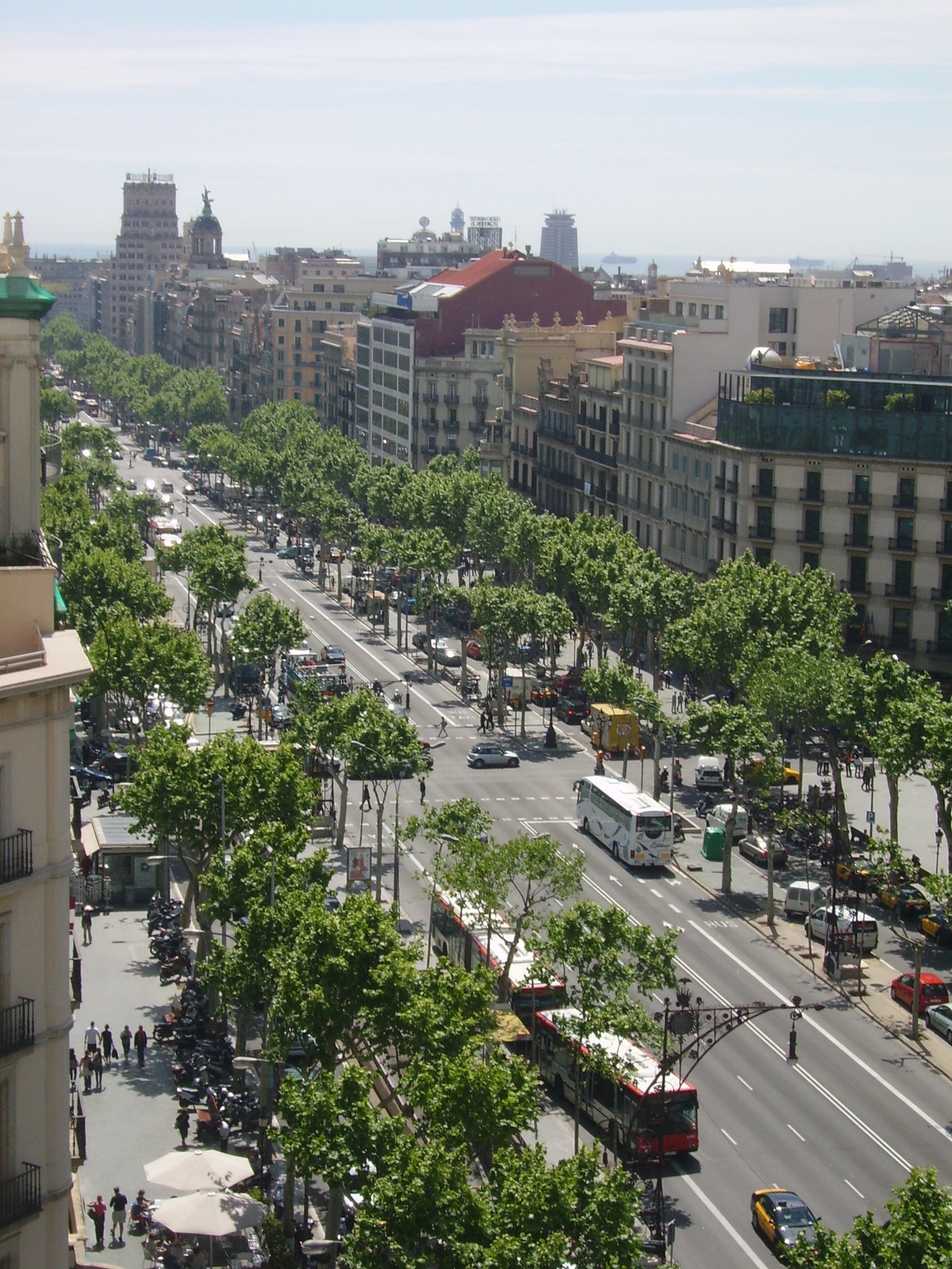
Barcelona’s grandest boulevard showcases Catalan modernism alongside Europe’s most coveted storefronts, stretching from Plaça Catalunya through the heart of Eixample.
At a glance
Passeig de Gràcia ranks among Barcelona’s most significant urban spaces, blending architectural masterpieces with luxury commerce. The avenue cuts through the geometric grid of Eixample, a 19th-century district designed for progressive urban living. Its width and tree-lined character distinguish it from surrounding streets.
History
The avenue developed as Barcelona expanded beyond its medieval walls, becoming a fashionable promenade connecting the city center to the growing Vila de Gràcia neighborhood. By the early 20th century, it had established itself as the preferred address for wealthy families and merchants, attracting Barcelona’s leading architects and designers. This concentration of talent and capital shaped its evolution into a showcase of Catalan modernism.
What you see
Passeig de Gràcia’s facades reflect the ambitions of its patrons and architects. The avenue contains several of Barcelona’s most celebrated buildings, displaying the ornamental language of modernisme—curved lines, decorative mosaics, wrought iron, and inventive structural solutions. Individual mansions command attention, each competing for distinction through material richness and spatial drama.
Cultural significance
The boulevard represents a pivotal moment in European urban design and architectural innovation. It embodies Catalan identity and prosperity during a transformative era. The street remains Barcelona’s most expensive address, a status reflecting both its historical prestige and contemporary desirability as a destination for international luxury brands.
Key facts
- Location: Barcelona, Spain (Eixample district)
- Coordinates: 41.39°N, 2.16°E
- Extends from Plaça Catalunya to Carrer Gran de Gràcia
- Regarded as Spain’s most expensive street
Practical information & getting there
Passeig de Gràcia is accessible by metro (multiple lines serve stations along the avenue) and lies within Barcelona’s walkable city center. The boulevard welcomes visitors year-round; allow time to view both architectural details and street life. Retail establishments dominate ground floors, while upper stories reveal residential and commercial interiors not always visible from the street.
Sources & resources
Find it on the map
See this place and what’s around it →📷 Become a Cultural Heritage Online photographer
Share your photos of places: they stay published under your name as the author. The more they're seen, the more you get noticed — and soon a contest will reward the most appreciated photos.
Log in or sign up free to add a photoIs this page about you?
This page is read by travellers and heritage enthusiasts who find it on Google. Tell us how you are connected to this place and we will take it from there.