
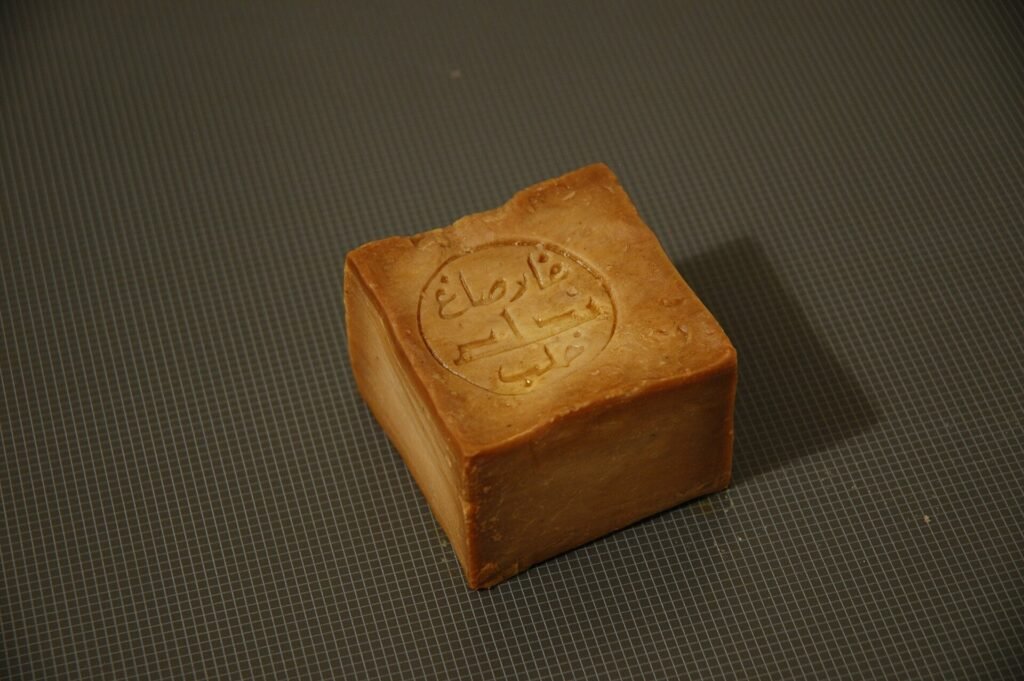
A handmade hard bar soap crafted from olive oil and laurel berry oil, Aleppo soap represents centuries of Syrian artisanal knowledge and remains a living craft practiced in its city of origin.
At a glance
Aleppo soap is a hard bar soap made by combining olive oil with lye and laurel berry oil. Known locally as ṣābūn ghar, or ghar soap, it belongs to the family of Castile soaps—those made from olive oil—yet is distinguished by the addition of laurel berry oil, which imparts both fragrance and therapeutic properties. The craft is labour-intensive and requires skill passed down through generations of artisans.
Origins & history
Aleppo soap originated in the Syrian city of Aleppo, where the convergence of Mediterranean olive cultivation and access to laurel berries created ideal conditions for its development. The practice became so closely identified with the city that it acquired multiple names in trade and diaspora communities: savon d’Alep in French-speaking regions, Syrian soap in broader markets, and laurel soap in English-speaking communities. The craft has sustained the city’s artisanal economy for centuries.
The practice
Soap makers begin with olive oil and lye, combining them through a labour-intensive process that demands precision and experience. The distinctive ingredient is laurel berry oil, added to the mixture to create the characteristic amber or green-hued bars. The process requires careful temperature control and timing—artisans must judge readiness by sight and touch rather than instruments. Once the mixture reaches the correct consistency, it is poured into moulds and left to cure. The bars are then cut by hand and aged, allowing the soap to harden fully and develop its final colour and scent. Every batch reflects the maker’s knowledge of how oils behave, how lye reacts, and how time transforms the raw materials into finished product.
Cultural significance
Aleppo soap embodies the identity of its city and region. For centuries it has been a mark of Syrian craftsmanship, traded across the Mediterranean and beyond. The practice connects makers and users to the landscape—olive groves and laurel trees—and to a tradition of self-reliance and skill. The soap remains both everyday necessity and cultural ambassador, carrying the name of Aleppo across the world.
Key facts
- Primary country: Syria
- Anchor community: Aleppo (36.19922°N, 37.16289°E)
- Main materials: olive oil, lye, laurel berry oil
- UNESCO ICH reference: 02132
Where to experience it
Aleppo remains the heartland of this craft, though the practice has been sustained by diaspora artisans and a global network of makers who learned the technique from masters in the city. You can encounter Aleppo soap in markets across Syria and in communities worldwide where Syrian artisans continue the tradition.
Sources & resources
Find it on the map
See this place and what’s around it →📷 Become a Cultural Heritage Online photographer
Share your photos of places: they stay published under your name as the author. The more they're seen, the more you get noticed — and soon a contest will reward the most appreciated photos.
Log in or sign up free to add a photo